Australia’s 2027 Automated Vehicle Plans Depend on Local Road Rules

An autonomous van could make a regular transfer between a supermarket distribution centre and nearby stores. For an Australian operator eyeing 2027, the route question is practical: who would be legally responsible for the driving system, how would the vehicle enter the market, and which authority could allow it onto the road? The answer also shapes the contract with the customer receiving each load. Australia’s 2027 milestone concerns conditional deployment in selected locations, while the national framework is still being built. The Australian Government says automated vehicles are being trialled, but general commercial public-road use is not yet available.
One national safety approach, several legal layers
Australia's plan separates the safety of a vehicle when first supplied from its safety throughout road use. The Commonwealth is developing a technical standard for automated driving systems (ADS) under the existing road vehicle standards framework. According to the Department of Infrastructure, this standard is intended to adopt the UN ADS regulation agreed in June 2026. That work concerns the design and evidence for the driving system; it does not itself grant a delivery route.
A proposed Automated Vehicle Safety Law (AVSL) would govern the system after it enters service. Its central concept is the Automated Driving System Entity, or ADSE: a corporation accountable for the ADS over its operating life. A dedicated regulator would oversee that entity's safety duties. For a logistics fleet, this is consequential. A software update, a recurring perception fault or a shift in the route environment cannot be treated solely as a driver's problem when there is no driver performing the task. The ADSE would need the capability to monitor and address such risks, while the fleet operator would still have its own transport and workplace obligations.
States and territories must also adapt their road rules, registration, enforcement and insurance provisions. The National Transport Commission (NTC) describes these changes as complementary parts of the national programme. A single national safety concept does not erase local responsibilities for a crossing outside a warehouse gate, a stopped vehicle blocking traffic or a collision response. Those details affect whether an attractive warehouse-to-store journey can become an authorised service.
The 2027 milestone covers selected locations
The NTC reports that transport ministers agreed in November 2025 to allow conditional deployment from 2027 in selected locations, with full national readiness later. The timetable depends on each state or territory updating its legislation and building the capacity to supervise operations, including the practical handling of applications, incidents and enforcement. It is a planning milestone, not a nationwide licence that takes effect automatically on 1 January 2027.
Existing state and territory trial arrangements remain the route for controlled testing. The NTC points developers to trial guidelines and says Australian governments support safe public-road testing under jurisdictional frameworks. Testing evidence can help establish how a vehicle handles intersections, pedestrians and intervention procedures. It does not turn a trial approval into permission for unattended commercial deliveries elsewhere. A fleet considering two depots in different states should expect separate engagement on road access until the new system is implemented.
The NTC's 2025 national trial guidelines say applications may cover trials of a commercial or non-commercial nature, but local permission or exemptions remain necessary. They identify safety management, insurance, trial control and data sharing as common application subjects. For a delivery route, that means documenting how the loading site releases a vehicle, when a remote operator intervenes, which events are reported and how other road users are protected. Commercial activity inside an approved trial is possible; it should not be confused with general market access outside its conditions.
The distinction matters when building a business case. A short repeatable journey may be technically easier than a broad service area, yet the costs still include vehicle certification, local approval, tele-assistance, maintenance, insurance and loading procedures. An operator should define the route and goods first, then ask which duties attach to the ADS supplier, the transport business and the customer site. That allocation will determine who receives fault reports and who can stop the service when conditions change.
A freight example from an operating network
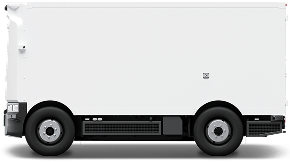
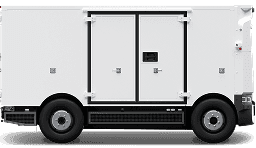
An overseas example shows why the operational detail deserves as much attention as the legislation. Singapore-based Zelostech says Singapore's Land Transport Authority approved the progression of its Z10 RoboVan from supervised testing with FairPrice Group to remotely supervised driverless freight operation. Zelostech's October 2025 announcement described links within and between FairPrice distribution centres at Benoi, Joo Koon and Sunview Road, with routes of up to 5.5 km. It identified palletised packaged products and daily essentials as suitable cargo. The announcement also described further vehicles to be delivered under a new agreement; those prospective quantities should not be read as an already operating fleet.
That is a Singapore operation, not evidence of an Australian permit. Its value for an Australian reader is the way a defined freight task brings responsibilities into focus. Goods must be ready at the origin, the receiving site must accept them, the vehicle needs a safe response to a blocked route, and a remote team needs a way to identify and resolve exceptions. Australian regulators will make their own decisions, but any future application will be stronger if these everyday interfaces are specified rather than left behind a general claim of Level 4 capability.
Turning a framework into a delivery service
For a retailer or parcel network, the most credible initial proposal is a clearly bounded transport leg with known loading points, vehicle class and road environment. If the task is retail replenishment, the proposal should show how dispatch times, goods custody and store receiving fit the vehicle's operating limits. That is a more useful question than whether a vehicle can drive autonomously in the abstract.
The proposed AVSL's corporate safety duty could also change supplier selection. An operator would need to know who maintains the ADS, who approves software changes, how incidents reach the accountable entity and what information is shared with the local road authority. Those arrangements are operational contracts as well as compliance evidence. Australia's national approach is designed to make safety responsibility clearer across the vehicle's life. The first opening from 2027 will depend on selected locations and state or territory legislation, which together will determine where a specific service can begin. For logistics companies, preparation starts with a route that can be examined in that level of detail.