Autonomous Delivery Vehicle Regulations in Saudi Arabia and Qatar

Saudi Arabia and Qatar are developing the regulatory conditions for autonomous vehicles through different approaches. Saudi Arabia has moved forward with mandatory technical requirements and amendments to traffic regulations. Qatar is implementing its national autonomous vehicle strategy through coordinated development and route-specific projects.
For autonomous delivery, the distinction affects how a logistics service reaches the road. Vehicle safety requirements establish the technical foundation; deployment decisions determine where and under what conditions a service can operate. A distribution-centre transfer, postal route and small pavement delivery robot can involve different vehicle categories and permissions, even when all three are described as autonomous delivery.
The opportunity for logistics companies lies in connecting these regulatory developments with recurring goods movements. Warehouse transfers and replenishment services provide identifiable routes, known receiving points and regular demand. These characteristics make it possible to assess autonomous transport against a specific commercial task.
Saudi Arabia’s technical framework is now mandatory
The Saudi Standards, Metrology and Quality Organization, SASO, lists 29 April 2026 as the mandatory application date for its Technical Regulation for Autonomous Vehicles. The regulation was approved in July 2025 and published in October that year. This establishes a concrete technical regulatory milestone for companies assessing the Saudi market.
SASO has also published a supporting list of standards. It includes references addressing functional safety, safety of the intended functionality, low-speed automated driving, scenario-based testing, cybersecurity and software updates. The list connects vehicle assessment with the behaviour of the driving system throughout its lifecycle. SASO may approve alternative technical solutions where compliance with the regulation’s essential requirements is demonstrated.
For logistics applications, that breadth matters. A delivery vehicle has to recognise road users, respond to faults and continue meeting its safety requirements after software changes. Demonstrating that it can complete a journey is only one part of the evidence relevant to a repeatable service.
Road-traffic rules are developing alongside technical regulation. The June 2026 additions to the Traffic Law’s implementing regulations address driverless vehicles explicitly. They require competent-authority approval before deregistration and exempt vehicles operating without human intervention from the specified provisions on authorising a person to drive. They also assign the rules and obligations of Article 50 to the owner where there is no human intervention. These are specific changes to traffic administration and responsibility, rather than a standalone cargo-service licence.
For a delivery operator, the published technical register and these traffic amendments establish two relevant parts of the framework. They do not, by themselves, identify the complete application procedure for every cargo configuration. Before committing a route, the supplier and operator should confirm the vehicle’s classification, applicable conformity procedure and road-use conditions with the competent authorities.
Qatar is building deployment through its national strategy
Qatar’s Ministry of Transport developed its Autonomous Vehicle Strategy in September 2023. Its scope extends across testing, licensing, procurement, operation, reporting and regulation. The ministry’s April 2025 implementation overview identifies work on vehicle certification, supporting infrastructure, governance and permits for testing and operational pilots. Its indicative timetable is expressly subject to external approvals.
More recent project announcements show how staged deployment is being applied. In July 2026, the ministry reported 2,500 first-phase robotaxi trips with an onboard safety officer. It described a subsequent phase involving two vehicles without onboard safety officers on three previously tested routes, with progression dependent on meeting safety requirements.
This is passenger-transport evidence, rather than a freight approval. Its relevance to logistics is the deployment method: the vehicle, route and oversight arrangement are assessed together. A delivery project still needs a determination of the applicable category and permission for its proposed activity. Qatar’s strategy supplies the broader direction; an individual authorisation establishes the operating scope.
What the two approaches mean for delivery operations
Saudi Arabia’s published technical framework gives suppliers a basis for organising conformity evidence. Qatar’s strategy and project updates provide visibility into coordinated validation and staged deployment. Neither can be reduced to a general permit available to every vehicle carrying goods.
For a proposed warehouse shuttle, the transport task can be described in operational terms: what it carries, where loading takes place, which roads connect the facilities and how often the journey is required. That description helps align vehicle selection with the regulatory discussion. A compact parcel service and a pallet transfer may serve the same customer while requiring different vehicle configurations.
Local environmental validation also belongs in the operating plan. Heat, dust and glare can affect the conditions in which a delivery service is intended to run. Charging and, where relevant, refrigeration demand affect the schedule. These are engineering and operational assessment priorities; their significance depends on the selected vehicle and route.
Gulf projects show why the operating environment matters
Singapore-based Zelostech’s RoboVan deployment at KEZAD provides a regional industrial reference. Its January 2026 announcement describes a trial at the Metal Park Storage Hub in Abu Dhabi, focused on industrial goods movements, integration with yard operations and validation under Middle Eastern environmental conditions. The project is in the UAE; it should not be read as permission to operate in Saudi Arabia or Qatar.
The useful comparison is the transport environment. An industrial storage hub involves gates, internal traffic rules and handovers between storage and yard teams. A proposed Saudi or Qatari service needs to establish whether its journey remains within managed premises or enters public roads. That boundary can change the approval discussion even when the cargo and vehicle stay the same.
A different stage is illustrated by the September 2026 agreement between Zelostech and Asyad. The memorandum concerns exploring autonomous logistics in Oman, including local validation and integration with logistics infrastructure. It records a partnership and intended work, rather than completed commercial services. Asyad’s ports, warehousing and transport network provide settings in which potential applications can be evaluated.
For Gulf logistics buyers, these projects highlight two separate decisions: selecting a transport task worth automating and establishing the conditions for operating it locally. A partnership can help identify suitable facilities and support arrangements. A site trial can investigate vehicle behaviour and workflow integration. Neither substitutes for the permissions required by the country and roads concerned.
Designing a service around the cargo movement
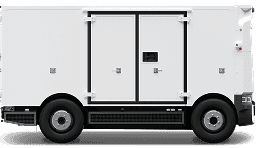
The Z10 RoboVan gives warehouse operators a cargo platform to assess against their loading process and transfer demand. In a proposed industrial shuttle, the receiving bay, dispatch windows and return journey deserve the same attention as the outward route. If loading regularly overruns, adding autonomous trips will not resolve the delay.
Procurement discussions should separate confirmed approvals, validation still to be completed and expected operating benefits. For example, a supplier may have relevant experience in heat and dust while still needing to demonstrate performance on the customer’s selected route. Similarly, an agreement to explore a market says little about the date on which a particular service can begin.
Saudi Arabia’s mandatory technical framework and Qatar’s coordinated deployment programme give logistics businesses concrete developments to work with. The next commercial step is a proposal that names the goods, facilities, roads and responsible operator, and establishes which permissions cover that journey. That level of detail makes the project assessable by both the customer and the relevant authorities.