Autonomous Vehicle Regulations in Singapore: From AV Trials to Autonomous Logistics Operations
Singapore's Current AV Regulatory Framework
For nearly a decade, Singapore has managed AV testing and deployment under the Road Traffic Act 1961 and the Road Traffic (Autonomous Motor Vehicles) Rules 2017, supported by a regulatory sandbox and LTA's authorisation framework. Under this framework, AV developers must obtain approval before conducting public-road trials and complete safety assessments through the Centre of Excellence for Testing and Research of Autonomous Vehicles (CETRAN).
As CNA reported in September 2025, Singapore had issued more than 50 authorisations for AV testing since 2017, with 19 AVs deployed on public roads at the time. LTA's current framework provides two assessment tracks for public-road AV deployments: Deployable AV Solutions and Developmental AV Solutions. Under the Deployable AV Solutions Assessment Track, qualifying AVs can progress toward driverless deployment through applicable stages including the M1 Test, Demo for Stakeholders, Document Review, Remote Operations Assessment, and Deployment Readiness Assessment.
The proposed framework builds on lessons from Singapore's existing AV regulatory regime and international practices. It is intended to clarify safety requirements, liability, insurance, enforcement, and data governance as AV deployment expands.
Accountability, Liability and Insurance
Remote operations introduce a new layer of human oversight for autonomous logistics. Singapore's proposed framework identifies four key participants in the AV ecosystem: AV technology entities, fleet operators, onboard Safety Operators (SOs), and Remote Operators (ROs). For RoboVan deployments, clear rules around these roles, liability, and insurance will help determine how incidents, third-party claims, and operational risks are managed as autonomous logistics expands.
Data and Cybersecurity
Data governance is another important consideration for autonomous logistics. RoboVans generate vehicle, location, operational, and incident data that may be relevant to both regulatory oversight and commercial operations. Singapore's proposed legal and regulatory framework addresses data protection, cybersecurity, and access to information needed for safety and incident investigation.
How Singapore's AV Sandbox Supports Autonomous Logistics
Singapore's AV regulatory framework provides a staged pathway for companies to validate autonomous driving systems before and during public-road deployment. The framework allows LTA and CETRAN to assess vehicle safety, operating conditions, and operational readiness before AVs progress to more advanced stages of deployment.
Depending on the applicable assessment track and deployment requirements, an AV may progress through stages including the M1 Test, Demo for Stakeholders, Document Review, Remote Operations Assessment, and Deployment Readiness Assessment.
For Zelostech's RoboVans, this staged approach provides a useful context for understanding the progression from public-road testing to commercial logistics operations.
Why ODD Matters for Autonomous Delivery Vehicles
For RoboVans, the Operational Design Domain (ODD) defines the conditions under which the vehicle is designed and authorised to operate. These can include the operating area, road type, speed, weather, lighting, and traffic conditions.
This is particularly important for logistics because routes can often be defined more precisely than passenger transport. A warehouse-to-distribution-centre route, for example, can be assessed according to its specific road layout, traffic conditions, operating hours, and required vehicle capabilities.
A clearly defined ODD helps ensure that the RoboVan operates within the conditions for which it has been validated and approved.
Why Singapore Is Well Suited for Autonomous Delivery Deployment
Singapore's operating environment has several characteristics that support route-based autonomous logistics.
Compact Urban Environment
Singapore's relatively compact geography and dense commercial areas make it easier to define operating areas and establish repeatable routes.
Controlled Logistics Routes
Logistics operations often follow structured routes and schedules. Warehouse transfers, industrial estate logistics, and airport cargo movements can therefore provide more predictable operating conditions than many passenger-transport scenarios.
Singapore has already supported autonomous logistics operations in both controlled and public-road environments.
Addressing Manpower Constraints
Autonomous vehicles can also help address manpower constraints in transport and logistics. LTA has highlighted the potential for AVs to take over repetitive driving tasks, particularly on predictable routes and within defined environments.
AV Testing and Digital Infrastructure
CETRAN provides a dedicated testing environment for evaluating AV performance under conditions relevant to Singapore's roads, supporting the validation process before public-road deployment.
What Singapore's AV Regulations Mean for Autonomous Delivery Fleets
Autonomous logistics in Singapore has progressed beyond the initial testing stage, with approved supply chain operations now taking place under defined public-road conditions. The experience of Zelostech's RoboVans shows how structured logistics operations can move through the regulatory pathway from supervised public-road trials to autonomous public-road operations with remote oversight.
Future autonomous logistics deployments are likely to favor repeatable demand and manageable road complexity. Warehouse transfers, distribution-centre logistics, business parks, campuses, and airport ground logistics are examples where routes can be clearly defined and monitored.
Customer-facing claims should remain precise. Approval to operate a specific autonomous vehicle under defined conditions is not the same as a license to operate an unrestricted national network. Operators should clearly communicate the route, operating conditions, safety measures, human oversight model, and applicable regulatory approvals.
As autonomous logistics scales, remote operations centres can support multi-vehicle monitoring, exception handling, field recovery, and incident recording. This is particularly relevant to Zelostech's Singapore deployments, where the Z10 progressed from supervised public-road trials to supply chain operations with remote oversight.
Example: Zelostech RoboVans for Structured Logistics
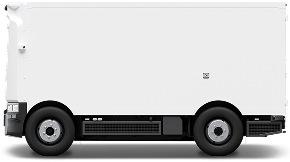
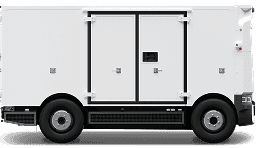
Zelostech's Z5 and Z10 RoboVans provide examples of how autonomous vehicles can be applied in structured logistics environments. The Z5 is designed for urban delivery and commercial logistics applications, while the Z10 has been used in Singapore for public-road cargo transportation.
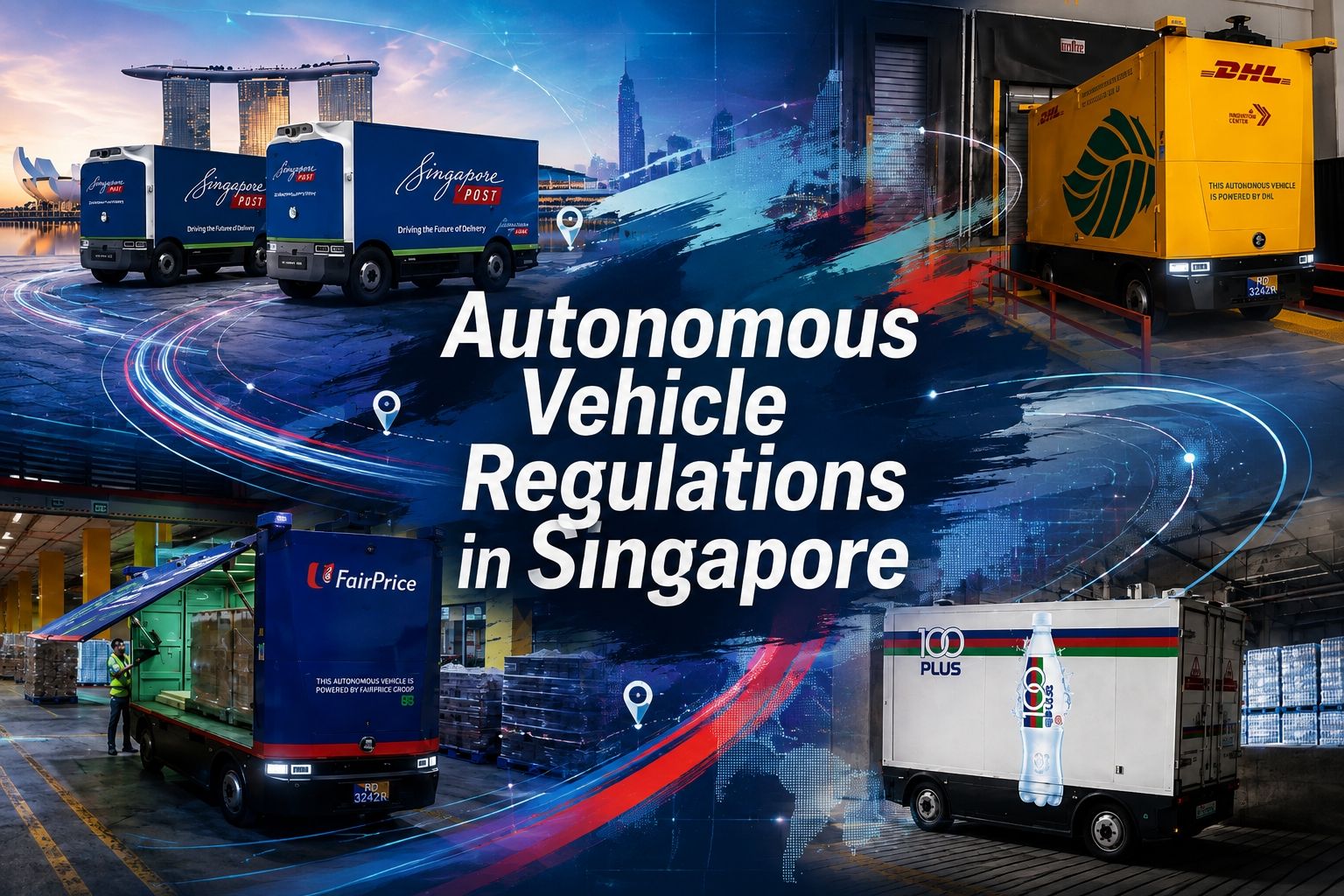
According to FairPrice Group, the Z10s are used primarily to transport palletised goods between its distribution centres, with a load capacity of up to 1.5 tonnes, a range of up to 210 km, and 10 m³ of cargo space.
The Singapore deployment demonstrates why structured supply chain routes can be a practical starting point for autonomous logistics. Instead of attempting to automate every type of delivery environment at once, operators can begin with defined routes, predictable cargo movements, and clearly established operating conditions.
Singapore's Autonomous Logistics Deployment Is Continuing to Expand
The regulatory progression is also being followed by continued commercial deployment. In April 2026, FairPrice Group announced a new autonomous vehicle route with Pokka to transport goods between a FairPrice distribution centre and Pokka's warehouse in Benoi.
The approximately 6 km round trip began trials in February 2026, with plans to transition to fully remote operations once the route receives LTA approval. FairPrice said it was already using AVs for more than 100 trips per week between its distribution centres and had seven AVs in its fleet, with plans to expand to close to 30.
This progression illustrates how autonomous logistics in Singapore is moving beyond individual technology trials toward repeatable commercial supply chain operations.
What Logistics Companies Should Prepare for Autonomous Vehicle Deployment
For companies preparing to deploy autonomous delivery vehicles on Singapore's public roads, the regulatory process provides a practical framework for assessing operational readiness. Key areas include route selection, operating environment, remote monitoring, safety procedures, and data management.
Route Selection
Operators need to define the routes and operating conditions under which the AV will operate. These conditions form part of the safety and deployment assessment.
For logistics fleets, clearly defined routes can also make it easier to establish operating boundaries, identify potential risks, and plan responses to unusual situations.
Remote Monitoring
For deployments moving toward remote operations, operators need appropriate communication systems, fallback procedures, situational awareness, and emergency response processes.
Remote operations also need to account for how vehicles will be monitored, how exceptions will be handled, and how field assistance or recovery will be coordinated when necessary.
Safety Procedures
Operators should establish procedures covering vehicle interaction, emergency response, incident handling, maintenance, and the responsibilities of relevant personnel.
Safety plans and assessment requirements are reviewed as part of the applicable LTA/CETRAN assessment process. During authorised AV trials, operators may also be required to maintain appropriate liability insurance coverage, including third-party risks, depending on regulatory requirements and trial conditions.
Data Management
AV deployments may require data recording and monitoring systems to support safety review and regulatory oversight. Operators should also establish appropriate data-security and access controls for vehicle, operational, and incident data.
Zelostech's Z5 and Z10 RoboVans therefore provide practical examples of how autonomous delivery vehicles can be applied within structured logistics environments while operators work through Singapore's evolving regulatory requirements.
Frequently Asked Questions About Singapore Autonomous Vehicle Regulations
Are autonomous delivery vehicles legal in Singapore?
Yes. Autonomous vehicles can operate on Singapore's public roads under approved regulatory conditions, subject to applicable safety assessments, operating requirements, and regulatory oversight.
What is the AV sandbox framework in Singapore?
Singapore's AV regulatory framework provides a staged pathway for testing and deploying autonomous vehicles on public roads, with safety assessments and LTA approval required at applicable stages.
What is ODD in autonomous vehicles?
An Operational Design Domain (ODD) defines the conditions under which an autonomous vehicle is designed and authorised to operate, including factors such as location, road type, speed, weather, and traffic conditions.
Why is Singapore suitable for autonomous delivery vehicles?
Singapore's compact geography, structured logistics routes, digital infrastructure, and manpower constraints make it a well-suited to route-based autonomous logistics.
Can RoboVans operate on public roads in Singapore?
Yes. According to FairPrice Group, Zelostech's Z10 RoboVans progressed from supervised public-road testing in 2024 to public-road supply chain operations with remote oversight in 2025. Future deployments and fleet expansion remain subject to applicable regulatory approvals, safety requirements, and operating conditions.
What approval is required for autonomous vehicles in Singapore?
Autonomous vehicles operating on Singapore's public roads must go through LTA's applicable authorisation and assessment process. Requirements depend on the type of deployment and applicable assessment track. Qualifying vehicles may progress to driverless operation with remote monitoring once the required stages are completed.