Which Routes Belong First on Your Fleet Electrification Roadmap?

The oldest vehicle in a fleet may be due for replacement, but its route may be a poor starting point for electrification. It could cover irregular distances, carry the heaviest loads or return to a depot with no confirmed charging capacity. Meanwhile, a newer vehicle may spend every day on a predictable transfer with a long overnight stop.
A fleet electrification roadmap should connect replacement decisions with transport duties. The first group of vehicles needs work it can complete reliably, charging access that will exist when service begins and a fallback arrangement the operator can actually use.
This approach gives managers a practical sequence: establish what the fleet does, select a manageable first group, test it against normal operating demands and expand when the evidence supports the next step. It keeps the discussion focused on which work to replace, rather than a general argument for electric vehicles.
Build the inventory around a working day
Begin with vehicle assignments and the routes they serve. Record total daily distance, trip frequency, load weight and volume, loading time, waiting time, shift pattern and the places where vehicles park. Include empty repositioning and the final return to base. A customer-facing delivery distance often captures only part of the duty.
Use enough operating records to expose variation. The busiest replenishment day, seasonal workload and occasional late finish may matter more than the average. Record the reason for those changes so the planning team can distinguish a repeatable peak from an unusual event requiring separate cover.
For recurring industrial logistics, look closely at short movements repeated throughout a shift. A modest route length can accumulate substantial distance and energy demand across many cycles. A parked vehicle may still be occupied by loading, receiving or another process, so stop duration should not automatically be counted as charging time.
The inventory should also identify the current vehicle's task-specific equipment and loading constraints. Cargo volume, restraint arrangements, access height and required auxiliary power can rule out an otherwise attractive replacement. Electric fleet planning becomes more credible when these requirements are visible before the shortlist is created.
Screen the route and depot together
Estimate the energy required for the whole duty using relevant vehicle data, then validate it in the intended conditions. Payload, gradients, stop frequency, ambient conditions and auxiliary equipment can change consumption. Retain a defined operating reserve and assess usable energy, rather than treating the battery's published capacity as fully available for work.
Next, check where and when the vehicle can replenish that energy. The US Department of Energy's fleet charging guidance identifies duty cycles, garaging locations, vehicle models and peak demand among the factors shaping charging decisions. For route selection, the immediate question is whether the required energy can be restored before the next assignment.
Confirm site access, electrical capacity, equipment compatibility, commissioning dates and responsibility for keeping chargers available. A planned charger should not be treated as an operational asset. Infrastructure delivery and vehicle procurement need a shared start date, with a decision point if either slips.
The screening table below is an illustrative decision aid. The example distances describe hypothetical daily duties, not vehicle performance claims. A route progresses only when both its transport requirements and its energy arrangements have been checked.
Candidate duty | Conditions to verify | Initial decision | Evidence needed before expansion |
Fixed 60 km warehouse shuttle | Stable load; overnight depot access; charging commissioned | Candidate for first trial | Full-shift completion, reserve and handover reliability |
110 km store round | Variable loading delays; late returns on peak days | Trial after schedule review | Peak-day energy and dependable charging window |
80 km split-shift service | Short midday stop; shared charger; little spare capacity | Resolve charging constraint first | Tested turnaround and fallback capacity |
Irregular 170 km assignment | Changing destinations and loads; no secure depot charging | Retain current cover for now | Representative duty data and a workable energy plan |
Define a first phase that can teach the fleet something
Choose a small, coherent group of duties with identifiable vehicles, receivers and depot support. The group should be large enough to reveal scheduling interactions but limited enough that disruption can be recovered. There is no universal percentage of a fleet that makes the right first phase.
Agree the trial's boundaries in advance. Specify the included shifts, load range, receiving points and operating conditions, along with who can approve a temporary substitution. A trial that quietly removes difficult trips may appear successful while leaving the original duty only partly served.
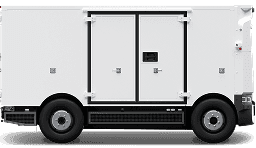
Electrification and autonomous driving require separate decisions. A route can suit an electric vehicle while still needing a driver. A RoboVan also needs suitable roads or site conditions, the relevant authorisation and workable loading, receiving and supervision arrangements. Keep those requirements visible instead of treating an electric replacement decision as automatic approval for autonomy.
Turn a 38 km trip into a full-shift assessment
A 38 km trip taking an average of 1.5 hours gives a planner a starting point for building a duty cycle. Those are the figures reported for DHL's Changzhou operation, where a Z5 carries goods between an express service centre and a display-equipment customer's production site. In its June 2026 announcement, Singapore-based Zelostech describes public-road commercial service at this Chinese project.
The route has identifiable endpoints and a measurable transport task. To assess a comparable replacement, count every required trip within the shift, then add loading, unloading and any return movements. The published 38 km figure is per trip; it should not be treated as the whole day's distance. Nor does the report supply energy consumption or a charging schedule from which another fleet could size its battery requirement.
Next, compare that complete duty with the vehicle specification. The Z5 RoboVan has a published maximum range of 230 km, maximum load of 1,800 kg and cargo space of 6.2 m³. Use these figures for initial screening, then validate energy and payload together under the intended conditions. They do not establish that all maximum values are achievable simultaneously.
During an initial deployment phase, collect energy and turnaround data across complete shifts, including loading delays and return journeys. Record every substitution and its cause so the results show how much work the new vehicle actually completed and how much remained with the rest of the fleet.
Expand only after the duty has been demonstrated
Phase | Work to complete | Decision to proceed |
Prepare | Confirm duties, charging, staff and fallback | Depot and vehicle ready for the agreed work |
Run and evaluate | Measure full shifts and record substitutions | Service and reserve targets met within tested conditions |
Extend | Check the next route group and infrastructure demand | Additional duties supported without weakening existing service |
Evaluate completed deliveries, on-time departures, charging availability, reserve at return and recovery interventions. Include energy, maintenance, infrastructure and support costs when comparing alternatives. A lower energy bill does not resolve a service failure caused by an unreliable charging window.
Retain evidence of difficult days and any conditions the trial has not yet covered. A successful mild-weather trial may justify a controlled next phase, while still leaving seasonal performance to be demonstrated. Expansion can be conditional rather than an all-or-nothing decision.
A useful electrification roadmap should make the order of deployment easy to explain. Routes with predictable loads, schedules and charging access can move first; infrastructure or scheduling constraints can be addressed before the next group follows; conventional vehicles can remain where the operating case is not yet ready. The result is a phased replacement of transport work based on evidence from real duties.