Indonesia Debates Road Law Reform. Where Do Driverless Cargo Vehicles Fit?
Indonesia’s debate over changes to its road traffic law brings a cargo-specific question into focus. Before buying a driverless vehicle to move parcels between an industrial estate and a regional sorting centre, an operator needs to know which authority will assess it, which roads it may use and who manages an interruption.
Indonesia is beginning to address these questions through transport planning and proposed legal reform, but current autonomous transport activity remains largely limited to site-specific demonstrations. Those projects provide useful evidence without amounting to general permission for Level 4 freight vehicles to operate on public roads.
The current law and the proposed change
Indonesia’s Road Traffic and Transportation Law, Law No. 22 of 2009, already sets a foundation for motor vehicles used on roads. It requires technical and roadworthiness compliance, and Article 49 provides for vehicle testing, including type and periodic testing. Those obligations matter for any proposed cargo vehicle: braking, dimensions, lighting and the intended load cannot be ignored simply because driving is automated. They do not, by themselves, explain how an automated driving system would receive permission to perform the driving task without an onboard driver. Indonesia’s national legislation portal publishes the law.
Indonesia is also considering changes to the wider road-transport framework. Government discussions on revisions to Law No. 22 of 2009 included vehicle categories and developments in steering and autonomous-vehicle technology. These discussions point toward a clearer legal basis for automated vehicles, but they should not be treated as an enacted national operating licence for driverless cargo services.
Earlier inter-agency work points to the questions officials are likely to examine. In 2024, Indonesia’s Ministry of Defence reported government work on an autonomous-transport roadmap and proposed presidential regulation. Its account referred to testing vehicle technology and supporting facilities, as well as the suitability of operating procedures and personnel. It was a report on policy preparation, not a regulation that a company can cite as its public-road authorisation. Separate 2026 rules covering app-based passenger, food and goods delivery services concern digital-platform transport and should not be confused with an approval pathway for driverless vehicles.
Nusantara tested a passenger system in mixed traffic
Nusantara, Indonesia’s planned capital, offers a useful example of how an authority can examine autonomy in a real transport environment. The Nusantara Capital Authority evaluated an autonomous rapid transit vehicle in mixed traffic during a September–October 2024 proof of concept. Its November 2024 published assessment recommended further work: the autonomous function had not performed reliably in the site conditions, and the team identified improvements involving mixed-traffic safety and communications. This was a passenger-transit assessment of a particular system, not a judgement on every autonomous vehicle or a cargo-vehicle licence.
The logistics opportunity at Nusantara is also distinct from that transit trial. A Capital Authority announcement on its logistics hub described technology ambitions including delivery robots and electric vehicles. An announced technology lan does not show that autonomous parcel vans have been approved for routine public-road service there. For freight operations, the more relevant takeaway is how the vehicle performs on the actual route, including its interaction with traffic, infrastructure and handover points.
The route is the commercial unit of analysis
Consider a hypothetical daily movement from a postal sorting building to a nearby parcel collection point. A closed industrial road, an access-controlled estate road and an ordinary public street may look similar on a map, yet they raise different access and supervision questions. The operator needs to identify who controls each segment and whether the proposed journey crosses a boundary. A test accepted inside one site should not be presented as permission to serve another site across public traffic.
Vehicle approval and service design also need separate evidence. The vehicle dossier would describe its physical characteristics and automated functions. The operating plan would show where it will travel, how it yields at gates and junctions, how staff load and receive parcels, and what happens when the route is blocked. These are practical questions for a future application or regulator discussion, not a published Indonesian Level 4 checklist. Keeping the two dossiers separate prevents an electrical or type-testing document from being mistaken for an approval to run unattended deliveries.
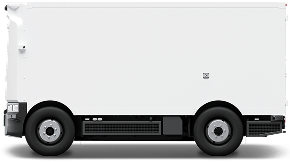
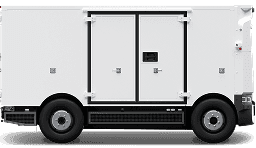
The customer’s process is equally important. Sorting centres work to dispatch cut-offs; receiving teams need predictable arrival information and a secure handover. A RoboVan can only improve that leg if loading, dispatch, remote support and exception recovery fit the existing shift pattern. Before scaling a trial, an operator can measure completed trips, interventions, missed handovers and the time staff spend resolving them. That evidence is more useful than a demonstration video when a regulator and customer assess the same route.
A cargo example from Singapore, with a clear boundary
Zelostech, a Singapore-based company working in autonomous logistics, offers an adjacent operational example through its work with SATS at Singapore’s Changi Airfreight Centre. According to Zelostech’s September 2026 announcement, an autonomous cargo vehicle service is being deployed and validated under live operating conditions within the Free Trade Zone. The initial vehicle can carry up to 800 kg between SATS airfreight terminals and freight forwarders’ warehouses. The announced benefit is more responsive point-to-point cargo movement; higher-capacity vehicles and round-the-clock use remain future possibilities in that account.
The Changi operation is useful as a comparison because it combines defined endpoints, controlled access and an established freight-handling workflow. Indonesian airports or industrial zones would still require their own assessment of vehicle suitability, site access and road permissions. Zelostech’s broader airport and industrial logistics applications help illustrate the types of goods movements a RoboVan platform may address; site access and road permission still have to be established locally.
Indonesia’s regulatory framework for driverless cargo is still taking shape. Current vehicle rules, site-specific autonomous trials and the 2026 legislative debate provide useful building blocks, but they do not yet amount to a general national pathway for regular L4 freight operations on public roads.