Japan’s 2027 L4 Ambition and the Path to Wider Autonomous Delivery

Japan’s ambition to expand automated mobility by fiscal year 2027 creates an opportunity for autonomous delivery. For a logistics operator, however, the useful question is specific: what would make a recurring warehouse transfer or replenishment route ready for driverless operation? A national target can encourage investment, but the transport service still needs an appropriate vehicle, a workable operating plan and permission for the activity concerned.
The distinction matters when interpreting the widely cited target of automated mobility services in at least 100 locations by FY2027. This is an expansion target, not a declaration that L4 delivery vehicles will have unrestricted access throughout Japan. For businesses planning deployment, 2027 is best treated as a planning horizon for more repeatable services, with individual projects progressing on their own evidence.
What the national target actually covers
The March 2026 METI mobility roadmap retains the FY2027 milestone of 100 or more locations within its automated mobility programme. Passenger services and wider automated transport development form part of that policy context. The figure should not be relabelled as a commitment to nationwide autonomous parcel delivery.
For freight users, the opportunity lies in the capabilities that broader implementation can build: local coordination, operating experience and a clearer understanding of service costs. Those benefits become commercially useful when applied to a defined movement of goods. A transfer between two buildings, for example, has loading times, receiving capacity and recovery arrangements that a general mobility target cannot specify.
The appropriate starting point is a transport task with measurable demand. Operators should establish the daily number of journeys, the cargo profile and the time currently spent waiting for a driver or an available vehicle. This makes it possible to assess whether automation addresses an actual bottleneck before committing to route expansion.
Vehicle approval and operating permission address different questions
Japan already has a legal route for specified automated operation equivalent to L4. The National Police Agency’s explanation states that the permission system took effect in April 2023. Its existence means a project can be assessed against established requirements rather than waiting for the 2027 target to create a legal pathway.
Technical acceptance and permission to run a service remain separate. Vehicle requirements fall within the transport ministry’s framework; the specified automated operation regime involves permission from the relevant Prefectural Public Safety Commission. The NPA’s operating framework calls for an operating plan, designated responsibilities and arrangements for incidents. It also provides for remote monitoring and a supervisor where the required functions are not performed onboard.
In practice, an operator should explain how the vehicle will respond when a loading entrance is blocked, how assistance will reach a stopped vehicle and who coordinates with police. These arrangements need to fit the proposed route. A capable driving system cannot resolve a receiving warehouse’s access restrictions or decide who may unload a delayed consignment.
Choosing a route that can support a dependable service
For an initial logistics route, repeatability has commercial value. Fixed collection points make handovers easier to organise, while familiar traffic conditions make performance easier to compare across shifts. The route should still be assessed during busy periods, poor visibility and maintenance activity. A quiet demonstration can conceal the conditions that determine daily availability.
Teams should also separate driving performance from shipment performance. A vehicle may complete every journey while goods wait too long for loading. Useful measures include completed transfers, missed dispatch windows, interventions and the time needed to restore service after a stop. These measures connect technical validation to the customer’s transport requirement without assuming that a larger fleet automatically improves throughput.
A Tokyo logistics centre provides a practical reference
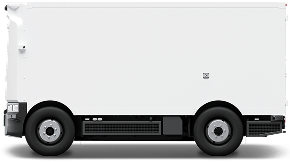
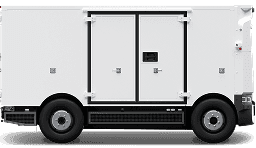
Singapore-based company Zelostech offers a relevant example through its work at Tokyo Ryutsu Center in Heiwajima. In its September 2026 update, the company reported three RoboVans at the site, backed by paying customers. Its account describes indoor and outdoor validation, movement across floors one to seven and an approximately two-kilometre route on the first floor.
The reported work included ramps, pedestrian yielding, stopping behaviour, rainy conditions and night operation. These details show why logistics deployment involves more than selecting a road segment. A vehicle carrying goods through a multi-level facility has to connect driving behaviour with the physical layout and the way tenants use the building.
The report supports a description of customer-backed site deployment and continuing validation. It does not establish nationwide Japanese L4 authorisation or permission for unrelated public-road routes. The project is a useful operational reference, while public-road L4 deployment remains subject to Japan’s approval process.
For another facility considering a similar service, the useful lesson is to examine transitions. Does the loading team know when the RoboVan will arrive? Can pedestrians see it before entering a ramp? Is there enough space to pause without blocking other movements? These questions help translate a successful vehicle movement into a dependable logistics process.
Making each deployment easier to repeat
The next step is to document what can be reused and what requires fresh assessment. Dispatch procedures, maintenance records and staff training may be adaptable across facilities. Ramp geometry, pedestrian flows and public-road conditions require local review. Expansion becomes more manageable when those differences are identified before a vehicle is assigned to a new site.
For customers evaluating the RoboVan platform, the commercial comparison should begin with the shipment and its operating environment. Cargo capacity alone says little about whether a service will meet collection deadlines. The vehicle must fit the handover process, available charging time and expected response when a journey cannot be completed.
The same principle applies to the company’s wider logistics applications. A retail replenishment movement and an internal warehouse transfer may use related technology, yet their receiving arrangements and approval needs can differ substantially. A deployment plan should explain those differences rather than treating every autonomous logistics task as interchangeable.
Japan’s 2027 ambition can support broader adoption if operators turn individual routes into services that remain reliable through ordinary disruption. For delivery businesses, progress will be visible in completed shipments, repeat customers and well-supported route extensions. That is a more useful measure of nationwide development than assuming that one target date will remove every local operating constraint