Plan the Route Before Testing Autonomous Delivery in New Zealand
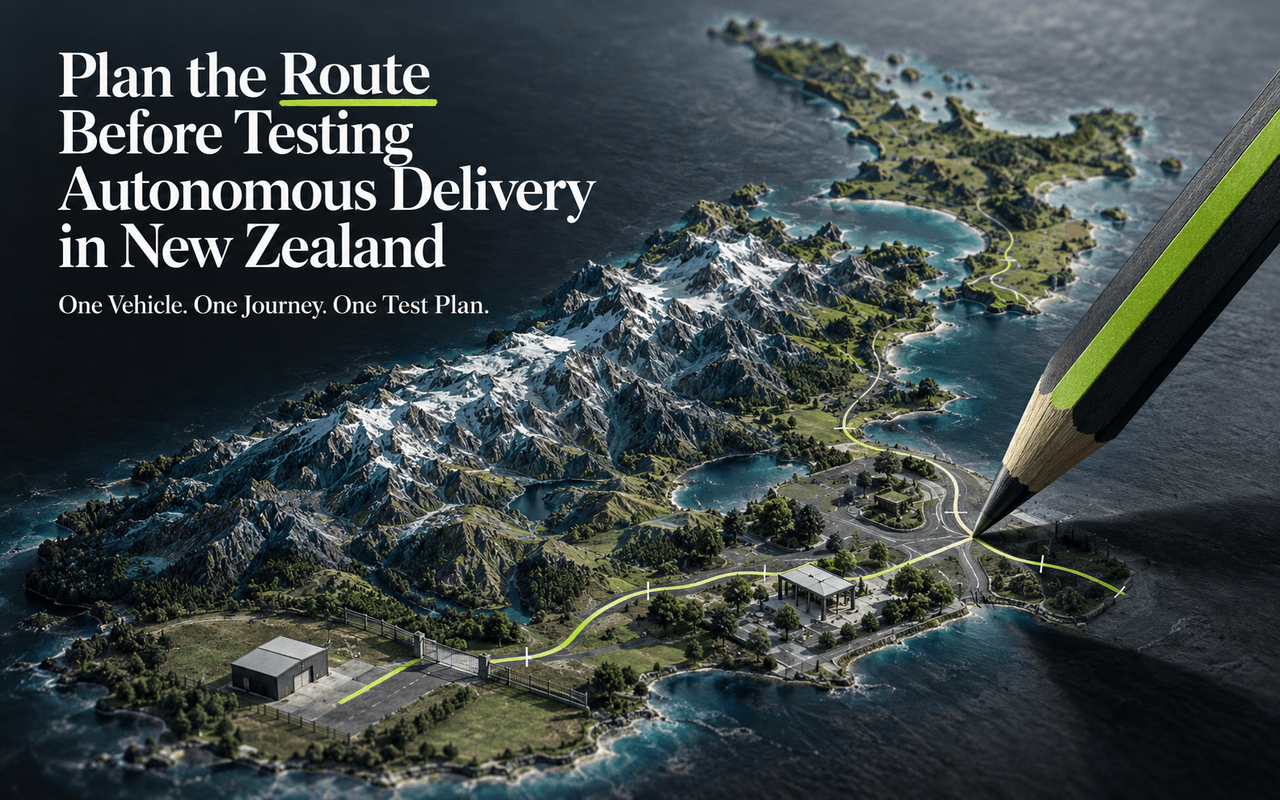
Check the vehicle against existing road rules
New Zealand's Ministry of Transport explains that legislation does not expressly require a driver to be inside a vehicle for it to operate legally on a public road. Yet many rules were written on the assumption that someone is driving, and every motor vehicle on a public road remains subject to the Land Transport Act 1998 and applicable vehicle and road-use rules. The absence of an express onboard-driver clause is therefore a starting point for analysis, not a general permission for driverless deliveries.
The question is which rules apply to the actual design. A production van modified with automated steering and braking raises different certification issues from a vehicle built without conventional controls. The same applies to the proposed activity: test runs with a designated operator, regular transfers of goods and operation on private industrial property may need different assessments. A public road can begin earlier than a logistics planner expects, including at a shared access point. The responsible road authority and the vehicle's entry and inspection requirements must be identified rather than inferred from the customer's property boundary.
For non-standard vehicles, section 166 of the Land Transport Act allows NZ Transport Agency Waka Kotahi to grant exemptions from specified rule requirements subject to conditions and a safety assessment. The Ministry describes this as appropriate for individual AV tests and trials, while warning that repeated exemptions are not a sustainable model for a large influx of vehicles. An exemption addresses specified requirements for a particular case; it does not create a general right to operate an autonomous commercial delivery service.
Build a test plan that NZTA can review
The NZ Transport Agency's published testing process begins with contacting the agency and working through the vehicle's compliance or exemption needs. It then addresses the licence class of the test operator, an on-road safety management plan and trade plates for relevant test vehicles. The agency says the operator should hold a full licence for the vehicle class whether or not that person sits inside during testing. Those steps describe a supported test process, not a simplified commercial-service permit.
A freight test plan needs to translate those requirements into daily operations. It should state where loading staff release the vehicle, how it yields at the depot exit, who watches for a blocked collection point, how a safe stop is achieved and how the load is secured. The route's road crossings, people on foot and connectivity gaps matter as much as whether the vehicle can navigate between two map points. These are operational questions a customer and a vehicle provider must resolve together; they should not be presented as conditions already imposed on every New Zealand deployment.
The load itself also changes the assessment. A van configured for parcels may stop frequently at kerbs; a vehicle carrying groceries could need predictable receiving times and temperature checks. If a proposed trial changes its body, controls or cargo-handling equipment, the operator should revisit the original compliance assessment rather than assume it still covers the modified vehicle. Recording these changes during testing creates a clearer basis for deciding whether the same vehicle can serve the next customer site.
Ministry work on automated vehicles also identifies a continuing policy issue: many offences and responsibilities still assume a human driver. Regular driverless delivery therefore raises a separate accountability question: who is responsible when the automated system is engaged, particularly during an incident or interaction with police? That question cannot be settled by describing the vehicle as SAE Level 4. It has to be addressed in the applicable approval and operating arrangements.
Gather evidence before extending the route
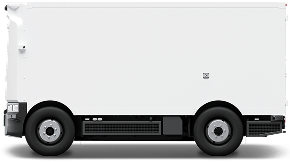
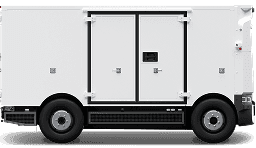
Zelostech, a Singapore-based company, offers a useful example of how to build evidence before seeking a broader freight operation. At Austria's DigiTrans Test Center, its Z5 RoboVan entered commissioning and reliability testing under a five-stage evaluation. Zelostech's April 2025 project account says the programme examines vehicle safety, system reliability and integration with loading, site infrastructure and energy management. The test centre can recreate intersections and traffic conditions so that responses are observed repeatedly. The announcement also describes temperature-controlled logistics as a testing focus; it does not establish that refrigerated deliveries were already running commercially.
The Austria programme does not transfer any operating rights to New Zealand, but it provides a useful model for separating vehicle validation from workflow validation. The first shows how the vehicle handles a defined event; the second shows whether staff can load it, dispatch it, receive goods and respond when a journey does not finish normally. That distinction helps a regulator inspect a specific route and helps the customer decide whether automation improves the service.
Choose a first freight leg with clear handovers
An operator considering warehouse transfer or local parcel distribution should begin with a leg where the origin and destination can support reliable handover. Vehicle dimensions, load restraint, access control and a safe stopping place can be evaluated before extending into a busier road network. The proposal should identify whether each segment is on a public road and which existing requirements would need compliance evidence or a specific exemption.
This approach also protects the commercial decision. A test that proves navigation but leaves receiving, remote oversight or incident handling unresolved is not yet a repeatable delivery service. Conversely, a bounded task with clear responsibilities can produce evidence useful to both customer and regulator. New Zealand's current framework makes such preparation possible on a case-by-case basis while work on more complete automated-vehicle rules continues. For a logistics team, progress begins with a well-described route and vehicle, then a test plan that answers the legal and operating questions raised by that journey.