One Parcel, Two Paths: Spain’s Rules for Delivery Robots and Road Vehicles

A retailer wants to move an online order from a neighbourhood store to a nearby customer. One proposal sends a small robot along pedestrian space. Another loads several orders into a driverless cargo vehicle that travels on the road and meets staff at an agreed stopping point. The commercial aim is similar, but Spanish authorities would examine different vehicles, spaces and activities. That fork in the journey is a better way to understand Spain’s delivery rules than searching for a single “autonomous robot licence”.
The first question is where the machine will actually travel. The second is whether the company seeks permission for a defined test or for an ongoing transport service. A route that touches both a pedestrian area and a public road may require separate analysis for each leg. Neither a national road test nor a municipal experiment can be stretched to cover every delivery in a city.
The pedestrian leg: Madrid looks at public space
Madrid’s Sustainable Mobility Ordinance shows why a pavement device cannot be treated as a miniature road van. In the city council’s explanation of Article 233, pilot activities and autonomous vehicles using pedestrian streets, protected pedestrian areas or other public areas intended for people on foot need prior municipal authorisation. The examples expressly include autonomous or remotely controlled robots distributing goods. This is a rule about use of Madrid’s public space; it should not be presented as a uniform Spanish authorisation for every municipality.
For a delivery operator, the municipal review reaches into everyday service design. A robot may need to pause at a crossing, negotiate a shop entrance or wait outside a customer’s building. Its plan should explain how it yields to pedestrians, where it may stop and who retrieves it if it blocks a passage. Those answers affect accessibility as well as reliability. They are quite different from proving that a cargo vehicle can keep its lane on a traffic road.
Madrid’s Villaverde mobility sandbox gives a useful boundary. The council announced a proposed last-mile grocery robot trial involving Goggo Network, Glovo and delibera.AI. It was a named experimental project, not an enduring right for every operator to send robots across the capital. Any current proposal still has to be matched to the precise streets and to the city’s applicable procedure.
The road leg: DGT authorises a defined test
Switch the order to a vehicle running between a distribution centre and a shop. Spain’s Directorate-General for Traffic (DGT) then becomes central to the public-road test. Its ES-AV programme, introduced through Instruction VEH 2025/07, covers automated and remotely driven vehicles in specified categories, including L, M and N. An applicant describes the vehicle, operator, intended road area or route and safety arrangements. The DGT publishes information on authorised trials, so a reader can inspect the scope of an actual test rather than assume that a national framework grants open-ended road access.
ES-AV distinguishes controlled, extensive and pre-deployment testing. The first two stages require an onboard safety operator. The pre-deployment stage can remove that person if the vehicle design and authorisation support it; remote safety supervision may still be required. A trial without an onboard operator is still a trial, with conditions set for that vehicle and operating area. It does not itself supply a commercial freight-service permit or approval for a different customer route.
Law 9/2025, Spain’s Sustainable Mobility Law, places these tests within a wider policy programme. Articles 81–84 establish principles for automated vehicles, create a one-stop office to facilitate public-road tests and call for relevant road passenger and goods-transport authorisation requirements to be adapted where appropriate. The law provides a framework for introducing automated vehicles into Spain’s transport system, while testing, vehicle registration, transport permissions and local use of public space still remain separate questions.
The difficult part may be the change of space
Many useful delivery services cross a regulatory seam. A road vehicle may stop near a pedestrian precinct, while a person completes the final handover. A pavement robot may begin outside a supermarket whose loading facilities are reached by ordinary vehicles. Drawing the complete trip exposes that seam: origin, every public segment, stopping point, transfer of custody and the location where a failed machine can be removed safely.
This map also improves the commercial proposal. If the shop cannot release orders at the planned time, a technically successful vehicle will wait. If the receiver cannot reach the stopping point, the last 50 metres may erase the value of automating the previous two kilometres. The operator should decide who loads, who receives, how an exception is reported and whether local staff can reach an immobilised vehicle. The permission sought should describe that real workflow, not a tidier demonstration route.
The DGT’s published trial information reinforces this route-specific approach. Authorised projects include different vehicle types and use cases, such as passenger shuttles and automated street-cleaning vehicles, with each test tied to a defined vehicle and operating environment. Approval for one of those projects says nothing about an unrelated parcel vehicle or pavement robot.
Match the vehicle to the delivery leg
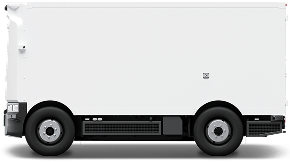
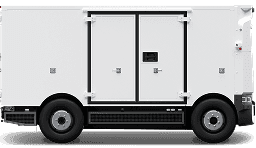
For retail replenishment, a road vehicle might carry several orders from a distribution centre to a shop, where staff take custody of the goods. A proposal using Zelostech’s Z5 RoboVan would fall on the road-vehicle side of this comparison: the product page describes a logistics vehicle, not a pavement robot. An individual order travelling along a footway to a customer’s door raises a different set of questions about pedestrians, entrances and municipal permission.
The proposed vehicle fixes the starting point for an approval discussion, not the outcome. An operator considering a Z5 route in Spain would have to identify its vehicle category, exact streets, stopping place and safety arrangements for a DGT test application. A pavement-robot operator would instead need to examine the city’s rules for pedestrian space. Neither a product description nor a successful test would settle the permissions for a later transport service; the applicable vehicle, goods-transport and local requirements would still need to be checked.
A successful distribution-centre-to-shop run would say little about a robot moving through a pedestrian street, while a city-authorised pavement experiment would not validate a cargo vehicle on public roads. Treating both as “delivery automation” may be useful commercially, but it obscures the separate authorities and operating conditions that determine whether either service can run.
Spain’s delivery rules become much easier to read once the journey is split into its actual parts: what the machine is, where it travels and whether the activity is a test or an ongoing transport service. A pavement robot in Madrid and a road-going cargo vehicle may serve the same order, but they enter different approval processes because they operate in different spaces.