Public Procurement of Autonomous Delivery Starts with the Route
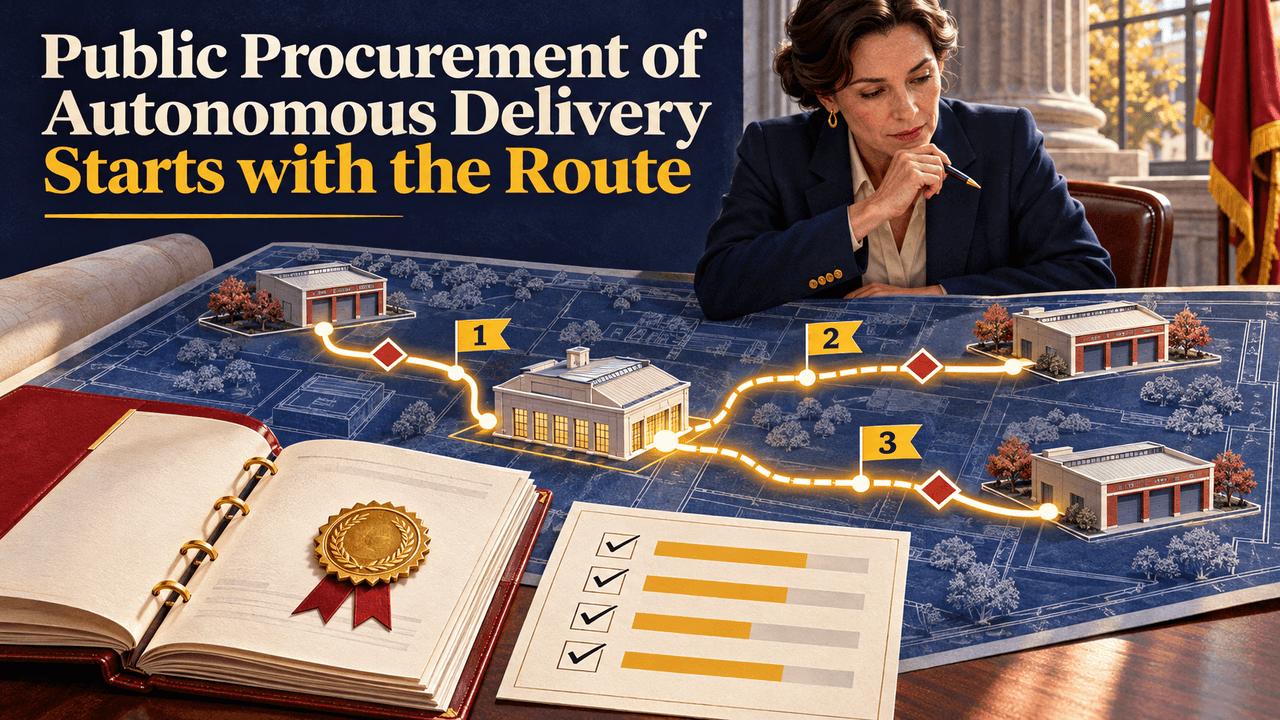
Imagine a council that moves tools and supplies from a central store to several maintenance depots every day. It wants to test whether an autonomous vehicle can handle that predictable transport leg. The purchasing team faces an immediate choice: buy vehicles, buy a managed delivery service or commission a limited evaluation. The tender will look different for each option, even when the route is the same.
This is why public procurement of autonomous delivery starts with the task, not a preferred machine. The authority needs to know who owns the vehicle, who supervises it, who loads the goods, how an interrupted journey is recovered and which costs remain after any pilot. Procurement rules control how the public buyer selects a supplier. Transport rules control whether and where the proposed service can operate.
Decide what the authority is buying
A vehicle purchase transfers an asset to the authority but leaves it to arrange maintenance, supervision and system support unless these are in the contract. A managed-service contract can assign more of those duties to the supplier, while still requiring the authority to define the service it expects. A research or trial contract may be the right instrument when the operating method has not been proved for that site. Calling every arrangement a “fleet purchase” hides these different responsibilities.
The specification should begin with goods and handovers: the largest load, number of daily trips, collection and delivery windows, access at each loading point and who signs off a completed transfer. For warehouse transfer, the relevant interface may be a dock or internal road. For a municipal route on public streets, the buyer also needs to identify the road authority and the vehicle approval pathway. A tender for a prototype demonstration should not promise a full service from day one.
Competition rules differ, but vague criteria help no one
For UK contracting authorities within its scope, the Procurement Act 2023 has applied to new procurements since 24 February 2025. It offers an open procedure and a competitive flexible procedure. Government guidance says the flexible route can be designed for innovation, including stages in which suppliers explain or demonstrate a solution. Award criteria must relate to the subject matter of the contract, be sufficiently clear, measurable and specific, and provide a proportionate way to assess tenders. The assessment methodology and the relative importance of multiple criteria must also be disclosed in the procurement documents.
In the EU, Directive 2014/24/EU permits technical specifications expressed as sufficiently precise performance or functional requirements. Its innovation-partnership procedure can combine development stages with a possible later purchase when the agreed performance levels and maximum costs are met. Whether a particular public buyer can use that route depends on the applicable national procurement law and the facts of the contract. An innovation partnership is not a shortcut to award a routine delivery contract without competition.
Singapore’s Ministry of Finance describes transparency, open and fair competition, and value for money as the principles behind government purchasing. Agencies publish requirements and evaluation criteria through GeBIZ, and price is only one consideration alongside quality, reliability, risk and long-term cost. Those principles can guide a delivery specification, but they do not mean a named supplier has won a public contract merely because its vehicles operate in Singapore.
Turn a route into an assessable service
The tender can ask for evidence that a vehicle can complete a defined duty cycle, rather than a brochure claim about autonomy. Useful measures include completed trips within the delivery window, cargo condition at handover, time lost to remote intervention, availability during agreed hours and response time when a vehicle stops. The buyer should state how each measure will be tested and what constitutes a failure. The same method must apply to all bidders.
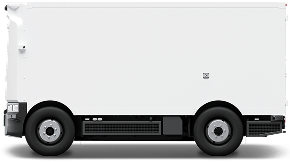
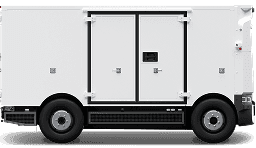
For a duty involving substantial palletised goods, a buyer could assess Zelostech’s Z10 RoboVan as one candidate against those supplier-neutral measures. The product page presents a high-capacity cargo vehicle; it does not establish that the council’s road, dock or timetable are suitable. Both the vehicle and service team still have to be evaluated against the authority’s own duty cycle.
FairPrice Group provides a useful operating example in Singapore. It reports using autonomous vehicles to transport palletised goods between its distribution centres, with more than 100 trips made each week and up to 1.5 tonnes of goods carried per trip. A separate supplier route between POKKA’s warehouse and a FairPrice distribution centre began trials in February 2026. For a tender, those examples show the difference between an established recurring operation and a new connection still being validated. The 100-trip figure applies to FairPrice’s AV fleet and should not be treated as a Z10-specific performance guarantee.
Costs also need a common basis. A vehicle price can look attractive while excluding remote-supervision staffing, charging, software, maintenance or retrieval after a breakdown. A service fee may include those items but leave cargo handling with the council. Requiring bidders to price the same operating days, vehicle availability and handover duties makes the comparison meaningful. Data access, incident reporting and exit arrangements belong in the contract because they determine whether the authority can audit performance and switch suppliers later.
Award the contract only for work that can be authorised
A tender can make the start of service conditional on later operational approvals, subject to the local procurement rules. It cannot turn a procurement award into road access. In Singapore, LTA requires AV applicants to identify the exact proposed trial area, classify it as a public road or path and proceed through the applicable assessment track before deployment.
In the UK, the 2026 trialling code allows ordinary public-road trials without a dedicated AV permit when the vehicle is roadworthy, appropriately insured and supervised by a safety driver ready to take control. More complex trials may require separate vehicle authorisations or exemptions, including a Vehicle Special Order in some cases. A contract schedule should tie each phase to the approval actually needed in that place.
The practical handover is from a successful evaluation to a service the authority can monitor. Specify who decides whether the route expands, what evidence triggers that decision and what happens if approval is delayed or withdrawn. A strong tender can remain open to competing vehicle designs while still being precise about the transport task, safety responsibilities, performance evidence and total cost the authority expects from the winning supplier.