South Korea’s Autonomous Delivery Robot Regulations Explained

South Korea regulates sidewalk delivery robots differently from larger autonomous vehicles used for warehouse and freight transport. Pedestrians may change direction abruptly, shop entrances can become crowded and a short crossing can determine whether an order arrives on time. The country’s outdoor mobile robot regime addresses this pedestrian environment through a defined safety-certification pathway.
For retailers, delivery platforms and logistics operators, the central question is whether the proposed robot and service fit that pathway. Calling a machine autonomous does not determine its legal status. The applicable rules depend on the robot’s category, certified configuration and where it is intended to operate.
How certified robots gained access to sidewalks
South Korea’s revised Intelligent Robots Development and Distribution Promotion Act took effect for this purpose in November 2023. Together with amendments to the Road Traffic Act, it enabled safety-certified outdoor mobile robots to use sidewalks with pedestrian status. The government’s explanation of the reform describes applications including delivery and patrol, alongside obligations intended to protect other sidewalk users.
Pedestrian status has practical consequences. Robots must follow the applicable traffic rules, including signals and crossing requirements. Operators have duties concerning correct control and safe operation. The service design should account for waiting at crossings and yielding space, rather than assuming that a direct line between a shop and a customer is a usable delivery route.
For an order fulfilment team, this changes the scheduling calculation. Travel time should include interactions with people, constrained passages and safe stopping. A delivery promise that ignores those interruptions can place pressure on a service precisely where cautious behaviour is needed.
Certification covers a defined robot configuration
The certification framework sets a maximum mass of 500 kilograms, including the load, and a maximum speed of 15 kilometres per hour. These limits appear in the implementing rules. They describe eligibility boundaries, not a recommendation to move at the maximum speed through every pedestrian space.
Businesses should also understand what is assessed. The certification notice, revised in November 2025, addresses the robot together with the control equipment needed for its operation. It provides documentary and product assessment. Buyers should establish that the equipment and configuration they intend to deploy correspond to the certified system.
That review should happen before a procurement specification is finalised. A change to the body, load arrangement or operating system may affect the basis on which a model was assessed. The current Act’s certification provisions include change certification, subject to exceptions for changes unrelated to operational safety, and provide for post-certification oversight. Certification is part of the product’s continuing compliance record.
The process has changed since the original launch
Older descriptions often refer to 16 assessment items and a 60-day review period. Those figures should not be carried forward without checking the updated framework. In its 2026 report on robot-sector reforms, the industry ministry states that the review period was reduced to 30 days and the assessment items consolidated into eight during the previous year.
A shorter review process can help suppliers plan product introduction, but it should not be treated as a guaranteed launch timetable for an individual delivery service. Preparing complete evidence, resolving issues and organising the actual operation remain separate work. The relevant question for a customer is whether the proposed system has completed the applicable process and whether its certificate remains valid.
The Korea Institute for Robot Industry Advancement publishes certification-related notices. Checking the current record is more useful than relying solely on a vendor’s old announcement. Procurement records should identify the model and certificate being relied upon so that later changes can be reviewed against the same baseline.
Insurance and daily operation need to be planned together
The government’s explanation of the sidewalk regime makes insurance or mutual-aid coverage mandatory for operators using these robots on sidewalks. Coverage should be arranged for the actual service, with clarity over the operating entity and the equipment involved. Assigning those responsibilities early helps avoid a gap between the supplier’s product obligations and the delivery business’s operating duties.
An operational plan should also explain how staff respond when a robot cannot proceed. A blocked passage, lost connection or inaccessible receiving point may leave a customer waiting even when the vehicle has behaved safely. Dispatchers need a way to pause the delivery promise, contact the recipient and arrange assistance. These are practical service-design recommendations; they should not be confused with a claim that every such procedure is a separately prescribed certification test.
Where sidewalk delivery and RoboVan logistics meet
The distinction between vehicle categories becomes useful when designing the wider distribution network. Small deliveries through pedestrian areas and consolidated inventory transfers can serve different parts of the same supply chain. Each movement needs equipment and permissions suited to its environment.
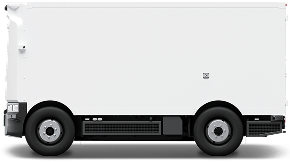
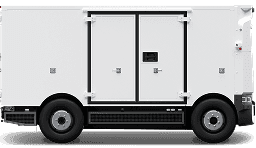
Singapore-based company Zelostech offers an example of the larger transfer task through its Z10 RoboVan trial at CEVA Logistics’ Singapore facility. The company’s September 2026 account describes a pilot moving pallets, totes and other inventory between floors using the facility’s existing ramps. The reported purpose includes more flexible internal movements and better use of staging areas.
This is a Singapore intra-hub trial, not a Korean sidewalk robot deployment or evidence of Korean certification. A vehicle designed for consolidated freight movement can support an upstream logistics leg, while a qualifying sidewalk robot might serve a different final delivery leg. Any combined network would need to establish approvals and handovers for each activity separately.
Choosing the right boundary for a delivery service
For a business evaluating the RoboVan platform alongside smaller robots, the useful comparison begins with shipment size, handover location and route type. A warehouse transfer does not become a sidewalk service because both vehicles drive autonomously. Equally, sidewalk certification should not be treated as approval for a larger road-based cargo vehicle.
South Korea’s certification regime gives eligible outdoor mobile robots a clear role in sidewalk delivery, but it does not extend to larger road-going autonomous cargo vehicles. Logistics operators should define the shipment, route and handover first, then select the vehicle and regulatory pathway that fit that part of the network.