The Gate That Changes an Autonomous Vehicle Test in the Netherlands
The first boundary is access, not distance
A short route can cross more legal and operational boundaries than a longer one wholly inside a controlled facility. The operator needs to mark each segment, who controls access, who else uses it and where goods change hands. A private loading area may be a useful starting point for testing repeat transfers. Once the plan includes a public road, the team must examine the relevant vehicle-test procedure and any conditions attached to the proposed location.
RDW, the Dutch vehicle authority, says there are no predesignated testing locations for automated systems. Under its prototype procedure, a manufacturer submits a test programme and RDW assesses where and how the work can proceed safely. The procedure can lead to temporary individual national approval for tightly controlled public-road testing of a prototype. It is tailored to a vehicle and test, not a standing licence for all delivery routes.
That flexibility allows a logistics team to start with the actual transport leg rather than searching for a designated national “autonomous zone”. The route can be assessed segment by segment, including why each area is suitable for the proposed test. For industrial park logistics, the site map needs to show shared yards, loading movements and any point at which the trip leaves the controlled premises. Site rules and other applicable duties still matter even if a vehicle never reaches a public street.
A public-road prototype goes through stages
RDW describes an ordered assessment: documents and risk analysis, testing in a closed environment, then possible public-road work under strict conditions. Approval can specify the test area, duration, insurance, driver arrangements, type of test and data transfer. A successful loop inside a depot may support the next stage of testing, but it does not automatically extend the same vehicle onto a public-road delivery route.
Under the RDW prototype procedure, a safety driver must always be in the vehicle and able to take control. The authority’s guidance covers driver-assistance systems as well as automated-driving systems, so the application also needs to say which function is being examined and who is performing the driving task. A public-road test with an onboard safety driver provides evidence about that test. It does not, by itself, establish a driverless commercial freight service.
A passenger project makes the boundary visible without settling a cargo question. In 2025, RDW reported temporary individual national approval for a Rotterdam airport shuttle after closed-site testing. A trained safety driver remained aboard for the public-road trip between a metro station and the airport. This shows the staged prototype route in use. The vehicle carried passengers, not freight, and its approval cannot be carried over to a logistics operator’s vehicle or route.
Changing the driver’s location changes the legal path
Dutch law also provides a route for certain experiments with a driver at a distance. The Experimenteerwet, in force since July 2019, allows such trials under strict conditions through a separate ministerial permit process. A government assessment distinguishes that path from the earlier public-road exemption approach, which kept a driver in the vehicle.
That difference has to be resolved early in the project design. A remote-driver experiment follows a different legal path from a prototype test that requires an onboard safety driver. The applicable legal basis, vehicle function, proposed operator role and permit conditions must be read together. A test labelled “autonomous” tells a prospective customer very little unless those elements are clear.
Put the freight task inside the right boundary
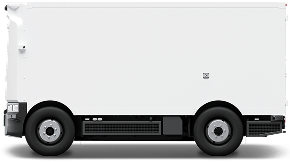
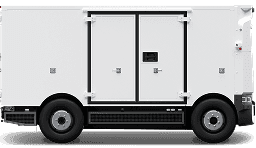
The line on the map now becomes a business choice. For repeated goods movement between buildings on a controlled site, a pilot can measure loading time, interference with other traffic, staffing at handovers and recovery from interruptions. Zelostech and PuraMobi identified that kind of transfer as the starting point for candidate RoboVan pilots in a 2026 announcement, with goods moving between facilities on commercial premises. The announcement described proposed work, not a completed Dutch public-road trial or an operating permit.
PuraMobi’s stated local role covers distribution, technical work, parts, warranty and regulatory guidance. For a site team, that puts maintenance and parts availability into the pilot design, alongside the vehicle test. The partners said they would assess candidate sites on cost, staffing, transport efficiency, energy use and vehicle performance. At the loading bay, those measures become specific questions: how many people are needed to release and receive a load, and how long does the handover take? An efficient drive can still leave the customer with an awkward handover. If the route eventually crosses into public access, its road-test basis must be assessed separately; the controlled-site work cannot establish nationwide delivery permission.
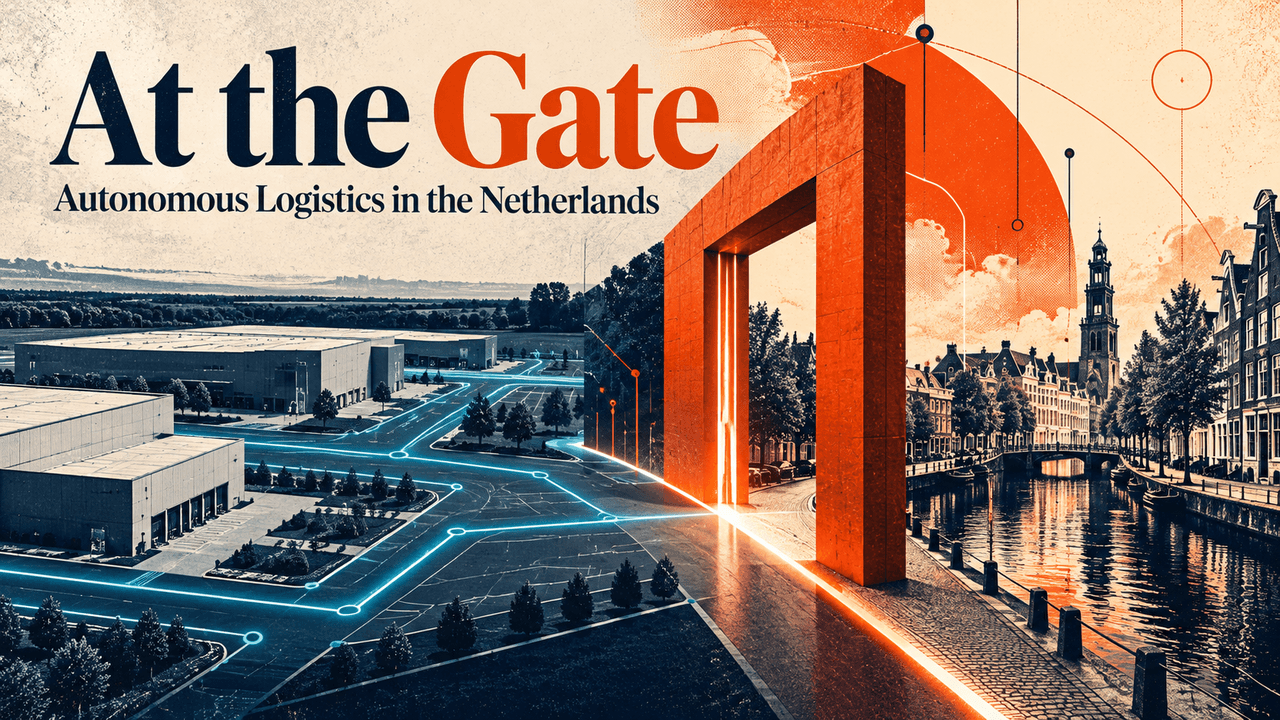
The gate is the point where the project changes character. Inside a controlled site, the test can show whether an autonomous vehicle fits the daily goods workflow. Once the route enters public access, the vehicle, location, driver arrangement and approval basis all need to be considered again. Dutch rules give operators flexibility over where testing takes place, while keeping the claims from each trial tied to the conditions that were actually approved and tested.