UAE Autonomous Delivery Vehicle Policy and the KEZAD Deployment
The UAE is building a structured framework for autonomous vehicle deployment, with Abu Dhabi establishing systems for registration, permitting, testing, monitoring, and commercial operations. For autonomous logistics, this creates a clearer path for introducing driverless vehicles into approved operating environments.
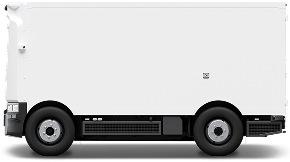
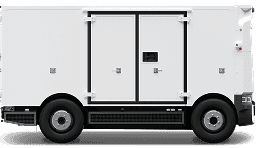
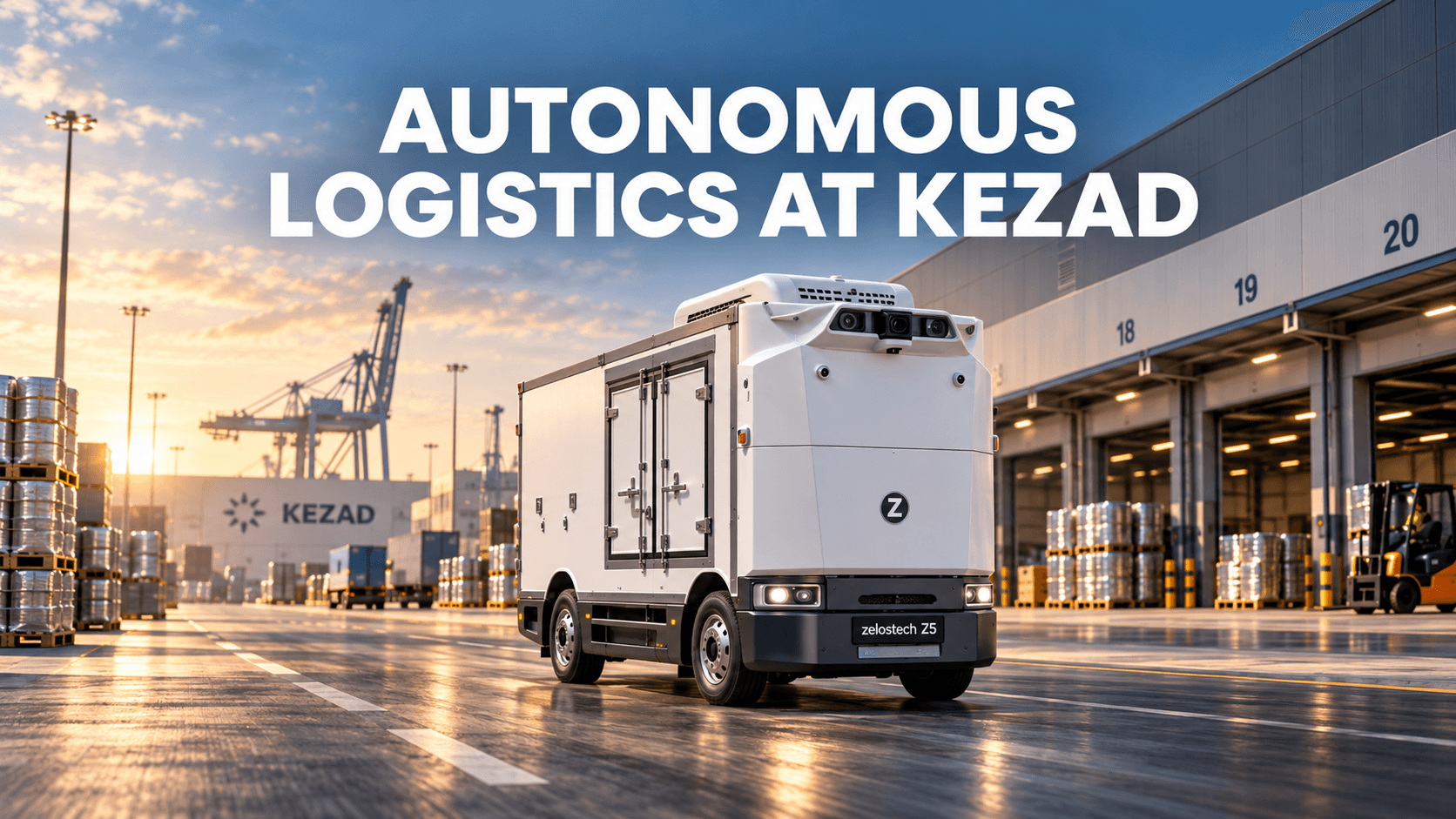
One example is Khalifa Economic Zones Abu Dhabi (KEZAD), where Zelostech announced the trial deployment of its RoboVan fleet at the Metal Park Storage Hub on January 20, 2026. The deployment brings autonomous logistics into an industrial setting where vehicle operations can be assessed alongside established storage and goods-handling activities.
Abu Dhabi’s Autonomous Vehicle Policy Framework
Abu Dhabi has established dedicated systems for managing autonomous vehicle testing and operations. The Integrated Transport Centre (ITC), operating under the Abu Dhabi Mobility brand, oversees autonomous vehicle activities and provides the regulatory infrastructure for their deployment in the emirate.
In November 2025, ITC launched the Autonomous Vehicles Integrated Testing, Operations, and Management System (AViTOMS). The centralized platform covers the process from registration, applications, and permitting through trial supervision, technical data analysis, and commercial operations. It also supports real-time vehicle tracking, operational monitoring, incident management, and intervention when required.
Abu Dhabi has also moved into fully autonomous commercial vehicle operations. In November 2025, ITC announced the start of commercial Level 4 driverless vehicle operations and issued the first two operating permits for fully autonomous vehicles.
The regulatory infrastructure continued to expand in 2026. In July, Abu Dhabi Mobility opened a central control room for real-time monitoring of autonomous vehicle operations across the emirate and introduced dedicated license plates for autonomous vehicles used in trial programmes and commercial services.
For autonomous logistics projects, these measures provide a defined process for vehicle approval, deployment, and operational oversight.
Why KEZAD Matters for Autonomous Logistics
KEZAD provides an established industrial environment where autonomous vehicle operations can be connected to existing storage and goods-movement workflows.
The Metal Park Storage Hub is particularly relevant to this type of operation. Its first phase covers around 93,000 square metres and includes 26 overhead cranes and 55 loading bays for trucks and automated guided vehicles. The facility is designed to support industrial storage and goods handling within KEZAD.
Such an environment has defined access points, loading areas, transport routes, and delivery locations. These characteristics create a practical setting for evaluating how an autonomous vehicle fits into established logistics processes.
At this level, vehicle autonomy is only one part of the operating model. The vehicle also has to work within site access procedures, loading activities, transport movements, and interaction with other vehicles and personnel.
RoboVan at the KEZAD Metal Park Storage Hub
At the Metal Park Storage Hub, the RoboVan deployment places Zelostech’s autonomous logistics technology in a real industrial environment rather than a standalone test setting.
The project allows the RoboVan to be evaluated within actual storage and goods-movement operations, including how it integrates with existing site procedures.
The industrial setting also adds a different operating context to RoboVan’s deployment experience. Autonomous logistics vehicles may need to work across different environments, from structured industrial facilities to other defined logistics routes. Each environment brings its own access requirements, traffic patterns, loading processes, and operational constraints.
The value of the KEZAD deployment therefore lies in the connection between the vehicle and the logistics workflow around it. The vehicle has to complete its assigned movements while fitting into the way goods are received, stored, handled, and moved across the site.
What the KEZAD Deployment Means for Autonomous Delivery
The KEZAD deployment puts the focus on operational fit: can an autonomous vehicle complete defined transport tasks reliably while working within the workflow around it?
In an industrial setting, operators can evaluate practical measures such as completed transport missions, route reliability, vehicle utilization, availability, and intervention requirements. These indicators provide a more useful view of autonomous logistics performance than vehicle capability alone.
The surrounding infrastructure also matters. Autonomous operations need to work with loading areas, site access procedures, established transport routes, and other vehicles and personnel operating within the facility.
For logistics operators, this integration is central to building a repeatable transport process. An autonomous vehicle needs to perform consistently while operating within the physical and operational constraints of the site.
From KEZAD to Wider Autonomous Logistics Applications
Abu Dhabi’s regulatory infrastructure is developing alongside real-world autonomous vehicle operations. AViTOMS provides a centralized mechanism for managing applications, permits, trials, deployment, and operational oversight, while the central control room and dedicated vehicle plates add further tools for monitoring autonomous operations.
Against this regulatory and operational background, the KEZAD deployment gives RoboVan a local industrial environment in which its autonomous logistics operations can be evaluated under real operating conditions.
The project adds regional operating experience to Zelostech’s RoboVan deployments and provides a practical foundation for future autonomous logistics applications in the UAE