UN WP.29 and the Path Toward Global Autonomous Vehicle Standards

When an autonomous logistics vehicle enters a new market, much of its safety evidence may already exist, but regulators still need that evidence in a form they can evaluate and recognize. International standards can make that process more consistent across markets.
The United Nations World Forum for Harmonization of Vehicle Regulations, known as WP.29, is central to this work. Its role concerns vehicle technical regulation. Logistics operators still need to establish the permissions and conditions for the service they intend to run. Understanding that boundary helps businesses make realistic plans for international expansion.
What WP.29 Adopted for Automated Driving Systems in 2026
On 24 June 2026, UNECE announced that WP.29 had adopted a global regulatory framework for fully driverless automated driving systems. The announcement identifies safety management, credible testing, structured safety evidence and monitoring during operation as central elements. This is a significant step toward a common basis for evaluating automated driving.
For buyers, the immediate value is a clearer language for questioning a supplier. Which driving conditions does the safety argument cover? What evidence supports performance in those conditions? How will emerging problems be detected after deployment? These questions apply directly to logistics services whose usefulness depends on repeated operation through changing daily conditions.
The June milestone should be distinguished from domestic implementation and any particular operating permission. A supplier’s statement that its development follows international standards needs to identify the instrument, applicable version and supporting evidence. A reference to WP.29 alone cannot establish that a vehicle has been approved for a customer’s route.
The importance of the legal instrument
WP.29’s work uses different international agreements. Under the 1958 Agreement, UN Regulations support reciprocal recognition of approvals among contracting parties applying the relevant regulation. The scope of recognition depends on participation and the applicable regulatory provisions; membership does not mean every party applies every regulation.
Global Technical Regulations under the 1998 Agreement follow a different route. They establish harmonised technical requirements for domestic consideration and implementation, without the same system of reciprocal type-approval recognition. UNECE’s explanation of the agreements makes this distinction explicit. A global technical text and an approval recognised in a particular market are different forms of evidence.
This matters when a logistics group wants to standardise procurement across countries. The vehicle specification may be shared, while approval documents and operating requirements differ. Procurement teams should ask which evidence can travel with the product and which parts of the proposed service need a fresh local assessment.
Turning safety evidence into useful operating decisions
UNECE’s 2026 announcement describes validation using simulation, track testing and real-world trials. It also highlights ongoing monitoring and the recording of safety-relevant data. For a delivery fleet, these activities should connect to recognisable events, such as a pedestrian emerging near a loading area or an obstacle appearing on a familiar route.
Consider a distribution-centre approach where parked vehicles obscure the view. A useful evaluation would vary the obstruction, approaching traffic and pedestrian movement, then explain the vehicle’s response. The decision-maker needs to understand why the evidence covers the proposed operation. A large total mileage figure cannot, by itself, show how often the relevant situation was encountered.
The same reasoning applies after a change. A revised route, different cargo arrangement or new software release can alter the assumptions behind an earlier assessment. Operators should have a practical way to identify the affected evidence and decide what requires validation again. This is an operating discipline that supports consistent service as the fleet develops.
European validation shows why local evidence remains valuable
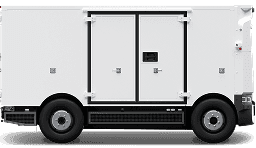
Singapore-based company Zelostech provides a useful reference through its Z5 RoboVan deployment with DigiTrans in Austria. The company’s published account describes commissioning and reliability testing, with a five-stage evaluation covering safety, system reliability and logistics integration. It also identifies temperature-controlled logistics as an area for testing.
The value of this example is the connection between vehicle behaviour and the transport task. A logistics vehicle must interact with loading processes, facility infrastructure and operating schedules. For temperature-sensitive goods, customers also need to evaluate the cargo-handling process and how delays are managed. These concerns turn a technical demonstration into evidence relevant to a potential service.
The Austria report describes a validation programme. It should not be presented as proof of a particular UN approval or unrestricted European commercial operation. International alignment can improve the structure of evidence, while the status of an individual project remains defined by its actual testing and approval milestones.
A port setting raises a different set of questions
In September 2026, Zelostech reported that Belgian public authorities experienced RoboVans on the K102 route at the Port of Antwerp-Bruges. Its account of the government and public-sector visit links the activity to a continuing RoboVan Experience Center established with the port authority. The reported event is evidence of local engagement and demonstration, not a substitute for an inspected approval certificate.
For logistics customers, a port demonstration can make an operating proposal easier to evaluate. Observers can examine how a vehicle shares space, where it waits and how the service would interact with existing movements. Questions raised in that setting can then be translated into test scenarios and operating procedures. The site supplies context that a generic standards statement cannot provide.
Together, the Austria and Belgium examples illustrate two different contributions to deployment decisions: repeatable validation and practical review in a working logistics environment. Neither needs to be overstated as international certification to offer value to a prospective customer.
Building procurement around evidence that remains usable
When evaluating a RoboVan platform, a logistics group should ask for a clear account of the proposed operating conditions, the evidence supporting them and the process for handling changes. The contract should also identify who maintains operational records and how significant events are reviewed with the customer.
WP.29’s 2026 ADS framework gives manufacturers, regulators and customers a more consistent basis for evaluating automated-driving safety. For autonomous logistics companies, the practical benefit is the ability to carry structured safety evidence from one market to the next, while still addressing the local approvals and operating conditions required for each deployment.