Unions Bring Autonomous Delivery to the Bargaining Table
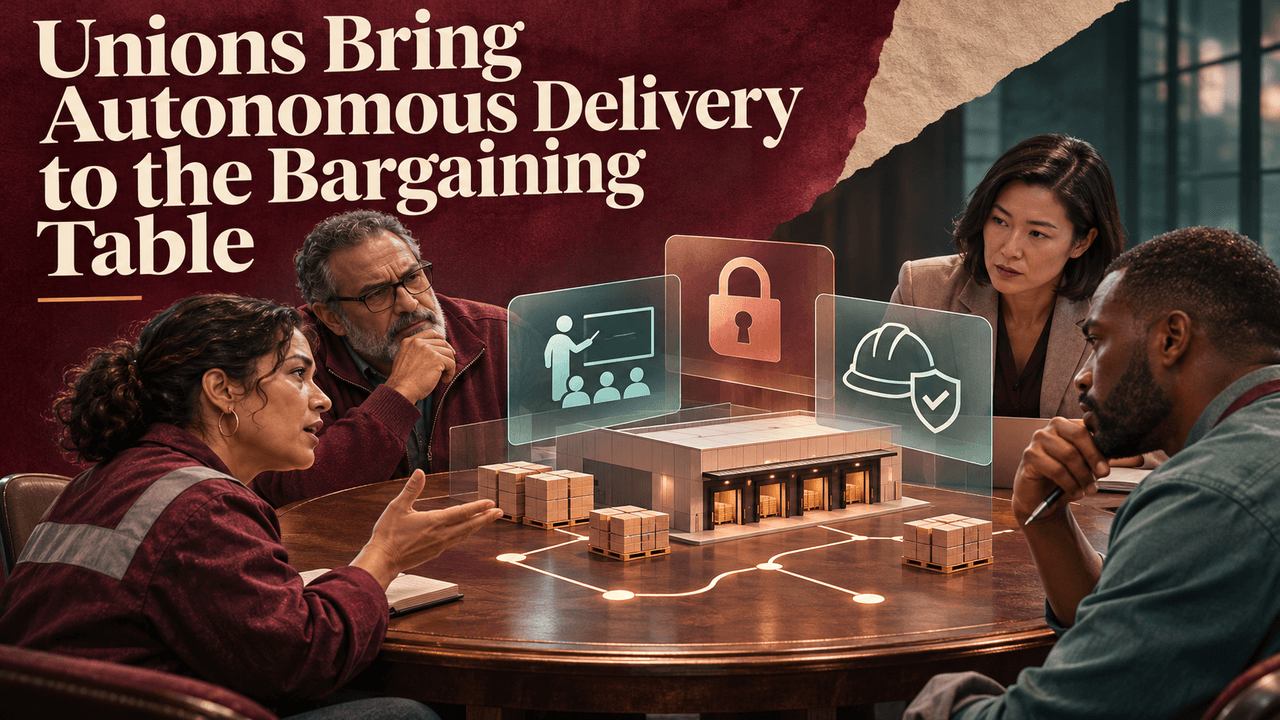
A driverless vehicle may take over a repeated trip between two distribution centres. The pallets still need to be prepared, loaded and received. Someone must decide what happens when a bay is blocked, a shipment is late or the vehicle needs assistance. The shift in work is the reason trade unions have entered autonomous-delivery policy debates: the road permit answers whether a vehicle may operate, while the workplace must decide how people and the new system work together.
Union responses differ by country and employment model. Some unions bargain directly over whether a technology can be introduced into a parcel network. Others seek worker involvement in public policy, training plans and rules for data collected at work. Treating all of these positions as a simple vote for or against automation misses what they are trying to govern.
A parcel contract that makes bargaining part of the timetable
The clearest delivery-specific example is the US Teamsters’ 2023–28 national agreement with UPS. Article 6 defines technological change to include significant changes affecting bargaining-unit work, wages, hours or working conditions, and specifically addresses technologies such as drones and driverless vehicles used to transport, deliver or pick up packages. During the agreement’s term, UPS must give the National Negotiating Committee six months’ notice before seeking to implement the specified technologies and bargain over their effects. A joint UPS-Teamsters technology committee reviews proposed changes, including the training required when technology creates or modifies bargaining-unit work.
This is a collective agreement governing UPS and its covered workers, not a US-wide law banning autonomous delivery. It also does not describe every type of road-going cargo vehicle or every third-party logistics contract. Its practical significance is timing: operational plans cannot assume that a regulator's vehicle authorisation settles the employment consequences of changing a delivery route.
The same agreement limits discipline based solely on GPS or telematics data, subject to its specified dishonesty exception and other terms. This matters because autonomy brings more vehicle and task records into the operation. A route dashboard designed for safety or dispatch can also become a record of individual workers' movements if data use is left undefined. The employment rules for such records need their own discussion.
The wider transport movement is asking for a voice earlier
The International Transport Workers' Federation (ITF) adopted global principles on artificial intelligence in September 2026 following a conference that brought together unions and workers from road transport, warehousing, ports, rail, aviation and other transport sectors. The principles call for workers and unions to be informed, consulted and able to negotiate before AI systems affecting them are introduced, alongside human oversight, data rights, safety protections and a fair share of productivity gains. These are union demands and bargaining principles, not binding global autonomous-vehicle regulation.
Their relevance to delivery is easy to see at a loading dock. A route change may alter a driver's job, a warehouse worker's schedule and a remote supervisor's workload at once. Consulting only the person who formerly drove the vehicle would miss the people who prepare cargo, clear blocked bays and recover stalled movements. An operator considering warehouse transfer can describe the task in enough detail for workers to identify those effects before a fleet expands.
Consultation should start with the work as it is actually done. How often is a load ready when the vehicle arrives? Who has authority to stop a departure when the manifest or seal is wrong? Which exceptions require a person on site, and which can a remote team resolve? These questions make a proposed role or training plan testable. A vague promise to “reskill staff” does not tell workers which jobs will exist, what they will pay or how employees can qualify.
Training can follow the work that remains
Singapore's National Trades Union Congress (NTUC) described an adjacent logistics example in May 2026. At ST Logistics’ Clementi Loop Supply Hub, warehouse automation was accompanied by job redesign and training, with the company saying productivity gains would support business growth rather than job cuts and that workers would be retrained for new roles. The example concerns warehouse automation rather than autonomous road delivery, but it shows how training can be tied to specific changes in the work instead of presented as a general promise of reskilling.
For a driverless freight leg, the training map might cover loading standards, safe interaction at bays, remote escalation, vehicle recovery and incident reporting. Which employees perform each role is a matter for the operator, applicable labour rules and, where relevant, bargaining arrangements. A technology supplier cannot decide those questions for a customer simply by providing the vehicle.
What an operating freight route shows—and leaves open
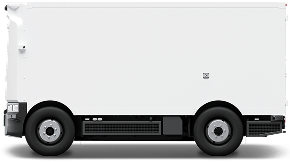
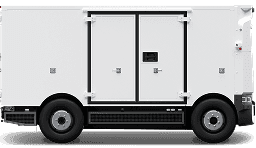
Zelostech's Singapore arrangement with FairPrice Group offers an operating task against which to ask the workforce questions. Zelostech reported in October 2025 that its Z10 RoboVans were approved for remotely supervised driverless supply-chain work within and between FairPrice distribution centres in Benoi, Joo Koon and Sunview Road. The account describes palletised goods and routes of up to 5.5 kilometres. It followed supervised public-road work; the announced expansion in vehicle numbers was a plan, not proof that every proposed vehicle was already in service.
That deployment divides the transport task between vehicles performing the repeated transfer and people preparing, loading, receiving and supervising the movement. Zelostech later reported that the FairPrice deployment enabled drivers to move into higher-value delivery roles, while FairPrice itself has described the technology as reducing manual work and allowing staff to focus on more complex tasks. These are company-reported outcomes from one operation, not evidence of a particular union agreement, headcount result or guaranteed workforce effect elsewhere. For another operator, the question still has to be answered locally: if a repeated driving leg changes, what work will employees perform instead, and what training and employment terms accompany that change?
For unions, that question can be raised through bargaining, consultation or advocacy. For a logistics operator, it belongs in the deployment plan alongside route safety and service performance. Public authorities can also ask how a proposed trial will affect jobs and skills, but the law and procurement conditions vary by jurisdiction; a permit should not be described as automatically requiring a specific workforce package.
The workforce discussion is most useful before the vehicle becomes part of the daily schedule. Show employees and their representatives the planned cargo leg, the tasks that remain with people, the new responsibilities being created and the data the system will generate. That gives both sides something concrete to review as the route expands and makes it easier to identify where training, bargaining or operating procedures need to change.