Can One Permit Cover Every Autonomous Delivery Vehicle in Vietnam?
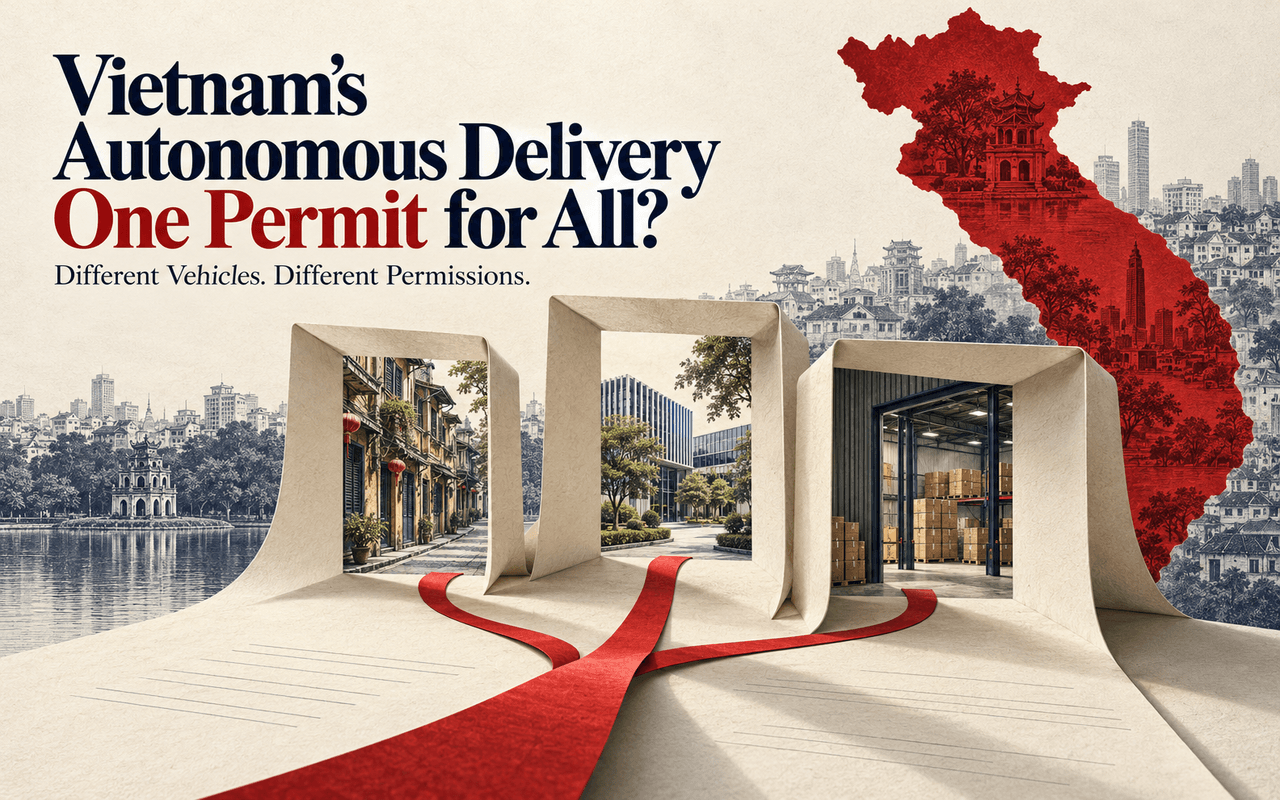 Could the same permission cover a road-going cargo van, a compact delivery robot and a vehicle moving goods inside a warehouse in Vietnam? They may all navigate automatically, but their vehicle categories and operating environments differ. For a logistics company, classification decides which application route is worth pursuing before a detailed delivery route is drawn.
Vietnam has a national process for licensing certain “smart traffic vehicles” and, separately, a Hanoi trial that includes delivery robots. The two developments answer different questions. A qualifying motor vehicle can follow a published permit procedure; Hanoi’s authorisation applies to one operator, fixed places and specific safeguards. Neither can be assumed to cover every autonomous delivery task.
The national permit starts with vehicle classification
The consolidated Law on Road Traffic Order and Safety, published by the National Assembly Office in March 2026, provides the current legislative context. The government’s Decree 151/2024 sets out an operating-permit procedure for “smart traffic vehicles”, while subsequent amendments and 2026 administrative changes affect the procedure. The relevant category concerns motor vehicles that can automate part or all of driving, route determination and responses to traffic situations. That definition makes vehicle classification a serious first step for an operator; it should not be stretched to every small device that delivers an item.
The current provincial traffic-police procedure lists an application, proof of technical-safety and environmental-quality certification, and owner documentation for an operating permit. It states a processing period of up to five working days after a complete, valid file is received. The published procedure also covers reissue and withdrawal. These are useful specifics for planning an application, but they are not evidence that a particular make, route or delivery service has already been approved.
Since April 2026, responsibility for smart-vehicle operating permits has been delegated from the central level to provincial police authorities. Published provincial procedures now direct applicants to the traffic police, meaning teams relying on older guidance may otherwise prepare the correct technical evidence for the wrong authority. Before procurement, operators should confirm the current classification and filing route for the proposed vehicle.
Hanoi’s delivery-robot trial draws a different boundary
A separate development is particularly relevant to delivery. In August 2026, Hanoi authorised a 24-month controlled trial for Phenikaa-X covering robotaxis, buses, cleaning robots and delivery robots. The delivery element is at Hoa Lac High-Tech Park, where the stated tasks include food deliveries to office buildings. The reported routes are fixed, with defined daytime operating hours and weather limits. Delivery robots must have staff supervising directly on site; the approved project does not establish unattended city-wide operation.
Hanoi’s decision also temporarily sets aside some ordinary vehicle-certification, registration and inspection requirements for that project, subject to substitute safety measures and testing evidence. These exemptions belong to the specific authorised trial. They should not be read as a general waiver for other companies or places. The government account also describes reporting, supervision and data-handling duties, including limits on transferring raw data and high-definition maps abroad. Such controls affect practical choices about fleet monitoring, cloud systems and incident investigation, not only vehicle engineering.
The project’s distinction between vehicle types is revealing. Robotaxis and buses have an onboard safety supervisor ready to intervene, while cleaning and delivery robots require direct on-site supervision. A larger road-going cargo van carrying goods between logistics facilities would need its own category and operating arrangement assessed; the Hanoi robot trial does not settle that question. Nor can its test results be counted as an autonomous postal or retail-delivery service already operating at scale.
Define the freight task before filing
An operator planning a road-going delivery vehicle needs a proposed task before it can make sense of the rules. Moving parcels between a sorting centre and a nearby depot creates different interfaces from carrying meals between buildings on a technology campus. The vehicle class, cargo handling, road access, crossing points and receiving staff should be described separately. A proposed operating area should identify where a trip begins and ends, who controls each road segment, and how a stranded vehicle would be recovered without blocking traffic.
The dossier also needs to reflect what is actually being sought. Technical-safety certification and the smart-vehicle permit address one layer. A controlled local demonstration may carry additional route, supervision and reporting conditions. Approval for one model, site or trial cannot be reused as proof that another operator may offer an unrestricted commercial service. This is a planning distinction derived from the published procedures and the Hanoi example, rather than a claim that every Vietnamese locality has adopted Hanoi’s terms.
Zelostech’s Vietnam agreement is at the exploration stage
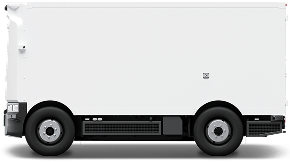
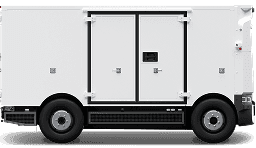
The Singapore-based company Zelostech, which develops the RoboVan platform for goods transport, has a relevant but carefully bounded Vietnam connection. Its April 2026 announcement of an MoU with Vietnam-based 365Group says the partners will explore autonomous logistics vehicles, market development and possible pilot deployment. The agreement was signed in Ho Chi Minh City. The MoU establishes a framework for cooperation, but it does not yet represent a permitted or commercially operating RoboVan service in Vietnam.
That limitation clarifies what the next useful milestone would be. For example, a proposed parcel transfer between two logistics sites would require a named vehicle, a defined route, the relevant safety file and an agreement on dispatch, receiving and recovery responsibilities. If a local trial were pursued, its actual supervision and data obligations would need to be recorded. Those are proposed project questions, not claims about work Zelostech and 365Group have already carried out. Zelostech’s postal delivery use case shows one type of transport task a RoboVan can be designed around; it does not confer Vietnamese operating rights.
Can one permit cover every autonomous delivery vehicle in Vietnam? The available rules do not support that assumption. A qualifying road vehicle has a published smart-vehicle permit procedure; Hanoi has allowed a tightly supervised delivery-robot trial for another operator; Zelostech has disclosed a local exploration agreement. A buyer should match one vehicle and one logistics leg to the relevant authority and any project-specific conditions, then judge performance within the permission actually granted.