What Autonomous Delivery Sensors Record—and Which Privacy Rules Apply
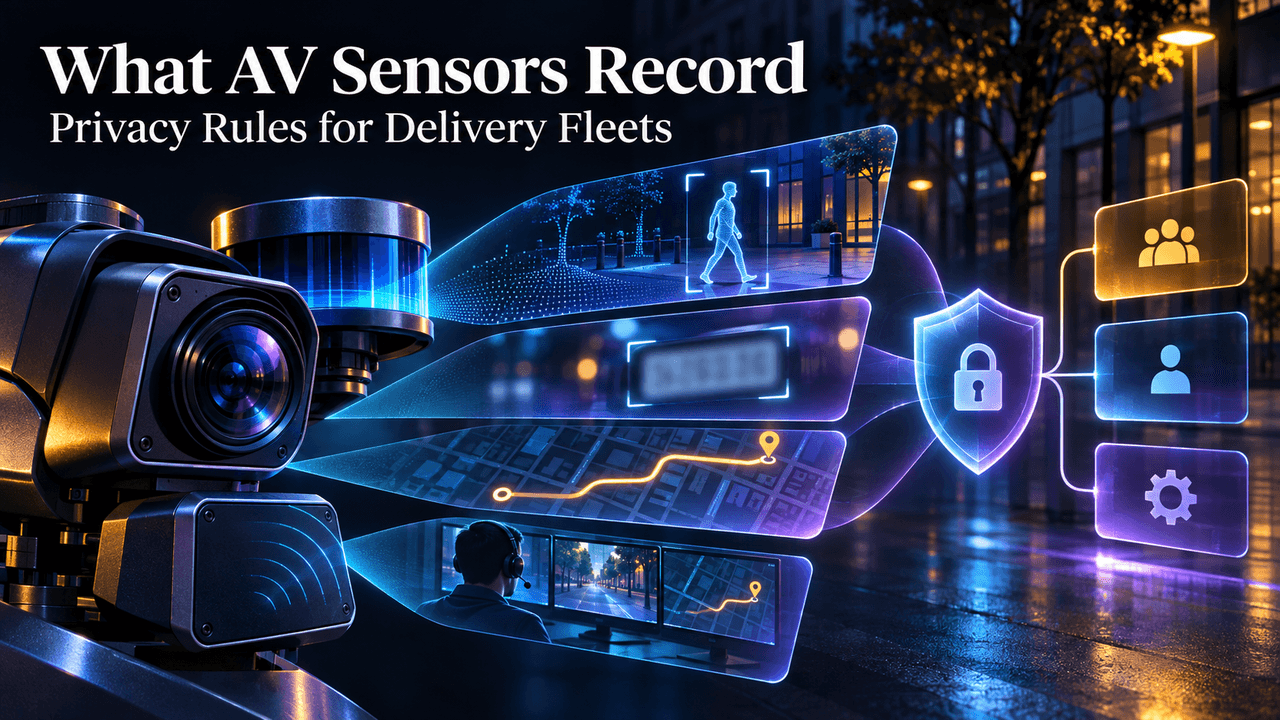 A delivery vehicle turns into a distribution-centre entrance. Its cameras may see a passer-by and a licence plate; its location feed records the route; a remote team may receive a live view when the vehicle stops. The operational reason for each signal differs. So does the privacy question: who can view it, what is retained, and can it be reused to train a model or assess an employee?
For logistics operators, “sensor data” is too broad a category to answer those questions. A collision-avoidance calculation that stays in the vehicle is different from a saved video clip that identifies someone on the pavement. A vehicle identifier can become personal data when linked to a worker's shifts. Rules differ by jurisdiction, but the useful starting point is the same: map each data flow to a purpose and a responsible organisation before the route begins.
What the sensors produce, and what the fleet keeps
An autonomous vehicle needs to perceive people and obstacles in real time. Perception does not require every raw frame to be uploaded, retained indefinitely or made available to every business partner. Operators may need selected records for incident review, maintenance or approved remote supervision. Those purposes should be distinguished from research, marketing and staff monitoring, each of which can change the legal analysis.
The distinction matters in a warehouse transfer. A camera may capture a loading-bay worker, while telemetry identifies which vehicle made a journey and when. A customer might need proof that a shipment arrived, but that does not automatically require access to the worker's image or the full sensor feed. Contracts between the technology provider, fleet operator and logistics customer should say who decides the purposes of processing and who merely processes data on another party's instructions.
Europe: design the data path, then justify it
The EU's GDPR applies where connected-vehicle data identify or can identify a person. In its adopted 2021 connected-vehicle guidance, the European Data Protection Board (EDPB) notes that camera footage can concern people passing a vehicle, while location data may reveal individuals' routines. Its advice favours data minimisation, privacy-protective defaults and local processing where feasible. Controllers must identify a lawful basis, explain the purpose and retention period, and assess high-risk processing; an impact assessment is required where the GDPR's threshold is met.
The EDPB guidance addresses connected vehicles broadly, rather than issuing a special delivery-RoboVan permit. For an automated freight route, it prompts practical design choices: can obstacle recognition happen onboard, can an incident clip be separated from continuous footage, and can remote staff see only the feed needed for their task? The answer must also account for safety and evidence requirements. Privacy does not mean deleting material that must lawfully be preserved after an incident.
China: vehicle data have a sector-specific layer
China's Automobile Data Security Management Provisions, in force since October 2021, expressly cover vehicle-related personal information and “important data”. They identify external images containing faces or licence plates among important-data categories and encourage in-vehicle processing, limited collection and an appropriate sensor field of view. Where external personal information is collected for driving safety without a practical way to obtain consent and then provided outside the vehicle, the provisions call for anonymisation. Other consent and notification duties depend on the type of information and processing.
For cross-border access, China’s 2026 Automotive Data Export Security Guidelines add a more specific layer. They treat certain cases in which data collected or generated in China are made available to an overseas recipient as data-export activity and set out the applicable compliance routes, including security assessment, standard contracts or certification depending on the data and circumstances. The guidelines also introduce defined exemption scenarios. A foreign engineer retrieving a stored clip and an obstacle signal processed locally should not be treated as the same data flow, while an exemption for one category does not create blanket permission to export all vehicle data.
California and Singapore: general law still reaches the vehicle
California has no single privacy statute written only for autonomous delivery sensors. The California Privacy Protection Agency has, however, scrutinised connected vehicles under the California Consumer Privacy Act (CCPA), naming cameras and location sharing among its concerns. For businesses covered by the CCPA, rights can include access, deletion and restrictions on sale or sharing, while precise geolocation may be sensitive personal information. Applicability and exceptions must be checked for the business and dataset; a vehicle's road-testing permission does not answer the privacy question.
Singapore's Personal Data Protection Act takes a general-purpose approach as well. Organisations must consider the purpose for collection and use, protection, retention and any transfer of personal data overseas. PDPC guidance also makes clear that transferred personal data must receive a standard of protection comparable to the PDPA, while CCTV footage can itself become part of an access or retention issue when individuals are identifiable. A public-road operating approval therefore does not establish that every use or disclosure of vehicle video is permitted.
A real route makes the questions specific
In October 2026, Zelostech reported the start of a six-month public-road RoboVan trial on Malaysia's approximately 22-kilometre MyAV route in Cyberjaya, alongside local partner ALS. Its account says a local remote-operations centre supports the trial with live video, telemetry, route information and system diagnostics. That is a useful example of why autonomous logistics vehicles require a data map spanning both vehicle and control room. The announcement does not disclose retention periods, access settings or a complete privacy design, and it should not be used as evidence of those practices.
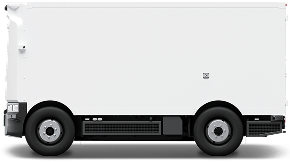
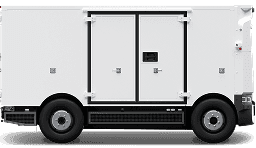
For a buyer assessing Zelostech's broader RoboVan platform, the right diligence request is specific: which streams leave the vehicle, who can see them, where are they stored, when are they deleted, and what happens if incident evidence must be preserved? The answer will depend on the route, local law and the operator's actual configuration. This is more useful than a generic promise that data are “secure”.
A practical privacy plan should follow the delivery task itself. Dispatch may need route progress, receiving may need proof of handover, remote supervisors need enough situational awareness to respond, and investigators may need a protected event record. Define those uses separately, then restrict access and retention to what each role actually requires. That makes the data design easier to defend across jurisdictions without losing sight of safety, operational evidence or personal privacy.