What Is an Autonomous Vehicle? Definition and Industry Overview
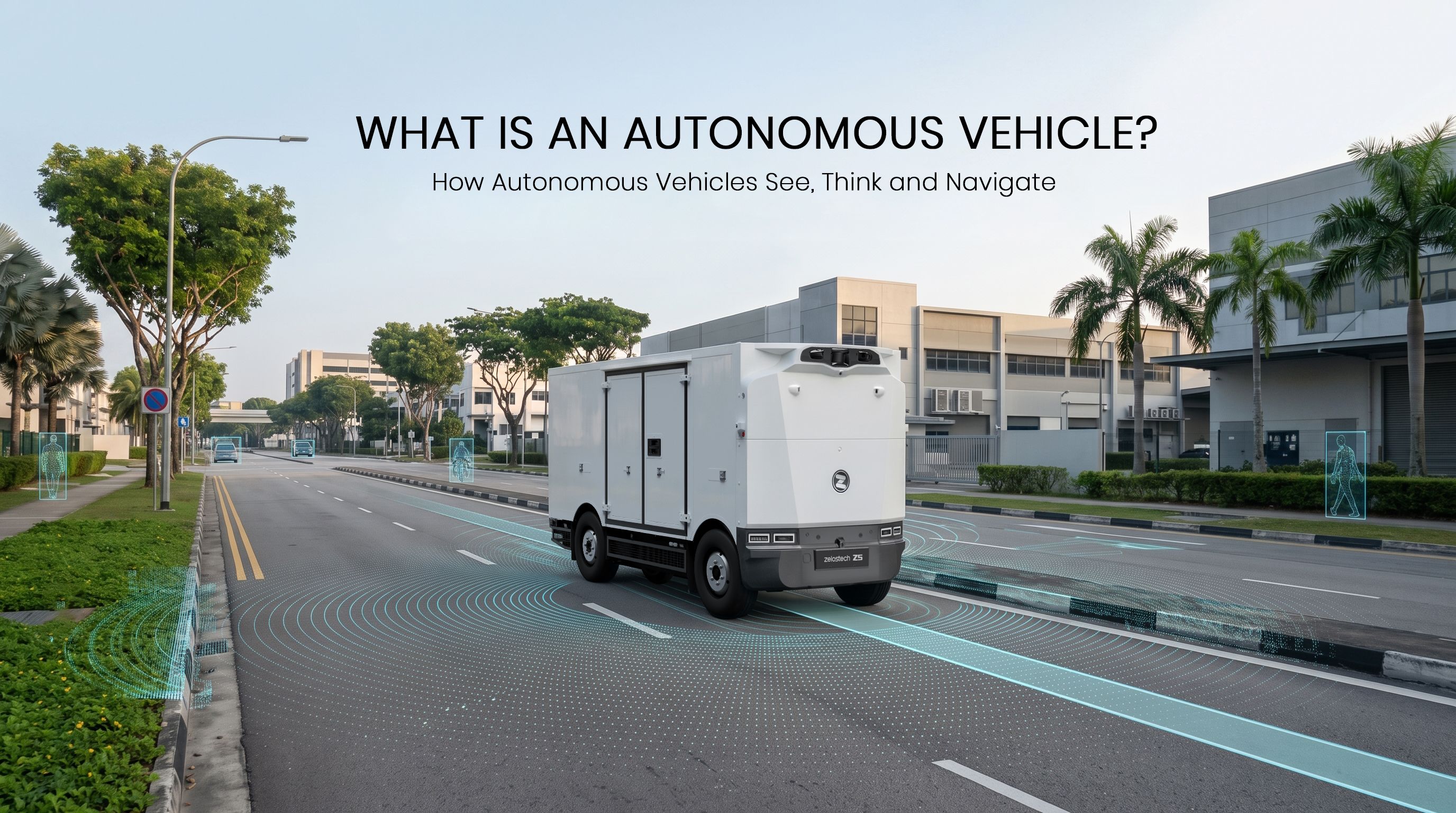
The definition of an autonomous vehicle is closely tied to the level of driving automation it provides. An autonomous vehicle is generally understood as a vehicle equipped with driving automation technology that can perform part or all of the dynamic driving task, depending on its level of automation and operating conditions. The level of automation depends on how much of the driving task the system performs and what role, if any, remains for the human driver.
SAE International’s J3016 standard provides the industry’s primary framework for classifying driving automation, from Level 0 (No Driving Automation) to Level 5 (Full Driving Automation). The standard defines six levels based on the respective roles of the human user, the driving automation system, and other vehicle systems in performing the dynamic driving task.
In industry and public discourse, “autonomous vehicle” is commonly used as a broad term for vehicles equipped with advanced driving automation systems, particularly Level 4 and Level 5 systems. In SAE J3016, however, the more precise term is “driving automation,” with Levels 3 through 5 classified as automated driving systems (ADS).
Autonomous vehicle technology extends well beyond passenger cars. It now spans robotaxis, autonomous shuttles, autonomous logistics vehicles, and driverless industrial transport systems. For logistics, the most commercially relevant applications are increasingly focused on repeatable freight movements in defined operating environments, where autonomous vehicles can deliver measurable gains in vehicle utilization, labor efficiency, and operational consistency.
How Do Autonomous Vehicles Work?
How does an autonomous vehicle work? Modern autonomous vehicles combine perception, localization, prediction, planning, and control to understand their surroundings, determine their position, anticipate the behavior of other road users, and execute driving decisions in real time.
Autonomous driving has advanced rapidly over the past few decades. Early systems focused primarily on driver assistance functions such as cruise control and parking assistance. Advances in artificial intelligence, machine learning, sensing, and computing performance have enabled autonomous systems to perceive more complex environments, make increasingly sophisticated decisions, and execute those decisions in real time.
Research has highlighted the potential of autonomous driving to reduce crashes, improve travel efficiency, and expand mobility options. In practice, however, commercial deployment depends on more than technical capability. Safety validation, regulatory approval, operational design domains, infrastructure, and the economics of each use case all influence when and where autonomous systems can be deployed.
Broad deployment of autonomous driving depends on the maturity of the technology, operating environment, regulatory framework, and commercial model. This is why commercial adoption is progressing first in clearly defined use cases, particularly logistics and other applications where routes and operating conditions can be controlled or systematically managed. The National Highway Traffic Safety Administration (NHTSA) provides further context on the development and deployment of automated driving systems.
Perception: Sensor Systems and Environmental Understanding
Perception allows an autonomous vehicle to build a real-time understanding of its surroundings. Depending on the vehicle and operating environment, the sensor suite may include cameras, radar, LiDAR, ultrasonic sensors, and inertial measurement units (IMUs). Each sensor provides different information about objects, road conditions, and the surrounding environment.
Cameras capture visual information and help identify lane markings, traffic signs, pedestrians, cyclists, vehicles, and other road features. Radar uses radio waves to detect objects and estimate their distance and relative speed. Unlike cameras, radar can provide useful measurements in low-light conditions and can be more resilient to certain weather conditions, although its performance can still vary with the environment.
LiDAR (Light Detection and Ranging) emits laser pulses and measures the time required for reflected signals to return. The resulting measurements provide detailed spatial information that can support object detection, mapping, and environmental understanding. In many autonomous systems, LiDAR works alongside cameras and radar as part of a broader multi-sensor perception stack.
The data from individual sensors must be combined into a consistent representation of the environment through sensor fusion. By integrating complementary sensor inputs, the system can improve perception accuracy, resilience, and robustness across changing operating conditions.
Localization Systems and Positioning
After perceiving the environment, the vehicle must determine its own position. This process, known as localization, is essential for accurate navigation and decision-making. Autonomous systems require positioning information precise enough to support continuous trajectory planning and vehicle control.
Localization can draw on GPS or other global navigation satellite systems, digital maps, LiDAR data, visual landmarks, and simultaneous localization and mapping (SLAM). The specific combination depends on the vehicle architecture and its operating environment.
For indoor mobile robots operating in warehouses and manufacturing facilities, GPS is often unavailable or unreliable. These systems therefore commonly rely on LiDAR-based mapping, SLAM, and other local positioning technologies. This differs from road-going autonomous logistics vehicles, which are designed for road and logistics networks and are typically discussed using automated-driving terminology rather than industrial mobile-robot terminology.
Prediction and Planning
Autonomous driving systems use perception and localization data to predict the likely behavior of surrounding road users and determine how the vehicle should respond. Prediction models estimate the likely movements of vehicles, pedestrians, cyclists, and other road users, while planning uses this information to generate a safe route and trajectory.
The planning system accounts for road conditions, traffic rules, predicted behavior, and vehicle operating constraints when making decisions such as lane changes, stopping, yielding, overtaking, and speed adjustments. It must also ensure that planned actions remain within the vehicle’s defined Operational Design Domain.
Vehicle Control
The control system converts the planned trajectory into steering, acceleration, and braking commands. It continuously compares the vehicle’s actual motion with the desired trajectory and adjusts these inputs in real time.
Together, planning and control translate autonomous decisions into precise vehicle motion while helping the vehicle remain stable and follow its intended path.
Types of Autonomous Vehicles
Autonomous Passenger Vehicles
Autonomous Transit Vehicles
Autonomous transit vehicles, including autonomous buses and shuttles, are designed to transport passengers along defined routes or within specified operating areas. They are being tested and deployed in environments such as airports, university campuses, business parks, and other managed mobility networks.
Because many transit deployments operate within relatively structured environments, they can provide a practical pathway to commercial autonomous mobility. Defined routes and operating conditions can also simplify validation and day-to-day operations compared with more open urban passenger traffic.
Autonomous Logistics Vehicles
Autonomous logistics vehicles are a specialized category of autonomous transport vehicles designed to move goods across defined routes and operating environments. They are increasingly used for repeatable transport tasks across distribution centers, industrial parks, ports, airports, campuses, and public-road delivery routes.
Compared with passenger mobility, logistics applications often provide clearer operational requirements and more measurable business outcomes, making them one of the most commercially active areas of autonomous driving.
According to McKinsey & Company’s 2021 report, autonomous driving could significantly reshape logistics, including the infrastructure and operating models that support freight transportation. The report highlights how logistics networks may need to adapt as autonomous vehicles become more prevalent.
For logistics operators, autonomous vehicles can support longer operating windows, reduce dependence on manual driving for repetitive routes, and improve the consistency of point-to-point transport. Their value is particularly clear when autonomous vehicles are integrated into existing dispatch, warehouse, and delivery workflows rather than operated as standalone technology demonstrations.
Many commercial Level 4 deployments operate within a clearly defined Operational Design Domain (ODD): a specified set of roadway, geographic, environmental, traffic, and other operating conditions within which the autonomous system is designed to function. This approach allows operators to scale proven use cases while maintaining clear safety and performance boundaries.
Zelostech RoboVans: Applying Level 4 Autonomy to Commercial Logistics
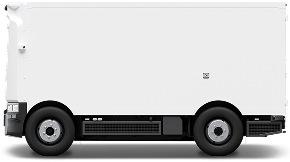
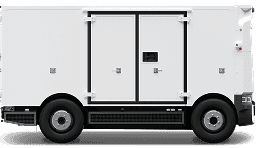
Zelostech applies Level 4 autonomous driving technology to commercial logistics through its RoboVan platform. The RoboVan lineup includes the Z5 and Z10, supporting applications such as urban delivery, retail replenishment, industrial logistics, airport operations, and cold-chain transportation. The platform uses proprietary map-free, full-stack Level 4 autonomous driving technology and is designed for both public-road and controlled environments.
Different logistics tasks require different vehicle platforms. The Z5 is designed for flexible freight transport across urban and other logistics environments, while the Z10 supports higher-capacity applications. This enables the autonomous driving system and vehicle platform to be matched to route characteristics, payload requirements, and operational workflows rather than treated as a one-size-fits-all solution.
Zelostech’s autonomous logistics applications span urban logistics, industrial environments, airports, ports, cold-chain distribution, pharmaceutical delivery, and other specialized use cases. These applications show how Level 4 autonomous logistics can be adapted to different ODDs, traffic conditions, payload requirements, and workflow constraints.
Zelostech has also moved beyond technology testing into recurring commercial operations. In Singapore, Zelostech received approval in 2025 to operate remotely supervised driverless vehicles on public roads for supply-chain logistics and deployed Z10 vehicles with FairPrice Group to transport goods between distribution centers in Benoi, Joo Koon, and Sunview Road. The deployment combines defined routes, remote supervision, autonomous driving technology, and existing logistics workflows.
Zelostech has expanded its deployments across different operating environments. In June 2026, DHL launched its first licensed autonomous logistics RoboVan on public roads in Changzhou, China. Powered by Zelostech’s Z5, the RoboVan received public-road authorization and autonomous driving operational approval and entered continuous commercial service on a dedicated logistics route. In Singapore, Zelostech also announced a strategic deployment agreement with Fraser and Neave (F&N) for Z10 RoboVans in warehouse and industrial logistics environments.
Zelostech has also deployed its RoboVan technology in specialized logistics environments, including the Changi Airport Free Trade Zone. These deployments reflect a practical approach to Level 4 autonomous logistics: defining the operating domain, matching the vehicle platform to the logistics task, and integrating autonomous driving into recurring freight operations.
Autonomous Mobile Robots (AMRs) in Industrial Automation
Autonomous mobile robots (AMRs) are a widely used industry term for mobile robots that can navigate and perform tasks with a high degree of autonomy. In logistics and industrial environments, they are commonly used to move goods, materials, equipment, or other payloads without a human driver.
Unlike fixed conveyor systems, AMRs can navigate dynamically and adapt routes around obstacles or changing operational requirements. Common applications include material handling, inventory movement, order fulfillment, inspection, and warehouse automation.
AMRs differ from road-going autonomous logistics vehicles in their operating environment and use case. AMRs typically navigate warehouses, factories, and other controlled industrial spaces, while autonomous logistics vehicles are designed to transport goods across defined road and logistics networks.
The distinction is important because the two technologies may serve similar logistics objectives while relying on different navigation architectures, safety requirements, vehicle platforms, and regulatory frameworks. AMRs are generally classified within industrial robotics, while road-going autonomous logistics vehicles fall within the broader field of driving automation.
Autonomous Vehicle Classification: SAE Levels 0–5
For on-road vehicles, SAE International’s J3016 Recommended Practice provides the established industry framework for autonomous vehicle classification and driving automation levels. The 2021 edition defines six levels, from Level 0 (No Driving Automation) to Level 5 (Full Driving Automation). The levels are based on the respective roles of the human user, the driving automation system, and other vehicle systems in performing the dynamic driving task.
Rather than treating “autonomous” as a single technical capability, the SAE framework emphasizes the conditions under which an automated driving system can operate and who is responsible for the driving task. This distinction is especially important for commercial deployments, where Level 4 systems can be highly capable within a defined Operational Design Domain without requiring the broad, unrestricted capability associated with Level 5.
Level 0: No Driving Automation
Level 1: Driver Assistance
At Level 1, the driving automation system provides assistance with either lateral vehicle motion through steering or longitudinal vehicle motion through acceleration and braking, but not both simultaneously.
Level 2: Partial Driving Automation
Level 3: Conditional Driving Automation
Level 4: High Driving Automation
At Level 4, the automated driving system can perform the entire driving task within its defined Operational Design Domain without requiring a human to continuously monitor the driving environment. The system is responsible for performing the driving task whenever it operates within that ODD.
Level 4 is particularly relevant to commercial logistics because an ODD can be designed around specific routes, locations, vehicle types, speeds, weather conditions, and other operating constraints. This makes Level 4 a practical foundation for real-world autonomous logistics deployments.
Level 5: Full Driving Automation
At Level 5, the automated driving system is designed to perform the complete driving task under all roadway and environmental conditions that can be encountered by human drivers, without requiring a human driver.
Full, generalized Level 5 autonomy is not yet in commercial use. Many of the most advanced commercial deployments today are focused on defined Level 4 applications, where the operating environment can be specified, validated, and managed.
Autonomous Vehicle Trends and Future Development
Commercialization of Level 4 Logistics
Logistics is expected to remain a major area of autonomous vehicle adoption as operators seek to address labor constraints, rising operating costs, and demand for more flexible delivery. Autonomous logistics vehicles can support repeatable transport tasks across urban routes, industrial parks, airports, ports, and other defined operating environments.
The focus is also shifting from individual pilot vehicles to fleet-level operations. Successful deployments increasingly require autonomous vehicles to work alongside dispatch systems, warehouse processes, remote supervision, charging infrastructure, and other elements of the logistics network.
Zelostech’s deployments reflect this shift from individual vehicle testing toward integrated logistics operations. Its work with FairPrice, DHL, F&N, and airport logistics partners demonstrates how autonomous vehicles can be incorporated into recurring freight movements rather than used only for technology demonstrations.
Map-Free and Scalable Autonomous Driving
As autonomous vehicle deployments expand, scalability has become an important consideration. Traditional high-definition mapping can provide detailed environmental information, but maintaining maps across large or changing operating areas can add operational complexity.
Map-free autonomous driving approaches aim to reduce dependence on pre-mapped environments by enabling vehicles to navigate using real-time perception and other onboard information. For logistics operators, this can reduce the operational burden of maintaining detailed maps across multiple routes and facilities.
Zelostech has made map-free Level 4 autonomous driving a central part of its technology platform. The approach is particularly relevant to commercial logistics because vehicles may need to operate across multiple routes, facilities, and changing environments without relying entirely on manually maintained high-definition maps.
Connected and Electrified Logistics
Connectivity can further expand the capabilities of autonomous vehicles. Vehicle-to-everything (V2X) communication, intelligent traffic management, digital road infrastructure, and connected logistics systems can provide additional information and coordination, helping autonomous systems operate more efficiently in complex environments.
Electrification is also becoming increasingly relevant to autonomous commercial vehicles. Electric drivetrains can offer lower operating and maintenance costs and integrate well with electronically controlled vehicle architectures. When combined with high vehicle utilization and efficient fleet operations, electric autonomous vehicles can support a more efficient and potentially more sustainable transportation model, depending on factors such as energy sources, utilization, and vehicle lifecycle.
Conclusion
Autonomous driving is moving from a technology concept toward practical commercial deployment, particularly in logistics and other well-defined operating environments. The industry’s next phase will depend less on achieving autonomy as an isolated technical milestone and more on building systems that can operate safely, reliably, and economically within clearly defined operating domains.
Level 4 autonomous logistics illustrates this shift particularly well. By combining autonomous driving technology with fleet management, remote operations, logistics infrastructure, and defined ODDs, operators can move from isolated technology demonstrations toward repeatable commercial operations.
Zelostech’s RoboVan deployments reflect this transition from autonomous driving technology to integrated commercial logistics. Its Z5 and Z10 vehicles are being deployed across public-road, industrial, warehouse, airport, and other specialized logistics environments, while partnerships with companies such as FairPrice, DHL, and F&N demonstrate how Level 4 autonomy can be integrated into recurring freight operations.
As the technology matures, the ability to integrate autonomous driving into real transportation workflows will be as important as advances in AI, sensing, and vehicle control. The future of autonomous vehicles will therefore be shaped not only by how capable the technology becomes, but by how effectively it can solve real transportation and logistics challenges at commercial scale.