What Is Last-Mile Delivery? Definition, Challenges, and Autonomous Solutions
 The standard definition of last-mile delivery
In logistics, last-mile delivery generally refers to the final stage of transportation, when goods move from a local warehouse, sorting facility, distribution center, or retail node to their final destination.
Last-mile delivery can serve a wide range of destinations, including residential buildings, offices, factory workshops, pickup lockers, community collection points, and rural service stations.
Simply put, it is the stage of the logistics process that connects the supply chain with the final recipient.Does "last mile" refer to a specific distance?
The “mile” in “last mile” does not refer to a fixed physical distance. The term originated in the telecommunications industry.
It was originally used to describe the final section of a telecommunications network connecting individual homes to the main network. The logistics industry later adopted the term to describe the final stage of goods distribution. In this context, however, “mile” does not refer to any specific distance.
In practice, the distance covered by last-mile delivery varies significantly depending on the market and operating environment. Delivery routes in dense urban areas may be as short as 0.5 to 2 kilometers.
In suburban industrial areas, deliveries may cover 3 to 8 kilometers, while routes in regional and rural markets can extend to 10–30 kilometers.
Rigid assumptions about distance can therefore lead to inefficient hub planning, unnecessary infrastructure investment, and higher operating costs.
Position in the complete logistics chain
A typical end-to-end commercial logistics chain can be described as:
Factory/supplier warehouse → first-mile collection → regional distribution center → middle-mile transportation → local sorting center → last-mile delivery → final recipient
Last-mile delivery sits at the end of the logistics chain and has the most direct connection with the final recipient. The first- and middle-mile primarily move goods between logistics nodes, while the last mile moves those goods from a local distribution point to their final destination.
This applies to both B2C consumer deliveries and smaller-scale B2B shipments.
Typical last-mile delivery scenarios
The most familiar examples of last-mile delivery include parcel delivery, on-demand delivery, and fresh food distribution. However, last-mile logistics also plays an important role in specialized B2B and industrial applications.
For example, industrial MRO spare parts, including replacement components for production lines and precision instruments, may need to be transported from urban spare parts warehouses to factory workshops. This is a typical B2B last-mile operation, often with stricter requirements for response time and delivery accuracy than standard parcel delivery.
In biopharmaceutical cold-chain logistics, clinical samples, vaccines, and temperature-sensitive medicines need to be transported under controlled conditions. They also need to remain traceable throughout the process, from pharmaceutical warehouses to hospitals and clinics. These operations are subject to strict regulatory and compliance requirements.
Agricultural supply distribution is another example, particularly in regional and rural markets. Fertilizers, seeds, and agricultural tools may need to move from local distribution centers to village outlets and individual farmers. These operations often cover large geographic areas with fragmented routes, making rural last-mile delivery one of the more challenging logistics scenarios.
Cross-border e-commerce involves two distinct last-mile flows. The first is the delivery of goods from bonded warehouses to consumers. The second is the return of goods from consumers to bonded warehouses. The former represents forward last-mile delivery, while the latter forms part of reverse logistics.
Both flows must comply with customs requirements and bonded inventory regulations, making them more complex than standard return deliveries.
Why is last-mile delivery important?
Last-mile delivery has become a major focus for the logistics industry because it is often one of the most difficult and expensive parts of the supply chain to manage.
Last-mile delivery can account for a significant share of total logistics costs, particularly in e-commerce. An industry analysis citing Capgemini and McKinsey reports that last-mile delivery can account for 41% to 53% of total e-commerce shipping costs, depending on the product category and route. This makes last-mile operations an important area for cost optimization.
It also has a direct impact on supply chain reliability. For B2B customers such as factories and hospitals, a delay of just a few hours in the final delivery can disrupt production or affect time-sensitive medical operations. The operational impact can be far greater than the value of the shipment itself.
Delivery speed and flexibility have also become important competitive factors. For example, a logistics provider that can deliver spare parts within four hours and provide same-day on-site service may have a significant advantage over conventional delivery services.
At the same time, last-mile delivery presents significant opportunities for automation and intelligent logistics. Technologies such as autonomous delivery vehicles and intelligent route planning can be deployed in suitable operating environments to improve efficiency and reduce operational costs.
Common misunderstandings
Several misconceptions about last-mile delivery can lead to poor logistics planning.
The most common is the assumption that last-mile delivery only applies to B2C, or business-to-consumer, door-to-door delivery. Because parcel delivery and food delivery are the most visible examples, it is easy to overlook other applications.
In reality, delivering industrial spare parts to factory workshops or agricultural supplies to rural communities can also be considered last-mile operations.
Another common misconception is that last-mile delivery only refers to forward transportation, while reverse logistics is treated as a completely separate process.
In practice, the final stages of returns, exchanges, recycling, and product collection can also form part of the last-mile operation. This is particularly relevant to cross-border e-commerce, home appliance after-sales service, and industrial spare parts replacement.
A third misconception is that the same last-mile framework can be applied across different industries.
The performance indicators, operating requirements, and equipment needed for last-mile delivery vary considerably by sector. Standard parcel delivery typically focuses on delivery rates and speed. Fresh food logistics places greater emphasis on spoilage and temperature compliance. Pharmaceutical logistics prioritizes regulatory compliance and end-to-end traceability, while industrial spare parts logistics may focus more heavily on response time and delivery accuracy.
Applying the same standards across these scenarios can create compliance risks in specialized industries or unnecessary costs in less demanding operations.
The final misconception is that shorter delivery distances automatically mean lower costs.
Although last-mile routes are often shorter than long-distance transportation routes, the cost per shipment can be significantly higher. Upstream transportation benefits from consolidated loads, while last-mile deliveries are more fragmented and involve more stops.
Labor, parking, failed deliveries, route deviations, and empty return trips can all increase the cost of each delivery.
First mile vs. middle mile vs. last mile
The distinction between the first mile, middle mile, and last mile is frequently discussed in logistics, but the boundaries between these stages are not always clearly understood.
These three stages have different functions, transportation requirements, and opportunities for automation.
Core definition
The first mile is the starting point of the logistics chain. It generally refers to moving goods from factories, supplier warehouses, retail stores, or other origins to a regional or central distribution facility.
Its main purpose is to collect and consolidate goods from multiple sources before they enter longer-distance transportation. First-mile operations are therefore typically associated with upstream logistics and cargo collection.
The middle mile connects regional distribution centers with localsorting and distribution facilities. It typically relies on heavy trucks, rail, and air freight to move consolidated shipments over longer distances.
Its primary goal is to move larger volumes between logistics hubs at a relatively low unit cost.
The last mile is the final delivery stage, moving goods from a local distribution node to the final recipient or destination. Unlike the first- and middle-mile, it typically involves smaller shipments, more delivery stops, and greater variation in destinations.
Final Mile vs. Last Mile: What’s the Difference?
“Final mile” and “last mile” are often used interchangeably in logistics. While they generally refer to the same stage of the delivery process, their exact scope can vary depending on the context.
In everyday industry communication, there is usually no fundamental difference between the two terms.
However, they can have slightly different practical meanings in certain contexts. “Last-mile delivery” is generally used to describe the broader final stage of distribution, while “final mile” may sometimes be used to emphasize the customer-facing portion of that process.
In some cases, “final mile” can refer specifically to the last physical segment between a local hub, community, industrial park, or factory entrance and the customer's designated delivery point.
The terms can also have different contractual meanings. In some logistics agreements, for example, “final mile delivery” may be used to define a specific door-to-door service while excluding upstream sorting or temporary staging at local pickup hubs.
For this reason, companies should clearly define the operational scope of either term in contracts and service agreements. In general logistics discussions, however, “last mile” and “final mile” can be treated as synonyms unless a specific definition establishes a different scope.
Why is it important to understand these differences?
The distinction between logistics stages is more than a matter of terminology. It can directly affect cost calculations, procurement decisions, contract terms, and technology selection.
Accurate cost allocation is particularly important. Middle-mile transportation and last-mile delivery have very different operating models, so combining them can make it difficult to determine where logistics costs are actually being incurred.
For example, a company evaluating autonomous logistics vehicles needs to understand the cost structure of the specific operation it wants to automate. If middle-mile and last-mile expenses are mixed together, the expected savings from automating the final delivery stage may be overstated or understated.
In sectors such as industrial and pharmaceutical logistics, inaccurate cost estimates can also affect pricing and overall project profitability.
Clear terminology is equally important in bidding processes and cross-border contracts. When different parties use the same logistics term to describe different operational scopes, disagreements can arise over responsibilities, costs, and service requirements.
Defining the boundaries of each logistics stage upfront provides a clearer basis for procurement and project delivery.
The distinction also matters when selecting logistics automation technologies.
First-mile operations may use automated cargo collection systems, AGVs, and sorting robots. Autonomous heavy trucks and mainline transportation systems are more relevant to middle-mile operations. The last mile may be better suited to autonomous delivery vehicles, smart lockers, and other delivery technologies.
Using the wrong automation technology for a particular logistics stage can increase investment without addressing the underlying operational problem.
A complete cost analysis should also account for reverse logistics. Returns and collections can involve additional inspection, sorting, handling, transportation, and coordination, and these costs may be overlooked when companies focus only on forward deliveries.
Including reverse collection, exchanges, and returns in the overall last-mile analysis gives companies a more accurate view of their operating costs.
This is particularly important in industries with high return volumes, such as cross-border e-commerce and home appliance after-sales service. Effective management of reverse logistics costs can have a direct impact on project profitability.
Understanding both forward and reverse flows also helps logistics operators identify where automation may provide the greatest value. Once the scope and cost structure of the last mile are clearly defined, companies can identify operational bottlenecks and evaluate whether L4 autonomous delivery is appropriate for their specific routes and environments.
How Can L4 Autonomous Delivery Vehicles Address Last-Mile Challenges?
Among emerging logistics technologies, L4 autonomous delivery vehicles represent one potential approach to addressing some of the operational challenges associated with last-mile delivery.
As an L4 autonomous delivery vehicle provider, Zelostech is an autonomous vehicle technology company serving global markets. The company develops RoboVans for different logistics scenarios, providing examples of how autonomous technology can be applied to real-world delivery operations.
To address high labor costs and driver shortages, L4 autonomous vehicles can carry out routine delivery operations without an onboard safety driver in suitable operating environments.
With remote monitoring and fleet management systems, a single operator may be able to supervise multiple vehicles, creating opportunities to improve labor efficiency. The exact operating model depends on the deployment environment, local regulations, and safety requirements.
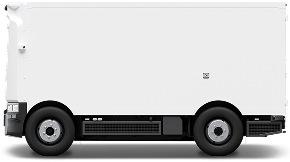
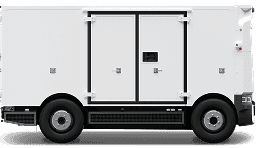
For urban and general logistics applications, the Z5 RoboVan is designed for autonomous logistics and multi-point delivery operations. The current Z5 product page lists a maximum range of 230 km, a maximum load of 1,800 kg, and 6.2 m³ of cargo space.
For temperature-sensitive transportation, the Z5 Cold-Chain RoboVan provides a dedicated autonomous refrigerated vehicle option, with a refrigeration temperature range of -20°C to 12°C, a maximum load of 1,555 kg, and a maximum range of 180 km. This type of vehicle is relevant to applications such as fresh food and pharmaceutical logistics.
For higher-capacity freight logistics, Zelostech also offers larger RoboVan platforms for applications that require greater cargo capacity and payload. These larger platforms are designed for industrial logistics, distribution, and other operations where high-volume cargo capacity is required.
The vehicles combine multi-sensor perception, decision-making and planning algorithms, and V2X technology to support autonomous operation in complex environments. They are designed to operate across a range of real-world logistics conditions.
These capabilities support autonomous operation across a range of environments, including urban roads, industrial areas, logistics parks, and other complex operating conditions. Zelostech's autonomous logistics applications cover areas such as postal delivery, grocery and food delivery, retail replenishment, airport logistics, business park delivery, industrial park logistics, production line delivery, cold-chain distribution, and other specialized logistics operations.
Zelostech has also partnered with logistics and postal organizations including DHL, Fairprice, and Singapore Post, building operational experience across different logistics environments. Singapore Post, for example, selected Zelostech as a core supplier for autonomous logistics vehicles, demonstrating the potential for L4 autonomous technology to scale beyond pilot projects into large-scale logistics operations.
These partnerships demonstrate how autonomous delivery technology can be integrated into real-world logistics operations, while its potential applications extend across different markets and industries. As a Singapore-based company serving customers globally, Zelostech develops autonomous logistics solutions for different operating environments and markets, with deployments and partnerships spanning Asia-Pacific, the Middle East, Europe, and other regions.
L4 autonomous vehicles can support both forward delivery and reverse collection. When integrated with backend fleet management and scheduling systems, they can also be coordinated with first-mile collection and middle-mile transportation.
A clear understanding of last-mile delivery boundaries helps logistics operators identify operational bottlenecks and determine where autonomous delivery can provide measurable value. Autonomy should therefore be evaluated as part of a broader transportation and fleet management strategy rather than as a standalone technology.