When Government Grants Can Fund Autonomous Delivery

A logistics operator has identified a repeatable journey between a distribution centre and several local collection points. The goods, timetable and loading bays are known. A RoboVan could cover the driving leg, but mapping, safety work, remote supervision, site changes and performance measurement all carry costs before the route settles into routine service. Which of those costs might public money support?
The answer depends on the funding instrument and the applicant. Governments have financed research, demonstrations and early service trials. That does not create a general rebate on every autonomous vehicle bought by a carrier. A grant may be available only to a consortium, a public authority or a project in a specified country. It may end before a commercial fleet reaches steady operation.
A grant pays for a project; a fleet subsidy changes the purchase price
The distinction matters when building a business case. A direct adoption subsidy would reduce the price or operating cost of a qualifying vehicle or service under stated rules. A competitive grant instead pays eligible costs of a defined project against milestones and reporting duties. Both can help adoption, but neither removes the need for traffic authorisation, insurance, site access or a customer willing to use the service.
Look at the eligible expenditure before comparing headline budgets. A call may support integration, validation, route preparation and evaluation while excluding ordinary operating costs after the project ends. Some programmes reimburse costs after they are incurred. Others require the applicant to contribute funding or work with independent partners. The same vehicle can be a suitable technical candidate and still fail a funding test because the proposed applicant, location or activity is outside scope.
What current programmes actually support
The UK’s CAM Pathfinder: Enable competition offers a useful recent example. Innovate UK opened the £15 million programme in October 2025 to support collaborative trials of connected and automated mobility services for future deployment at scale. The competition explicitly covered areas including freight and last-mile delivery and closed on 17 December 2025. Eligible project leads included UK-registered businesses, local authorities and transport authorities, and public-road applications had to identify partners for the relevant safety and no-user-in-charge roles. It was project funding for service trials, not an open-ended vehicle discount, and it is not a live application route in November 2026.
The EU’s Horizon Europe programme addresses another part of the problem. AutoMoTIF is an EU-funded research and innovation project running from June 2024 to May 2027, focused on integrating automated transport into multimodal freight and logistics systems. Its public project record covers integration, governance and deployment questions across freight transport. Participation in a funded research project is different from receiving a direct subsidy to purchase vehicles for a local delivery fleet, and future Horizon Europe opportunities will have their own eligibility rules and deadlines.
In the United States, the Department of Transportation’s SMART programme funded public-sector demonstrations of advanced transportation technology through a two-stage structure. Stage 1 supported planning and prototyping, while Stage 2 supported larger implementation projects. However, the current USDOT programme page states that Congress reallocated the programme’s remaining unobligated balances in 2026 and that no new notices of funding will be issued. Existing grants continue to be honoured, but SMART should not be treated as a current application route for a new autonomous logistics project.
Start with the transport problem, then choose a funding route
A credible proposal describes an actual movement of goods. A retail replenishment route between a depot and shops, for example, has loading windows, vehicle access limits, receiving staff and a baseline cost per completed transfer. The application should say what changes during the trial: number of scheduled journeys, handover time, interventions, missed deliveries, safety events and the work still done by people. The baseline matters because a demonstration that merely logs autonomous kilometres may not show whether the logistics service improved.
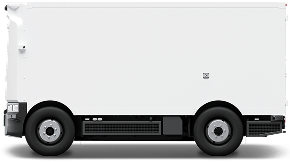
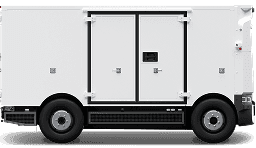
That is also the point at which a product belongs in the application. A consortium proposing a depot-to-store service could assess Zelostech’s Z5 RoboVan against the load, bay geometry and stop pattern it has documented. The model’s published specifications are a starting point, not a substitute for a named operator, site agreements or evidence required in the target jurisdiction. Use on another route does not convey permission or funding eligibility in the UK, EU or US.
The applicant must show where testing ends and regular service would begin. A controlled-site trial cannot establish public-road permission. A successful public-road trial may still cover only specified vehicles, roads and conditions. Funders may want a plausible scale-up path, but a grant award cannot substitute for the regulator’s decision on the operating route.
Zelostech’s work at Tokyo Ryutsu Center offers a closer funding example. In October 2026, the company announced that it would participate in a three-month government-subsidised project beginning in November at the active Heiwajima logistics facility, working with Japanese partners under an initiative connected to Japan’s Ministry of Land, Infrastructure, Transport and Tourism. The project is intended to place autonomous vehicles inside an operating distribution facility alongside its existing systems, infrastructure and daily routines. It is a defined deployment project rather than a general vehicle-purchase rebate or a public-road permit. At the time of the announcement, the three-month project had not yet begun.
Budget for the day after the grant
The final financial question is who pays once the funded period closes. A carrier should model vehicle acquisition or service fees, charging, supervision, maintenance, field recovery, insurance, software support and depot labour against the journeys it can actually run. A route that only works with project-funded staff and equipment may be a worthwhile experiment, but it is not yet a self-supporting delivery service.
Public funding is most valuable when it helps answer questions the operator would need to resolve before scaling anyway: whether the route can be authorised, whether the logistics workflow performs reliably and whether the commercial model still works after the funded period ends. A successful grant project should leave behind evidence that can support the next deployment decision, not simply a completed demonstration.