Who Can Test What, Where? AV Permits Across Five Markets

A permit shown at an industry event can be impressive, but a logistics customer needs a more exact answer: does it cover this vehicle carrying goods on this road, with this form of supervision? California, the UK, Germany, Singapore and Japan answer that question through different procedures. Their rules cannot be reduced to a ranking of “easy” and “difficult” markets. The practical difference lies in what each authority approves and who remains responsible once the vehicle leaves the depot.
Consider a proposed transfer from a sorting centre to a nearby distribution site. The trip might begin with an engineer in the driver’s seat, move to remote supervision and eventually become a scheduled service. Each change can alter the legal basis for the journey even if the vehicle and roads stay the same. The comparison therefore starts with the decisions on an application, rather than a list of national permit names.
Who is asking for permission?
California’s Department of Motor Vehicles (DMV) issues permits to manufacturers under separate categories for testing with a safety driver, driverless testing and deployment. Its rules were updated in April 2026, including a route for heavy-duty AV applications. A fleet customer reviewing a manufacturer’s permit should check which testing or deployment category it covers and whether the intended vehicle falls within that approval. The fact that a supplier has a California test permit says nothing by itself about permission in another US state.
Germany puts public-road development and testing of automated or autonomous driving functions through a time-limited approval from the Kraftfahrt-Bundesamt (KBA). The application addresses the vehicle basis, technical changes and development concept. The eventual L4 operating framework is a separate track: approval of a vehicle and operation in a defined operating area cannot be inferred from the earlier test approval. A German transport customer therefore needs to know whether it is buying into a development project or planning an authorised transport service.
The UK illustrates why the absence of a special testing permit can still leave demanding responsibilities with the trial organiser. Its June 2026 trialling code allows public-road tests without an AV-specific permit or surety bond when the vehicle is roadworthy, appropriately insured and supervised by a driver ready to take control. The organiser remains responsible for complying with road law and engaging relevant authorities. That route fits a supervised experiment; it does not authorise a later driverless goods service.
Who can intervene when the vehicle drives?
Supervision is part of the legal activity, not a staffing detail to change after approval. California distinguishes safety-driver testing from driverless testing. In the UK’s ordinary trialling route, a suitably licensed safety driver must be able to override the system. Great Britain also has a distinct pathway for more advanced trials where exemptions or vehicle authorisations may be needed, including use of a Vehicle Special Order. Those mechanisms should not be confused with permission to operate a regular driverless freight service.
Japan draws a similar boundary through a different mechanism. According to the National Police Agency, certain road tests with a person in the driver’s seat may proceed without special permission or notification if guideline conditions are met. Driverless “specified automated operation” requires permission from the relevant Prefectural Public Safety Commission and an operation plan. For a freight operator, the key question is whether the human role described in the test documents still exists in the proposed delivery service. A successful supervised journey cannot answer that question on its own.
Which streets and tasks are actually in scope?
Singapore’s Land Transport Authority (LTA) asks applicants to identify the exact proposed area and whether it is a public road or public path. Public-road AVs undergo safety assessment at CETRAN before road deployment, with assessment tracks reflecting the maturity and intended use of the solution. The applicant should connect the route map to actual depot entrances, crossings and handover points. Singapore already has authorised public-road autonomous logistics operations; a proposed new route can still have its own assessment and conditions.
One street can change the approval question for the same goods movement. A sorting centre might share a gate with a controlled yard, while the next customer requires a public-road trip. The route submission should show where public access starts, where the vehicle can stop, and what happens if the planned gate is closed. For a warehouse transfer, a map that omits the loading and receiving points leaves the authority and the customer with an incomplete description of the task.
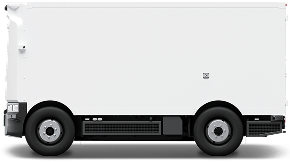
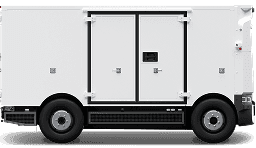
The five markets give those route details different legal weight. A procurement team could name Zelostech’s Z5 RoboVan in one vehicle specification for several proposed depot transfers, then need a different permission schedule for each location. Singapore asks for the proposed road or path and use case. Japan’s specified automated operation relies on an operation plan and an accountable operator. Germany’s later L4 service needs an approved operating area beyond the route considered during development testing. California’s manufacturer-held permit specifies whether testing has a safety driver, is driverless or has progressed to deployment. The UK’s supervised trial code creates no AV-specific permit, yet the organiser still has to establish a lawful, safe arrangement and engage relevant authorities. A product specification can inform these submissions; it cannot carry an approval from one market to another. Until local documents establish otherwise, the Z5 in that tender remains a proposed vehicle choice, not an authorised delivery service.
Suppose the buyer then adds an evening collection at a neighbouring facility. That change may affect operating hours, stopping arrangements and the people available to attend a stopped vehicle. Before treating the extra leg as part of an existing approval, the organiser should check the written conditions with the issuing authority. On a UK supervised trial, where there may be no AV-specific permit to amend, the organiser still needs to revisit road law, insurance, safety-driver arrangements and local engagement. A route description should help dispatchers and receiving staff as well as the application team.
When does a test become a service?
The last comparison is about stage. California explicitly separates driverless testing and deployment. Germany separates KBA development testing from operation in an approved area. The UK’s supervised trial route and driverless pilot pathway also serve different purposes. Japan’s specified automated operation needs its own permission, while Singapore assesses the proposed vehicle, route and use case under its existing regime. None of these systems treats a test certificate as a transferable commercial licence.
Before announcing a launch, a logistics buyer should read the actual approval or trial conditions against six basic facts: the applicant, vehicle, roads, supervision model, cargo activity and duration. A project may be fully authorised for testing and still require another decision before it becomes part of a regular delivery schedule.