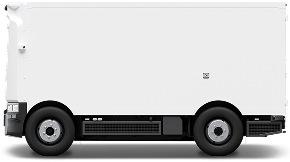
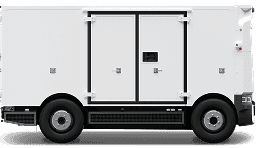
Zelostech Advances Japan Operations from Testing to Deployment
TOKYO, September 2026 — Zelostech is advancing its autonomous logistics operations in Japan from long-term testing and validation toward commercial deployment, building on several years of local testing, logistics-site operations, and customer-backed projects.
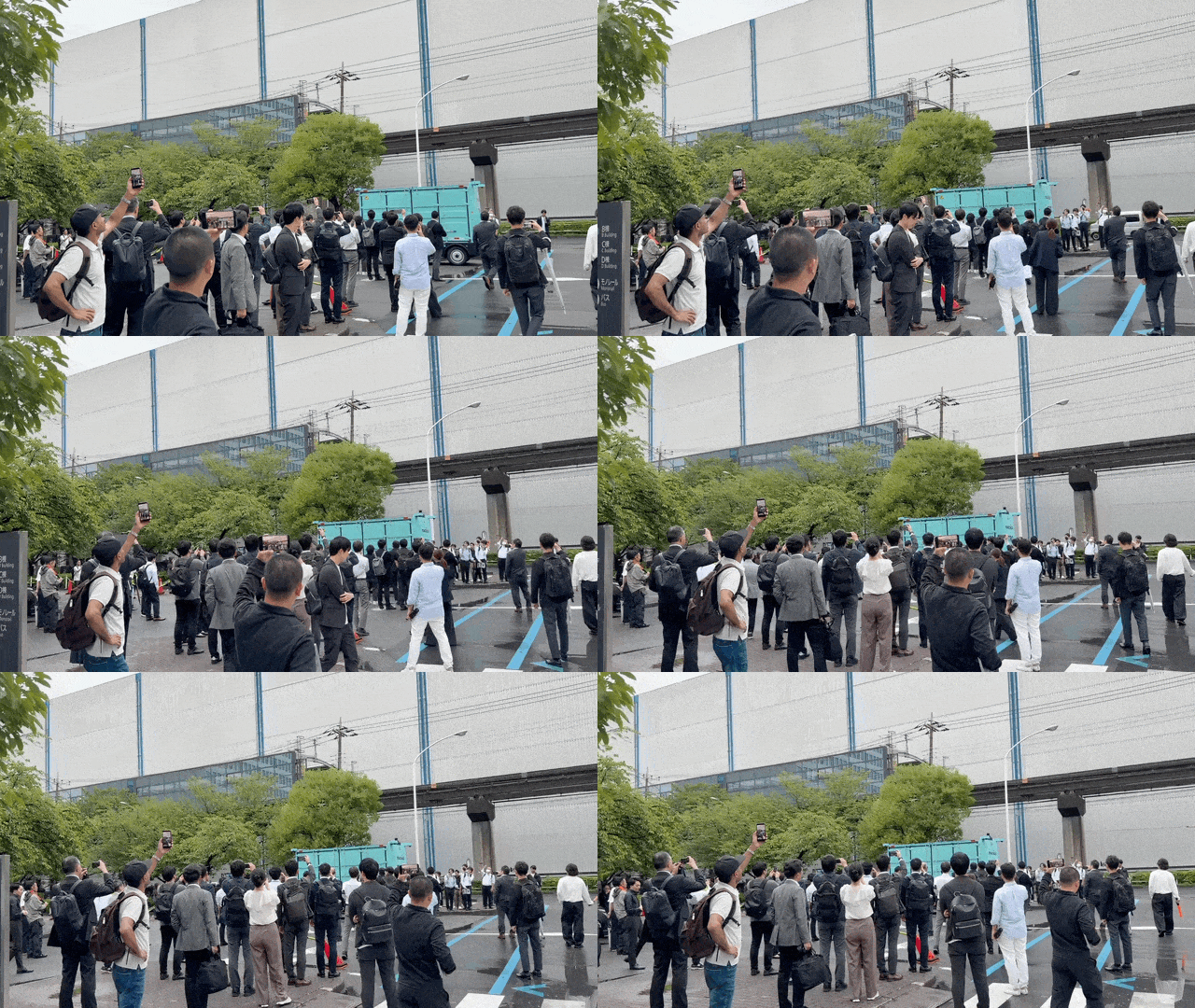
Since entering Japan in 2024, Zelostech has advanced from on-site testing in Fukushima and the smart city project in Saitama Prefecture to real-world logistics operations in the complex environment of the Tokyo Ryutsu Center (TRC) at Heiwajima in Tokyo. This marks a major leap from regional deployment to operations in the capital.
From Early Testing to Real Logistics Operations
Zelostech began local testing in Japan in 2024, followed by controlled-course validation in Saitama in 2025.
In 2026, the program advanced to TRC in Heiwajima, where RoboVans have been tested across both indoor and outdoor environments, including operations from the first through seventh floors, a roughly 2-kilometer route on the first floor, indoor navigation, ramps, and multi-floor transitions.
The latest phase has expanded into scenarios closer to real commercial operations, including:
Rainy-weather and nighttime operation
Pedestrian crossing and yielding
Stop-response scenarios
Indoor autonomous navigation
Multi-floor logistics operations
Sensor self-cleaning in rainy conditions
Route-specific scenario testing
These scenarios are designed to evaluate not only autonomous driving performance, but also the vehicle's ability to operate reliably within the complexity of a real logistics environment.
Heiwajima Becomes a Major Autonomous Logistics Testbed
TRC has become one of Japan’s most active environments for autonomous logistics development.
The Heiwajima Autonomous Driving Council was established to bring together logistics companies, technology providers, public authorities and research organizations around practical autonomous-driving deployment. By 2026, the initiative had moved into a more advanced stage, with expanded testing activity, vehicle demonstrations and closer involvement from Japan’s Ministry of Land, Infrastructure, Transport and Tourism.
A 2026 autonomous logistics project at the site was also selected under a Ministry of Land, Infrastructure, Transport and Tourism program, adding another layer of public-sector support to the development of driverless freight movement at Heiwajima.
Zelostech has been part of that ecosystem as the program has matured, while also expanding its network of Japanese partners through the council.
Commercial Backing Sets the Program Apart
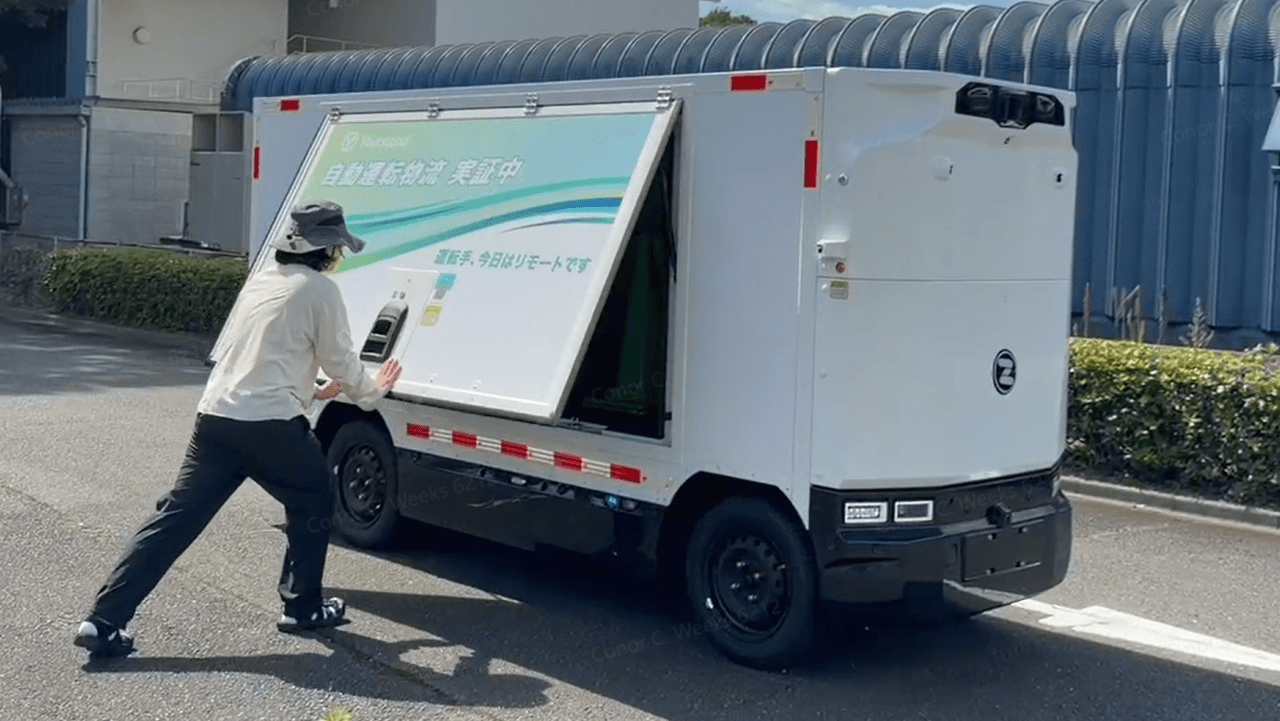
Heiwajima brings several autonomous-driving companies into the same logistics environment, creating a rare setting where different systems can be observed under similar operating conditions. Zelostech currently has three RoboVans at TRC, and all three are backed by paying customers, while some competing vehicles have been supplied for testing at no cost.
That commercial commitment has pushed the program further into the questions customers need answered before expanding deployment: how consistently the vehicles can operate across long hours and changing conditions, how easily they can be integrated into existing routes and site procedures, how much intervention they require, and whether performance remains stable as testing moves into rain, nighttime operation, indoor environments and more complex multi-floor scenarios.
At this stage, the value of the program lies in showing that the RoboVans can function as part of a working logistics system, with the reliability and operational discipline needed for customers to consider larger-scale use.
Moving Beyond Testing
The company's activities have also expanded beyond vehicle testing. Zelostech has strengthened its local ecosystem through participation in the Heiwajima Autonomous Driving Council, collaboration with Japanese partners, and involvement in projects supported by Japan's Ministry of Land, Infrastructure, Transport and Tourism.
For Zelostech, Japan is not a short-term testing market. It is a long-term strategic market for autonomous logistics. The company plans to continue expanding its local capabilities, working with logistics operators and ecosystem partners, and bringing its RoboVan technology into a broader range of commercial operating scenarios.
This marks the first exploration of RaaS applications in Japan, conducted jointly with relevant partners. Moving forward, together with our partners, we will contribute to the advancement of autonomous driving in Japan.
The next chapter for Zelostech in Japan is about turning years of local testing and operational experience into scalable autonomous logistics deployment.
Stay tuned.