The EU’s Autonomous Vehicle Regulatory Framework in 2026 Explained

The European Union has a common technical framework for fully automated vehicles, including defined goods-transport applications. In 2026, that framework is developing through amendments to vehicle approval rules and cooperation on cross-border deployment. For logistics companies, the result is a more structured basis for evaluating autonomous transport across European markets.
The framework operates at several levels. Automated driving system approval addresses the technology’s performance and safety. Whole-vehicle approval addresses the vehicle as a product. National and local operating requirements determine how an authorised service uses particular roads. Understanding these layers explains why common European technical rules can coexist with different deployment procedures.
For a business planning recurring warehouse or distribution-centre transfers, this is the central distinction: technical approval can support a vehicle platform across markets, while each service still has a location, operator and defined operating conditions.
The existing rules cover relevant logistics use cases
Commission Implementing Regulation (EU) 2022/1426 sets procedures and technical specifications for approving automated driving systems in fully automated category M and N vehicles. Category N covers motor vehicles designed primarily to carry goods. The regulation includes operation within predefined areas and hub-to-hub journeys along predefined routes with fixed start and end points.
These use cases correspond to recognisable logistics tasks. A vehicle carrying inventory between two distribution facilities follows a journey with known endpoints. An industrial logistics service may make several transfers within a defined area. The framework gives these applications a place in the technical approval system.
The system requirements address driving behaviour, response to failures, minimum-risk manoeuvres and operation within the conditions for which the system is designed. Assessment combines review of the safety approach with testing and supporting evidence. For a logistics customer, the relevant evidence concerns how the vehicle handles the route and reaches a safe condition when it cannot continue.
Whole-vehicle approval and road operation remain distinct
Regulation (EU) 2018/858 provides the wider framework for vehicle approval and market surveillance. Approval of the automated driving system forms part of the overall vehicle assessment; other applicable vehicle requirements remain relevant. The correct approval route depends on the category and configuration of the proposed product.
Operating permission answers a different question. It connects the vehicle with the roads and service in which it will be used. Germany, for example, has provisions addressing defined operating areas and technical supervision. A logistics group expanding into several member states consequently works with a common technical foundation alongside the applicable national arrangements.
This separation has a practical benefit: the transport task can be assessed in its own setting. A port service road and an urban connection between warehouses may carry similar goods, yet involve different junctions, access arrangements and interactions with other road users. Those differences affect the deployment without necessarily changing the underlying commercial purpose.
What changed in 2026
Implementing Regulation (EU) 2026/481 entered into force on 24 March 2026. It amends the existing automated driving system framework, including certain definitions and safety-management requirements. It also introduces specific technical and validation requirements for automated valet parking in low-speed parking environments. Those parking provisions should not be interpreted as a general approval pathway for autonomous delivery services.
Delegated Regulation (EU) 2026/1188 also updates the whole-vehicle framework, including provisions enabling approval of vehicles produced in unlimited series with automated valet parking systems. The unlimited-series change has that defined scope. It does not create unrestricted road access for all autonomous delivery vehicles.
For a goods vehicle, these amendments do not remove the need to identify the relevant delivery use case under the ADS rules and satisfy the applicable whole-vehicle requirements. A buyer should ask which approval covers the proposed cargo configuration, rather than treating “2026 compliant” as a complete specification.
Cross-border cooperation focuses on practical deployment
In June 2026, 18 member states signed a declaration with the European Commission on large-scale cross-border autonomous vehicle testbeds. Freight and logistics are among the intended use cases. The initiative combines work on common approval principles and coordinated permitting with practical deployment activities.
For a logistics network with facilities in several countries, more comparable procedures could make expansion easier to plan. Evidence produced at one site may help structure the assessment of a similar task elsewhere, while local differences remain visible. The declaration supports that cooperation; individual fleet permissions still arise through the applicable processes.
Zelostech’s European work illustrates the separate stages
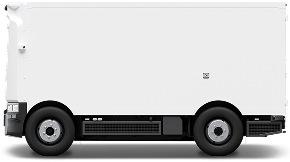
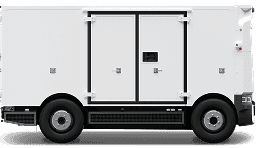
Singapore-based Zelostech’s European activity provides a concrete example of local validation around a logistics platform. In September 2026, the company announced a Belgian Y Test Plate for its RoboVan. Its account explains that the designation brings the vehicle within Belgium’s formal testing framework, with automated road testing requiring authorisation from the relevant mobility authorities.
The designation supports access to Belgium’s formal testing process. The surrounding work concerns how the vehicle performs in European operating environments and how it can be integrated into local logistics. It is a useful distinction for customers comparing a product demonstration with progress through a formal national process.
Zelostech also opened a RoboVan Experience Center at the Port of Antwerp-Bruges, announcing continued vehicle operation along the K102 route. A continuing presence in a live port environment gives stakeholders an opportunity to examine the vehicle and discuss the practical conditions of deployment beyond a one-off exhibition.
For customers considering the Z5 RoboVan, the relevant questions become concrete: the intended cargo, the transfer points, the road environment and the approved operating model. The Belgian activities provide local experience to inform those discussions without implying approval for unrelated services elsewhere in Europe.
Expanding a logistics route across European markets
For logistics operators expanding across Europe, the key question is how much of an existing deployment can carry over to a new site. Vehicle capability, cargo requirements and operating procedures may remain similar, but road layouts, access controls, interactions with other traffic and recovery arrangements can differ significantly from one location to another.
The Belgian work provides a useful reference for that process. Access to a formal testing framework allows local operating data to be collected and deployment conditions to be evaluated before a commercial service is introduced. A later customer operation would still depend on the relevant vehicle approvals, operating permissions and support arrangements for that specific route.
Common EU technical rules create a shared basis for assessing vehicle safety, while national and local procedures determine how that capability is applied in practice. For logistics networks, this makes expansion more structured: evidence from one deployment can inform the next, while route-specific conditions and permissions are addressed separately