Germany’s Autonomous Driving Law and the Path to Legal L4 Logistics Operations

Germany has a legal framework for autonomous vehicle to operate without a driver in defined areas of public road space. For logistics companies, this creates a basis for services such as recurring transfers between warehouses, distribution facilities and industrial locations. The central task is to connect a vehicle’s approved capability with a suitable operating area and an accountable operating organisation.
The framework combines the 2021 autonomous driving legislation with provisions in the Road Traffic Act, known as the StVG, and the 2022 Autonomous Vehicle Approval and Operation Ordinance, or AFGBV. These instruments address regular operation as well as the conditions under which vehicles and their operating arrangements are assessed.
For L4 logistics, the significance is that driverless operation has a defined legal pathway. The permission concerns a vehicle working within specified boundaries, with responsibilities that continue after the service begins.
A defined operating area connects the law to the transport task
Section 1d of the StVG defines an operating area geographically within public road space. It also defines technical supervision and the minimum-risk condition used when the vehicle stops to maintain safety. Section 1e requires the technical capability to perform the driving task independently within the relevant area, without a person driving or technical supervision continuously monitoring the journey.
This model fits a logistics task with identifiable origins and destinations. A warehouse transfer can be described through its road connection, loading locations and operating hours. The boundary gives the vehicle a defined environment and gives the customer a clear description of the service being provided.
The approved area determines which customer sites the vehicle can serve. A vehicle authorised for one industrial connection may offer dependable daily capacity there, while a new destination requires assessment of its coverage and conditions. Fleet expansion involves extending a transport service as well as adding hardware.
The approval pathway has several connected stages
Under the national AFGBV route, vehicle approval involves the Federal Motor Transport Authority, the KBA. Approval of the operating area and vehicle registration are separate elements of the framework. EU vehicle approval rules also remain applicable, making the actual vehicle configuration and approval basis important to the chosen route.
The operating-area assessment examines whether the vehicle can perform the driving task on the proposed roads, whether the infrastructure is suitable and whether the necessary personnel and resources are available. Section 9 also addresses traffic safety and other relevant public interests. This evaluates the deployment as a combination of technology, location and operating organisation.
For goods transport, the loading interface is part of making that combination workable. A vehicle may navigate its road connection successfully but still depend on an accessible bay and a receiving team. Establishing those conditions alongside the route helps the approved service become a reliable part of warehouse operations.
Technical supervision supports exceptional situations
Germany assigns technical supervision to a qualified natural person. The legal role includes the ability to deactivate the vehicle and authorise driving manoeuvres in the circumstances provided by the framework. AFGBV section 14 specifies technical qualifications, manufacturer training, an appropriate driving licence and reliability requirements.
The vehicle performs the driving task during normal autonomous operation. Technical supervision provides a defined human role when assistance is required. The ordinance also addresses examining and documenting the cause of a minimum-risk condition before bringing it to an end, including provisions where a vehicle defect is involved.
In logistics, these responsibilities connect the vehicle with the wider service team. A stopped vehicle may require a technical assessment, while warehouse staff resolve an unavailable unloading point or field personnel arrange recovery. Clear division of these tasks allows exceptional situations to be handled without making each routine journey dependent on an onboard driver.
Regular operation includes maintenance and reporting
The vehicle keeper has continuing duties under AFGBV section 13. These include maintenance, checks, documentation and providing the resources needed for technical supervision. It requires an expanded check before daily operation and an overall inspection every 90 days from registration, following the operating manual. A separate main vehicle inspection is required at six-month intervals. These duties form part of operating an autonomous fleet after its initial approval.
Operational data also supports oversight. StVG section 1g identifies circumstances for recording data and governs its use and access for specified purposes. The information needed to review an incident sits alongside the commercial records used to manage deliveries.
These requirements affect service availability and cost. Maintenance time, technical staffing and recovery arrangements belong in the same operating plan as dispatch frequency. A credible business case measures the cost of completing the required transfers consistently, including the support that remains necessary when driving is automated.
European validation can make a German proposal more concrete
Singapore-based Zelostech’s work with DigiTrans in Austria offers a nearby reference for preparing a logistics vehicle for local conditions. Its April 2025 account of Z5 validation describes commissioning and reliability testing under a five-stage evaluation. The programme covers vehicle safety, system reliability and integration with logistics operations. This is evidence of a validation programme, not German operating approval.
The planned work includes loading processes, site infrastructure, energy management and temperature-controlled logistics involving food and medicines. DigiTrans’s configurable roads and intersections allow scenarios to be repeated under controlled conditions. These details are useful because a proposed service must work at the loading bay and through the shift, as well as on the road.
Consider a refrigerated transfer between two facilities. The German operator would need to connect the assessed driving conditions with a schedule that allows for loading and temperature management. If the vehicle stops, someone must address its technical condition while the logistics team protects the cargo and arranges any necessary recovery. Those are planning implications of the example, rather than published results from a German deployment.
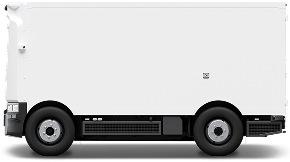
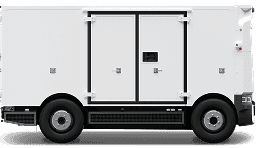
For the Z5 RoboVan, a customer can use local validation to examine the intended vehicle configuration and identify support needs before committing a service schedule. The Austrian work supplies a reference for that preparation. The German approval process determines whether the particular vehicle and operating area meet the applicable requirements.
Budget for the support behind each driverless journey
Businesses evaluating autonomous warehouse and industrial logistics should include technical supervision, scheduled checks and recovery capacity in the service cost. A driving task may be automated while maintenance and cargo handling still require staff. The AFGBV makes several of these continuing responsibilities explicit.
That changes how a proposal should be compared with an existing transport service. Daily availability needs to allow for the prescribed checks; staffing needs to cover the defined technical-supervision role; and a failed journey needs a workable response. The relevant commercial measure is the cost of meeting the customer’s delivery schedule with those obligations included.
Germany provides a defined legal pathway for regular L4 operation on public roads within approved operating areas. For logistics operators, deployment depends on aligning the vehicle’s approval basis, the authorised route or operating area, technical supervision and continuing fleet obligations. Together, these determine whether an autonomous warehouse or industrial transport service can operate reliably at commercial scale.