The UK’s Automated Vehicles Act: What It Means for Autonomous Delivery Vehicle

The UK’s Automated Vehicle Act 2024 establishes a framework for authorising self-driving road vehicles and assigning responsibility for their operation. For autonomous logistics, it creates a structure relevant to vehicles carrying goods without an onboard driver. The main scheme applies in Great Britain: England, Scotland and Wales.
For delivery fleets, the vehicle’s intended operating environment is a useful starting point. A road-going RoboVan transporting cargo between facilities and a small device delivering an order along a pavement perform different tasks in different public spaces. They cannot be treated as a single regulatory category because both use autonomous technology.
As of September 2026, the government is implementing the Act for full operation in 2027. It has also announced separate legislative intentions concerning low-speed vehicles, including pavement delivery robots. For logistics businesses, these are related policy developments with different scopes and timetables.
How road-going delivery vehicles fit the Act
The Act defines a road vehicle as a mechanically propelled vehicle intended or adapted for use on roads. Its framework distinguishes self-driving features that require a user in charge from those that can undertake a journey without one. The explanatory notes explicitly include freight among the uses of no-user-in-charge vehicles.
A driverless logistics service is relevant to the latter model. The goods move without an onboard person expected to take over driving, while organisations remain accountable for the technology and operation. This gives autonomous cargo transport a place in the framework independently of passenger services.
Authorisation concerns the circumstances in which a vehicle can drive itself safely and legally. For logistics, those circumstances connect with the service: the roads used, the operating environment and the journey the vehicle performs. A depot transfer and a changing set of residential deliveries can present different conditions even when they carry similar parcels.
Pavement delivery robots follow a separate policy discussion
The government’s Backing Your Business policy annex states its intention to introduce proportionate legislation for low-speed vehicles, including pavement delivery robots, e-scooters and last-mile delivery vehicles. This is a proposed reform programme, rather than evidence that the Automated Vehicles Act has already granted blanket access to pavements.
Local trials demonstrate the different delivery task. A July 2026 Lincolnshire County Council response describes DPD’s robot trial in Witham St Hughs, using footpaths to serve addresses roughly one mile from its depot. The response is evidence of a local operating arrangement, not a complete account of the project’s legal basis or a nationwide permission for similar devices.
The distinction answers the central question for delivery businesses. The Act supplies a framework relevant to qualifying self-driving road vehicles. Small pavement devices remain part of a separate discussion about low-speed vehicle rules and access to shared pedestrian space. Vehicle classification and the applicable local arrangements still matter to an individual service.
Responsibility is divided between the driving system and the operation
Under the Act’s framework, an authorised self-driving entity, or ASDE, is responsible for the vehicle’s self-driving behaviour and associated obligations. No-user-in-charge vehicles also require an operator framework addressing the oversight of journeys without an onboard driver. These roles allow technology responsibility and service responsibility to be identified explicitly.
Government guidance identifies non-driving responsibilities such as maintaining roadworthiness and responding to breakdowns as matters for the no-user-in-charge operator. The distinction is particularly useful for delivery fleets, where a vehicle can drive autonomously while still relying on an organisation to keep the service available.
For example, a failed delivery may involve a closed receiving facility rather than a driving-system fault. The logistics team handles the goods and customer arrangements, while vehicle support personnel address the vehicle’s condition and recovery. Making those responsibilities visible helps a customer understand what an autonomous service includes beyond the journey itself.
Implementation determines when the full framework can be used
The government’s implementation programme targets 2027 for the full policy, legislative and operational framework. Guidance for first responders refers to full implementation from late 2027. The enacted Act and the detailed arrangements being introduced under it are distinct milestones.
A separate automated passenger services permitting scheme supports passenger deployment. Its purpose does not extend automatically to a goods-only delivery fleet. For logistics, the relevant development is the wider framework for vehicle authorisation and no-user-in-charge operation.
This timetable gives logistics companies a reason to develop the operating model alongside vehicle assessment. Cargo handling, dispatch, maintenance and incident response can be designed around a proposed service while its applicable approval route is established. Commercial launch depends on the permissions available for that specific activity.
What RoboVan operations demonstrate about the logistics model
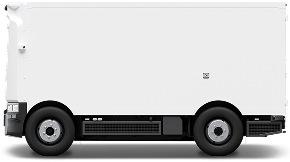
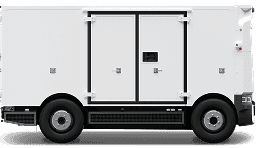
Singapore-based Zelostech provides a concrete reference for road-based autonomous goods movement. Its Singapore logistics account describes Z10 RoboVans moving palletised goods between FairPrice distribution centres, with public-road supply-chain operations under remote oversight beginning in 2025 after supervised public-road testing in 2024.
The example concerns a defined transport segment within an existing network. Warehouse teams load and receive goods, while the RoboVan performs the repeated transfer. For a British logistics customer, this helps identify a potential application distinct from a pavement robot serving individual households. Local vehicle approval and operating permissions would remain necessary.
The same account cites FairPrice’s April 2026 report of more than 100 weekly autonomous vehicle trips between its distribution centres. That network-level figure illustrates recurring use rather than a single demonstration. FairPrice reported this figure for its AV network as a whole, without allocating trips by vehicle supplier.
Zelostech’s RoboVan platform overview describes cargo configurations for recurring transport and specialised delivery requirements. Its logistics applications include postal delivery, warehouse transfers and retail replenishment. The appropriate configuration follows the goods movement and receiving process, rather than the broad label “delivery robot”.
Choose the transport service before choosing the vehicle
For a British distribution business, the first decision is whether it needs a vehicle to move consolidated loads between staffed premises or a device to reach individual customers along pedestrian routes. Those choices affect cargo handling, stopping locations and the human work left at each end of the journey. They also lead to different regulatory questions.
The Automated Vehicles Act establishes the statutory framework for authorising qualifying self-driving road vehicles and allocating responsibility between the authorised self-driving entity and, for no-user-in-charge journeys, the licensed operator. A proposed RoboVan service can be assessed against that structure, with the technology provider’s responsibilities distinguished from the operator’s maintenance and incident-response duties. Pavement delivery requires separate attention to the rules for that vehicle and public space.
FairPrice’s example helps define the road-based application: repeated transfers within a supply chain, measured against dispatch and receiving requirements. A British proposal should express the same level of operational detail, then establish the permissions that apply locally. That gives a customer a concrete service to evaluate as the framework is implemented.