What Is Autonomous Driving? Levels, Stages, and How It Works
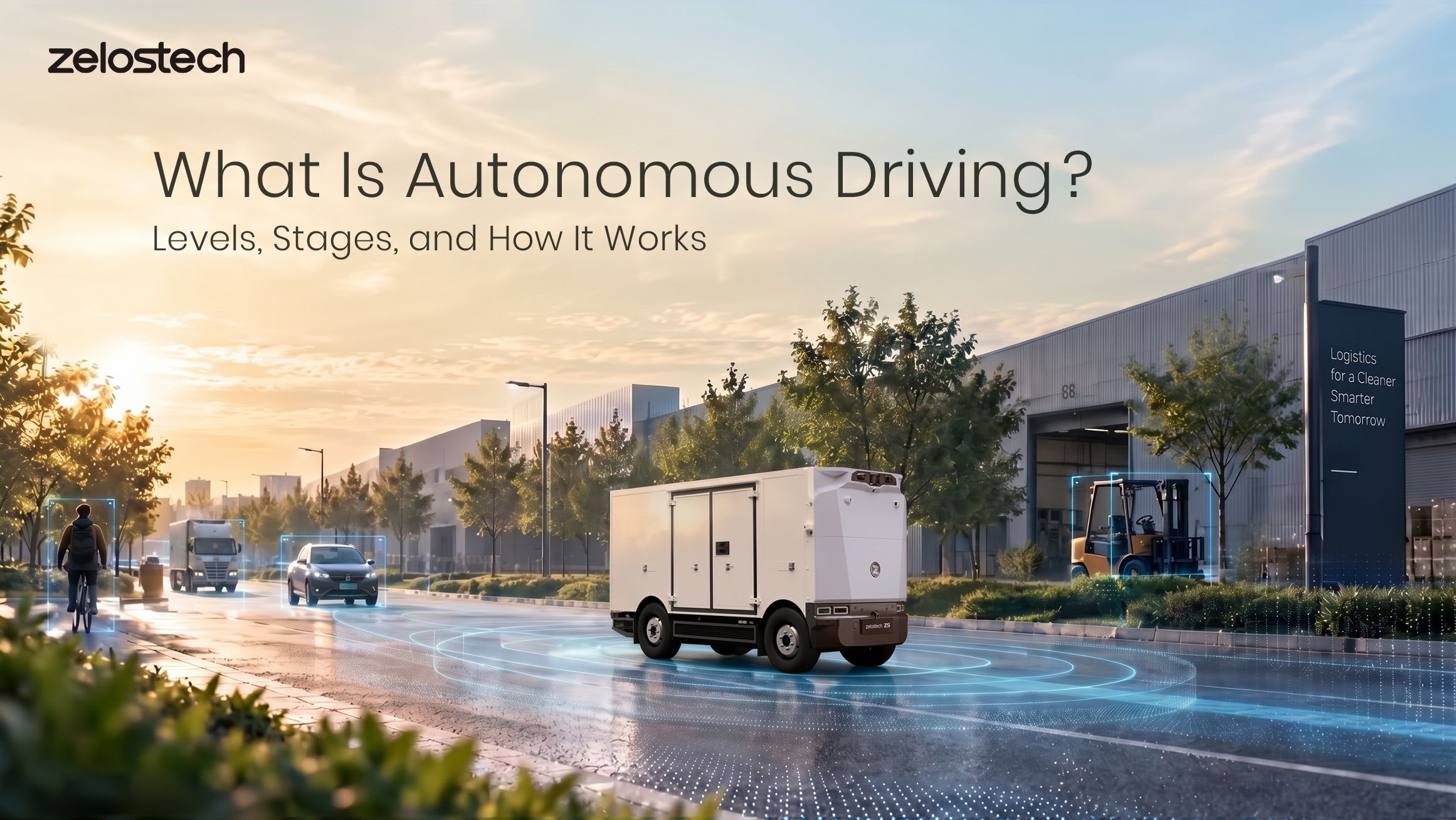
Autonomous driving is a commonly used term for the use of driving automation technology to perform part or all of the dynamic driving task that would otherwise be performed by a human driver. Depending on the system's capabilities and operating conditions, the human may need to continuously supervise the vehicle, remain available to take over, or not be required to drive at all.
Modern autonomous driving systems combine multiple technologies, including cameras, LiDAR, radar, GNSS, inertial sensors, digital maps, sensor fusion, artificial intelligence, prediction models, planning algorithms, and vehicle control. Together, these systems enable a vehicle to perceive its surroundings, determine its position, predict the behavior of other road users, plan a safe trajectory, and control its movement in real time.
Autonomous driving is not a single technology or a binary state. The capabilities of an automated driving system depend on what parts of the dynamic driving task it can perform, under what conditions it can operate, and what responsibilities remain with the human driver.
The SAE driving automation framework provides the most widely used terminology for describing these differences. SAE J3016 defines six levels of driving automation, from Level 0 to Level 5, based on the roles of the human user and the driving automation system in performing the dynamic driving task.
For commercial transportation, this distinction is particularly important. Many autonomous logistics systems are designed for defined operating environments such as industrial parks, ports, airports, logistics hubs, campuses, and recurring delivery routes. These applications can be well suited to Level 4 autonomous driving because the system can perform the entire dynamic driving task and required fallback within its defined operating domain without requiring a human driver to take over.
What Is Autonomous Driving?
Autonomous driving refers to the automation of driving functions that would normally require a human driver. Depending on the level of automation, these functions can include steering, acceleration, braking, monitoring the driving environment, following a route, responding to traffic, and maintaining a safe trajectory.
The term covers a wide range of capabilities. A system that assists with steering and speed while a driver continuously monitors the road is fundamentally different from a system that can perform the entire dynamic driving task without a human driver.
This is why autonomous driving levels are important. Rather than describing a vehicle simply as "automated" or "autonomous," the SAE framework identifies different levels according to the capabilities of the driving automation system and the role of the human user.
The appropriate autonomous driving level depends on the system's capabilities, operating conditions, and the level of human involvement required.
A vehicle may also support more than one driving automation feature. SAE J3016 classifies the level of the driving automation feature that is engaged, rather than assigning one permanent automation level to the vehicle itself.
For this reason, discussions of autonomous driving should focus on system capability, operating conditions, and human responsibility, rather than relying only on terms such as "self-driving" or "autonomous."
Autonomous Driving vs. Self-Driving
Autonomous driving vs. self-driving is largely a question of terminology rather than a precise technical distinction. The two terms are often used interchangeably in everyday language.
In technical discussions, however, the actual capabilities of the system matter more than the terminology. A Level 2 system may simultaneously control steering and acceleration or braking, but the human driver must continuously supervise the driving environment. A Level 4 system, by contrast, can perform the entire dynamic driving task without requiring a human driver to take over when operating within its defined operating domain.
As a result, a vehicle that performs some driving functions automatically should not necessarily be considered driverless. The relevant questions are what the system can do, where it can operate, and whether a human driver is still required.
What Are the Levels of Autonomous Driving?
| Level | SAE designation | System capability | Human role |
| Level 0 | No Driving Automation | Provides warnings or momentary intervention | Human performs the driving task |
| Level 1 | Driver Assistance | Controls either steering or acceleration/braking | Human remains responsible for driving and supervises the system |
| Level 2 | Partial Driving Automation | Controls steering and acceleration/braking simultaneously | Human continuously supervises the driving environment |
| Level 3 | Conditional Driving Automation | Performs the entire dynamic driving task under defined conditions | Human must be available to respond to a takeover request |
| Level 4 | High Driving Automation | Performs the entire dynamic driving task and required fallback within a defined operating domain | No human driver is required within the operating domain |
| Level 5 | Full Driving Automation | Performs the entire dynamic driving task without the operational-domain limitations of Level 4 | No human driver is required |
How Many Levels of Autonomous Driving Are There?
There are six levels of driving automation in the SAE framework: Level 0 through Level 5.
Some sources refer to five levels because they count only Level 1 through Level 5. This is why both "5 levels of autonomous driving" and "6 levels of autonomous driving" appear in search results.
The term L1 to L5 autonomous driving refers to Levels 1 through 5, while the complete SAE classification also includes Level 0.
Technically, therefore, the complete SAE classification is L0–L5.
The phrase "autonomous driving stages" is also commonly used to describe the progression from driver assistance to increasingly automated operation. SAE's formal terminology is levels of driving automation, rather than stages.
Level 0: No Driving Automation
Level 0 means that the vehicle does not provide sustained driving automation. It may still provide warnings or momentary assistance, but the human driver performs the dynamic driving task.
Examples include systems that warn about lane departure, potential collisions, or other hazards. These functions can improve driver awareness or safety without making the vehicle capable of sustained automated driving.
Level 1: Driver Assistance
Level 1 provides sustained assistance with either the vehicle's lateral motion or longitudinal motion.
For example, a system may provide steering assistance while the driver controls acceleration and braking, or it may control acceleration and braking while the driver remains responsible for steering.
The system assists the driver but does not perform the complete dynamic driving task.
Level 2 Autonomous Driving: Partial Driving Automation
Level 2 can provide simultaneous assistance with steering and acceleration/braking.
Although the system can control both lateral and longitudinal vehicle motion, the human driver must continuously supervise the driving environment and remain responsible for the driving task.
This distinction is important because Level 2 autonomous driving can appear highly automated from the driver's perspective, but it is still a driver-support system rather than a driverless system.
What Is Level 3 Autonomous Driving?
Level 3, or Conditional Driving Automation, allows the driving automation system to perform the entire dynamic driving task under defined operating conditions.
Unlike Level 2, the human driver does not need to continuously monitor the driving environment while the Level 3 system is operating. However, the human must remain available to respond to a request from the system to intervene and resume the driving task.
The transition from Level 2 to Level 3 therefore represents an important change in the human-system relationship. At Level 2, the human remains continuously responsible for monitoring the driving environment. At Level 3, the automated driving system performs the dynamic driving task within its conditions of operation, while the human serves as the fallback when the system requests intervention.
L2 vs. L3: What Is the Difference?
The most important difference between Level 2 and Level 3 is who is responsible for monitoring the driving environment while the automated feature is engaged.
With Level 2, the human driver must continuously supervise the system and remain responsible for the driving task.
With Level 3, the automated driving system performs the entire dynamic driving task under its defined operating conditions. The human does not need to continuously monitor the environment but must remain available to respond when the system requests a takeover.
The distinction is therefore about both system capability and responsibility, not simply the number of driving functions the vehicle can control.
What Is Level 4 Autonomous Driving?
Level 4 is known as High Driving Automation under SAE J3016. A Level 4 automated driving system can perform the entire dynamic driving task and required fallback within its defined Operational Design Domain (ODD) without requiring a human driver to take over.
An ODD specifies the conditions under which the system is designed to operate. Depending on the application, these conditions can include geographic boundaries, road types, operating speeds, traffic conditions, weather, lighting, and other environmental or operational constraints.
Level four autonomous driving, or Level 4 autonomous driving, therefore does not mean that a vehicle can drive anywhere under any conditions. It means that the automated driving system can operate without a human driver whenever the conditions remain within its defined operating domain.
This distinction makes Level 4 particularly relevant to commercial transportation. Logistics operations often involve recurring routes, known destinations, defined service areas, and structured operating environments. These characteristics make it possible to design and validate an autonomous driving system around a specific ODD.
Why Is Level 4 Important for Commercial Transportation?
Commercial transportation does not necessarily require a vehicle to operate everywhere and under every possible condition.
A logistics vehicle may repeatedly travel between distribution centers, warehouses, industrial facilities, ports, airports, or designated delivery areas. The routes, vehicle characteristics, operating speeds, loading locations, and other requirements can often be defined in advance.
This creates an opportunity to develop an automated driving system specifically for the conditions that matter to the transportation operation.
For example, a Level 4 logistics vehicle can be designed to operate within a defined service area or along recurring routes without requiring a human driver. The system can then be tested and validated against the road, traffic, weather, and operational conditions included in its ODD.
This application-focused approach is one reason Level 4 autonomous driving has become particularly important in commercial logistics.
Level 5 Autonomous Driving
Level 5 represents Full Driving Automation. Like Level 4, a Level 5 system can perform the entire dynamic driving task without a human driver. The fundamental difference is that Level 5 is not limited by a specific operational domain.
Level 5 is designed to perform the dynamic driving task under all roadway and environmental conditions that can reasonably be expected to be encountered by a human driver, rather than only within a defined ODD.
This makes Level 5 a substantially broader engineering challenge than Level 4.
For many commercial transportation applications, however, Level 5 is not necessary to create operational value. If a logistics operation can be effectively defined by geography, routes, traffic conditions, vehicle characteristics, and other operating requirements, Level 4 may be sufficient to perform the required transportation task without a human driver.
Difference Between Level 4 and Level 5 Autonomous Driving
The difference between Level 4 and Level 5 autonomous driving is primarily the scope of operation.
Level 4 can perform the entire dynamic driving task and required fallback without a human driver within a defined operating domain.
Level 5 is designed to perform the same task without the operational limitations that define Level 4.
In practical terms, Level 4 can be highly capable without being universally capable. A Level 4 logistics vehicle may be completely driverless on its approved routes while being unable to operate outside its ODD.
Level 5 aims for a much broader form of driving automation that is not restricted to a particular geographic area, route, or set of operating conditions.
How Does Autonomous Driving Work?
Autonomous driving is an integrated system rather than a single technology. A typical autonomous driving architecture combines perception, localization, prediction, planning, vehicle control, computing, and safety mechanisms.
At a high level, the process can be represented as:
Sensing → Perception → Localization → Prediction → Planning → Control
These functions operate continuously as the vehicle moves through its environment.
Perception and Sensor Fusion
Perception allows an autonomous vehicle to build a real-time representation of its surroundings.
Depending on the system architecture and operating environment, sensors may include cameras, LiDAR, radar, GNSS receivers, inertial measurement units, and other sensing technologies.
Cameras provide visual information that can help identify road markings, traffic signs, vehicles, pedestrians, cyclists, and other road features. Radar can provide information about object distance and relative velocity and can complement camera-based perception in different lighting and environmental conditions. LiDAR can provide detailed spatial measurements that support object detection and environmental understanding.
No single sensor provides a complete picture of the environment in every situation. Sensor fusion combines information from multiple sensors to create a more consistent representation of the vehicle's surroundings.
The specific sensor configuration depends on the vehicle, its operating domain, and the performance requirements of the autonomous driving system.
What Is Localization in Autonomous Driving?
Localization determines the vehicle's position and orientation relative to its environment.
For autonomous driving, knowing a vehicle's approximate latitude and longitude is not enough. The system needs sufficiently precise information to understand its position relative to roads, lanes, intersections, mapped features, delivery locations, and other elements relevant to its route.
Localization can combine GNSS, inertial sensors, cameras, LiDAR, maps, and other sources of positioning information. The exact architecture depends on the vehicle and its operating environment.
For vehicles operating on recurring logistics routes, reliable localization is particularly important because the system needs to repeatedly follow planned paths and reach specific loading, unloading, and delivery points.
Prediction: Anticipating the Behavior of Other Road Users
Perception tells the autonomous driving system what is happening around the vehicle. Prediction helps estimate what may happen next.
Prediction models can estimate the likely future movements of vehicles, pedestrians, cyclists, and other road users based on their current positions, velocities, trajectories, and surrounding context.
For example, the system may need to estimate whether another vehicle is likely to change lanes, whether a pedestrian may enter the vehicle's path, or whether a nearby vehicle is slowing down.
Prediction is particularly important in dynamic traffic environments because autonomous driving decisions must account not only for the current state of the environment but also for how that environment may change over the next few seconds.
Planning and Decision-Making
Planning determines how the vehicle should move through the environment based on perception, localization, prediction, road rules, and operational constraints.
The system may need to make decisions such as whether to stop, yield, change lanes, maintain speed, avoid an obstacle, or follow a particular route.
Planning generally operates at multiple levels. Route planning determines how the vehicle should travel toward its destination, while motion planning generates a trajectory that the vehicle can safely follow.
The planning system must also respect the vehicle's ODD and operating constraints. A commercially deployed autonomous vehicle should not plan actions that fall outside the conditions for which its automated driving system has been designed and validated.
Vehicle Control
Vehicle control converts the planned trajectory into physical vehicle actions.
The control system manages steering, acceleration, and braking while continuously comparing the vehicle's actual motion with the desired trajectory.
Because road conditions and vehicle motion are constantly changing, the system must repeatedly adjust its control commands rather than simply execute a fixed sequence of instructions.
Planning determines where and how the vehicle should move, while control determines how to translate that plan into precise vehicle motion.
Computing and System Safety
Autonomous driving requires substantial computing capability to process sensor data, run perception and localization algorithms, predict the behavior of other road users, generate driving plans, and control the vehicle with low latency.
Safety is not a single step in this process. It is a system-level requirement that spans sensing, perception, planning, control, computing, vehicle systems, and operational monitoring.
An autonomous driving system therefore needs mechanisms for fault detection, system monitoring, fault handling, and safe responses when a component or subsystem does not perform as expected.
For commercial deployments, these technical safeguards must also be supported by operational processes such as remote monitoring, fleet management, maintenance, incident handling, and system updates.
What Does It Take to Achieve Autonomous Driving?
How to achieve autonomous driving depends on the target application, operating environment, and required level of automation. Achieving autonomous driving requires more than installing sensors or developing an AI model. The challenge is to integrate the complete vehicle and software system and demonstrate that it can operate reliably within its intended conditions.
For a commercial Level 4 application, the process typically begins by defining the transportation task and the ODD. Engineers then develop and integrate the perception, localization, prediction, planning, control, computing, and safety systems required for that environment.
Testing and validation are equally important. The system needs to be evaluated against the conditions it is expected to encounter, including different road layouts, traffic scenarios, weather conditions, lighting conditions, and potential system failures.
Simulation, closed-course testing, controlled deployments, and public-road validation can all contribute to this process, depending on the application and regulatory requirements.
Commercial deployment also requires infrastructure and operational support. Fleet management, remote monitoring, maintenance, charging, route management, data systems, and integration with existing logistics workflows can all affect whether an autonomous vehicle can operate reliably at scale.
The practical objective is therefore not simply to reach a particular SAE level. It is to build a system that can perform the required transportation task safely, consistently, and repeatably within its intended operating environment.
Autonomous Driving Stages: From Driver Assistance to Driverless Operation
"Autonomous driving stages" is an informal way of describing the progression from human-controlled driving toward increasingly automated operation. SAE formally refers to these as levels of driving automation.
The stages of autonomous driving can be broadly described as a progression from human-controlled driving to increasingly capable automated systems.
At Level 0, the human performs the driving task. Level 1 introduces assistance with either lateral or longitudinal vehicle control, while Level 2 can provide simultaneous steering and acceleration/braking assistance under continuous human supervision.
Level 3 marks a shift toward conditional automation, where the system performs the entire dynamic driving task under defined conditions and the human remains available to take over when requested.
Level 4 enables driverless operation within a defined operating domain. Level 5 extends the capability beyond the operational limitations that distinguish Level 4.
The different levels in driving automation should not be interpreted as a requirement for every vehicle to move sequentially from Level 1 to Level 5. The appropriate level depends on the transportation task, operating environment, safety requirements, regulatory framework, and business case.
For example, a logistics operator with recurring routes in a defined service area may have a strong business case for Level 4 without requiring Level 5 capabilities.
Autonomous Driving in Logistics
Logistics is one of the most promising applications for autonomous driving because many transportation tasks are repetitive, measurable, and operationally structured. These applications include last-mile delivery, retail replenishment, warehouse transfer, industrial park logistics, airport ground logistics, and cold-chain distribution.
A logistics operation may involve predictable movement patterns, recurring routes, defined service areas, schedules, loading points, and vehicle requirements. These characteristics can create a strong fit between commercial logistics and Level 4 autonomous driving.
For a broader overview of how autonomous vehicles can affect logistics operations, including benefits, safety considerations, deployment challenges, and large-scale adoption, see our guide to autonomous vehicles in logistics.
What Is L4 Autonomous Logistics?
L4 autonomous logistics refers to the use of Level 4 automated driving systems to transport goods without a human driver within a defined operating domain.
Unlike a generalized autonomous driving system intended to handle a broad range of public-road conditions, an L4 autonomous logistics system can be engineered around specific transportation requirements.
Its ODD may define:
Geographic operating areas
Approved routes
Road types
Operating speeds
Traffic conditions
Weather and environmental conditions
Vehicle and payload requirements
Loading and unloading locations
Other operational constraints
This approach allows the autonomous driving system to be tested and validated against the conditions that are directly relevant to the logistics operation.
Why Is L4 Autonomous Driving Relevant to Logistics?
Many logistics operations involve predictable movement patterns. A vehicle may travel the same route multiple times a day, operate within a defined industrial area, or repeatedly move goods between two logistics facilities.
This does not eliminate the complexity of autonomous driving. The system still needs to perceive its surroundings, respond to changing traffic, handle unexpected obstacles, and maintain safe vehicle control.
However, a clearly defined operating domain can make the engineering and validation problem more manageable than attempting to support every possible roadway and environmental condition.
For logistics operators, the value of autonomous driving also extends beyond driverless operation. A commercially useful autonomous vehicle must fit into the broader transportation workflow, including dispatch, cargo handling, route management, remote supervision, charging, maintenance, and fleet operations.
Level 4 Autonomous Logistics with Zelostech RoboVans
Zelostech applies Level 4 autonomous driving technology to commercial logistics through its RoboVan platform.
Its autonomous logistics systems are designed for applications such as urban delivery, retail replenishment, industrial logistics, airport operations, and cold-chain transportation. The technology combines autonomous driving software, multi-sensor perception, decision-making, vehicle control, and other components required for driverless logistics operations within defined operating domains.
The practical challenge is not simply making a vehicle drive without a driver. A commercial L4 logistics platform needs to operate consistently within its ODD and integrate with the operational systems surrounding the vehicle.
This includes route management, remote monitoring, fleet coordination, cargo workflows, charging, maintenance, and other processes required for recurring transportation operations.
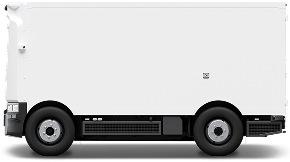
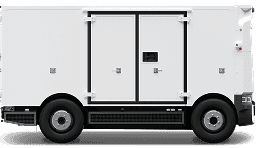
Zelostech's Z5 RoboVan and Z10 RoboVans are designed for different logistics requirements, allowing vehicle capacity, route characteristics, and operating environments to be considered alongside the autonomous driving system.
This application-oriented approach illustrates an important principle of L4 autonomous driving: the goal is not unrestricted autonomy, but reliable autonomous operation within a clearly defined and validated operating domain.
The Future of Autonomous Driving
The development of autonomous driving is increasingly shifting from demonstrating technical capability toward achieving reliable and commercially scalable operation.
For passenger vehicles, higher levels of automation require systems capable of handling highly variable public-road environments. For commercial transportation, progress is also being driven by applications where routes, operating areas, and transportation requirements can be more clearly defined.
This is likely to keep Level 4 autonomous driving important in logistics and other commercial applications.
Future progress will depend on improvements across the entire autonomous driving stack, including artificial intelligence, perception, sensor fusion, localization, prediction, planning, vehicle control, computing, and system safety.
At the same time, autonomous driving cannot be separated from the operational environment around the vehicle. Fleet management, remote operations, connectivity, charging infrastructure, regulatory frameworks, and logistics-system integration will all influence how quickly autonomous vehicles can move from pilot programs to large-scale commercial deployment.
The most important measure of progress may therefore not be how close the industry is to Level 5, but how effectively autonomous driving technology can solve real transportation problems within clearly defined operating conditions.
Conclusion
Autonomous driving is an integrated technology that enables vehicles to perform increasingly large portions of the dynamic driving task with reduced or no human intervention, depending on the system's level and operating conditions.
The SAE framework provides six levels of driving automation, from Level 0 to Level 5. The most important distinctions between these levels involve system capability, operating conditions, and human responsibility.
Level 2 can automate steering and acceleration/braking while requiring continuous human supervision. Level 3 allows the system to perform the entire dynamic driving task under defined conditions while requiring the human to remain available for takeover. Level 4 enables driverless operation within a defined operating domain, while Level 5 is designed to operate without the domain limitations that characterize Level 4.
For commercial transportation, Level 4 is particularly significant because many logistics operations can be organized around defined routes, geographic areas, and operating conditions. This makes it possible to develop and validate autonomous systems around specific transportation requirements rather than attempting to solve every possible driving scenario.
L4 autonomous logistics therefore represents a practical path toward commercial autonomous driving. The technology must combine perception, localization, prediction, planning, control, computing, and safety with the operational infrastructure required to run autonomous vehicles reliably at scale.
The future of autonomous driving will ultimately depend not only on advances in AI and sensing, but on how effectively these technologies can be integrated into real transportation workflows and deployed safely, consistently, and economically.